

God Pities the Nursery Children
A Translation of Yehudah Amichai’s ‘God Pities the Nursery Children’ [אלוהים מרחם על ילדי הגן ] from Hebrew. God pities the nursery children, He pities school children even less As for the גדולים [big ones], He will pity no more – He’ll let them fend for the
Lección de Cocina
The kitchen is gleaming white. It’s a shame to have to tarnish it with use. You’d need to sit down to contemplate it, to describe it, to close your eyes, to conjure it up. Pay close attention to this neatness, this purity which is not to that dazzling excess that gives you chills in hospitals. [

Dhá véarsaí as: Caoineadh Airt Uí Laoghaire
Caoineadh Airt Uí Laoghaire is an 18th century Irish-language wife’s lament, commemorating a husband murdered by an Anglo-Irish official. Do bhuaileas go luath mo bhasa is do bhaineas as na reathaibh chomh maith is bhí sé agam, go bhfuaras romham tú marbh Cois toirín ísil aitinn, gan
Inferno XXVI (trans. From Italian)
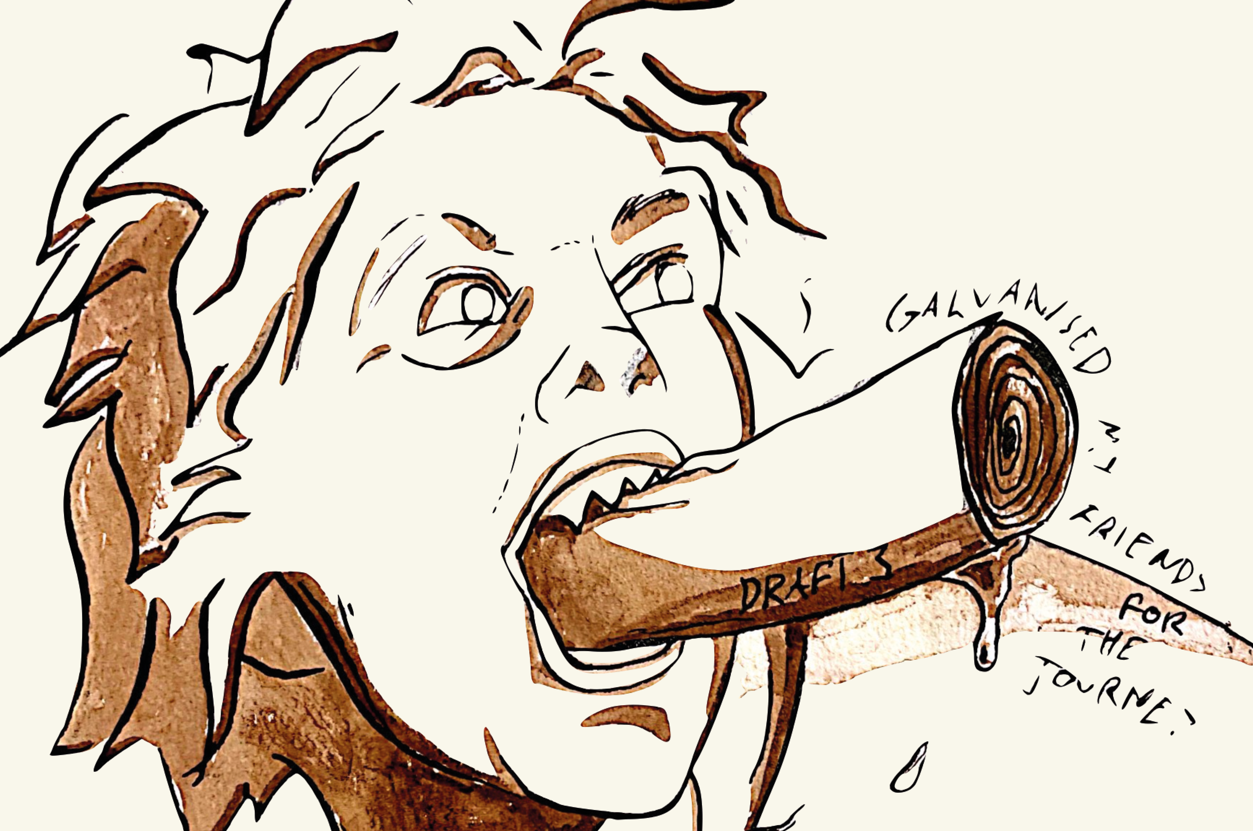
A New Translation and Dramatization of Inferno, Canto XXVI: The 8th Circle of Hell. Odysseus (In rags, with clay pipe, red-faced, moustachioed. He wears the pale pink nightie of an empress. Appears on his haunches in the London tube. Looking at the ceiling. Puddle of phlegm on s

Giraffe
I see that today you look ever so sad, And your hands are so delicate, clasping your knees. Listen now – far, far away, by Lake Chad, A lone giraffe wanders, swaying in the breeze. God granted him poise and graceful, slow airs, And his fur is mottled with magical shapes, A pattern with [&he
(translated from French)
When we were finally dressed up fit for a Sunday, Elsi would drive us to the Auberge du Cheval Blanc, up to the French doors that mysteriously reflected the hill overlooking the hairpin bends of the road. I saw the bus appear over the horizon, the one which Maman had certainly taken. It slowly made
Simple Truths Simply Put
“El mundo cultural que articula la obra, tan distinto en problemática, historia y estructura, resulta en este caso intraducible.” “The cultural world the work articulates, so different in its problems, history, and structure, is in this case untranslatable.” So lament the edit

Waiata-tangi o te moana: The Seafarer
This is my own creative translation of the first 18 lines of the anonymous Old English (Anglo-Saxon) Poem The Seafarer. I have incorporated te reo Māori words (and the occasional OE) in my translation, as I’ve wanted to give the reader a glimpse of the beauty of bilingual expression. The poem is