


Pressure Point: Laying the Journalist’s Head on the Line
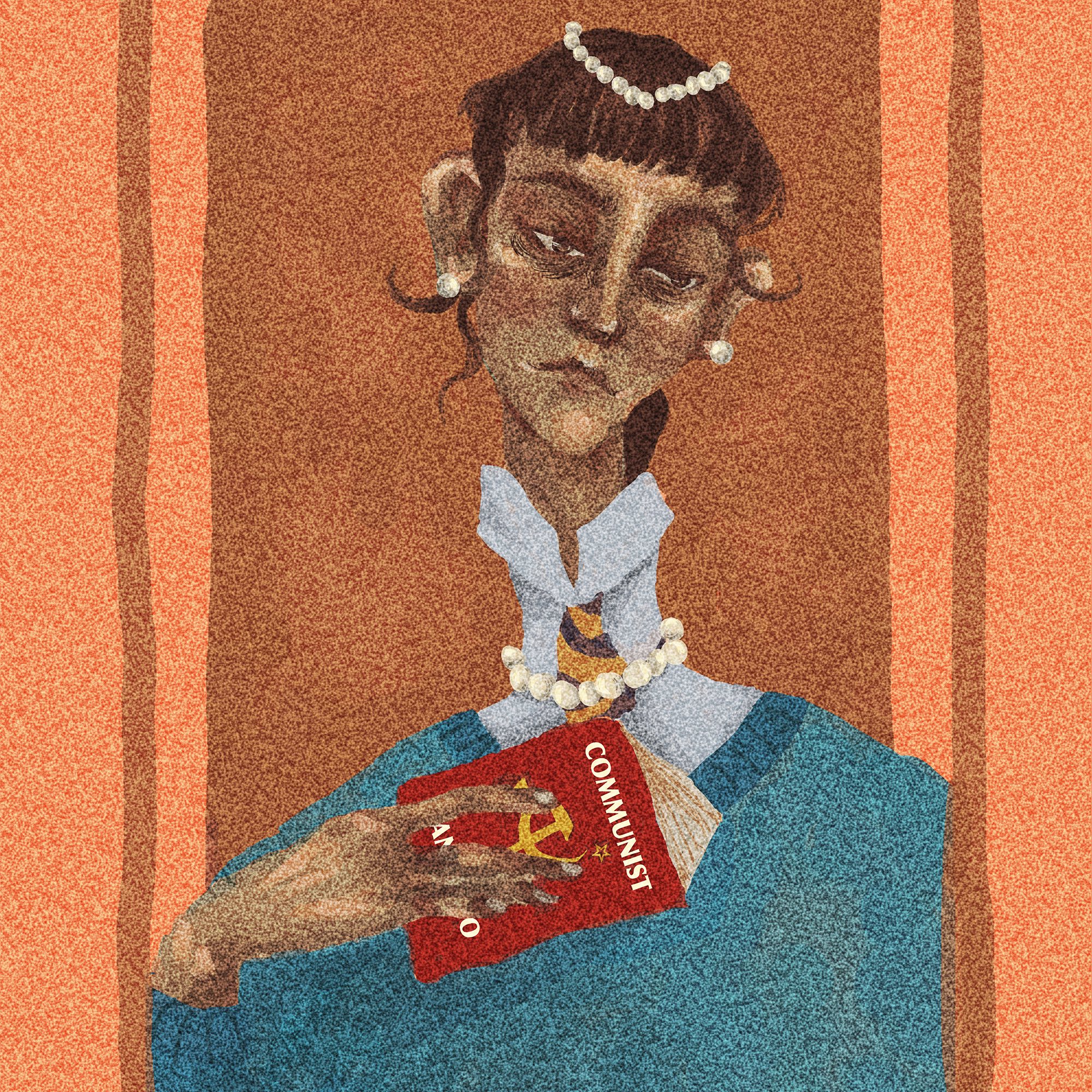
On October 14, 2026, the decision to stop selling Sally Rooney’s works in the UK was announced. This event was not entirely unforeseen: in 2025, Rooney expressed support for Palestine Action directly following the July amendment to the 2000 Terrorism Act which added said group, amongst others, to its list of proscribed organisations. In the overlapping voices of each news outlet’s summative headlines and eye-catching snippets, however, the degree of agency held by both author and publisher became increasingly obfuscated.
Immediately digestible yet rigorously engineered, news headlines effortlessly fashion our perception of any given event. They must represent the core of an issue upfront, incite urgency or curiosity where appropriate, and achieve search engine optimisation, all within a half-sentence of headlinese. Readers are met with a cacophony of reporting voices prioritising different details and proposing different implications—pages upon pages of definitive statements in the same authoritative tone, each presenting their ever-so-slightly different portraits of the same subject as the objective image.
The BBC headline states a voluntary retraction of her works: ‘Sally Rooney books withdrawn in UK over Palestine Action support.’ The Guardian reports cessation driven by infeasibility rather than choice: ‘Sally Rooney says she can no longer sell books in UK due to Palestine Action support.’ The Telegraph points to an external removal of her works: ‘Sally Rooney’s books pulled from shelves over Palestine Action support.’ More specialised news outlets further muddy the waters by assuming specific industry knowledge from their readership: The Bookseller’s headline—‘Faber to no longer distribute Sally Rooney in UK due to Palestine Action legislation’—not only places responsibility on the ‘legislation’ itself rather than Rooney’s ‘support’ for Palestine Action, but also names the specific publishing house as a crucial player in lieu of gesturing towards an unnamed agent.
Faber themselves released a statement on their official website, stating that ‘[c]urrent legislation in the UK’ prevents the distribution of UK earnings to Rooney; to avoid the ‘unconscionable situation’ of profiting from Rooney’s work without deserved monetary compensation, they ‘can no longer supply her works in the UK in any format.’ The statement names neither legislative change nor political controversy, instead forefronting that their contractual obligation to return earnings is no longer legally permissible. On the record, the statement merely explains a legal barrier to Faber’s business operations. Despite declaring they ‘remain the proud publisher’ of Rooney, the publishing house commits itself to no hard position—their supportive statement does not explicitly condone Rooney’s politics, nor does it condemn the legislation at the root of this cessation.
Reporting on this issue, contentious in both global socio-politics and the niche of literary affairs, necessitates a delicate dance around legal restrictions on top of the ever-present regulations imposed by the Independent Press Standards Organisation. The ISPO expresses intent to ‘uphold high editorial standards to protect the public and freedom of expression’, and investigates alleged breaches to clauses to the Editors’ Code of Practice concerning issues such as accuracy, privacy, and discrimination. These clauses influence the permissible degree of transparency in each report, and the lengthy ISPO Ruling Archives are testament to just how combative conflicting stakeholder interests can be. In the context of such disputes, the necessity for statutory oversight alongside self-regulation in journalism may thus be assessed.
At once negotiating fact, opinion, and entertainment, the headlines of Oxford’s student journalism scene epitomise the malleability of narrative focus. Peer regulation and minimal writer-reader interaction may embolden our commitment to stronger statements, but the very fact of exposure may prevent particular thoughts from being voiced. No matter the perceived scale of risk innate to chosen topics—whether a formal report on current affairs or a light commentary on oddly specific facets of student life—writers are hyperaware that their words are broadcasted to far larger proportions of the student community than would be possible without a platform. Do we write to entertain, challenge, or just to carve out another face of our individual image? What responsibilities come with our disproportionately amplified voices?
Perhaps it matters not how much, or indeed, whether, we mince our words—it is only our headlines which surface through the torrents of student-produced content, and even then, only a few of these funnel into the pool of attention.
Words by Remie Cheng.
Art by Naia Searight.
You may also like

Conversations with Sally Rooney on politics, power and revolution
Sally Rooney is the current darling of the literary world. Over the past 18 months, the 27-year-old

Inconspicuous Consumption: the problem with e-books
Why won't we read an e-book?
Oscar Wilde and Sally Rooney: Parodying the Political
“Art is individualism, and individualism is a disturbing and disintegrating force. There lies its