

Under Review: Iphigenia at Aulis
I’ve promised not to tell you how Euripides’s Iphigenia at Aulis ends, but I can tell you how it starts. In the preshow, Agamemnon, Greek commander and father of Iphigenia, sits at a desk in a distinctly Celtic setting. He’s writing and unwriting the letter that could save his daughter’s life, if he decides to send it: he’s already called Iphigenia to Aulis to be sacrificed to the goddess Artemis, because the prophet Calchas has predicted that only this will turn the wind in the Greek army’s favour and allow them to sail to Troy. Iphigenia and her mother think she’s coming to be married to Achilles. Agamemnon could still send them home. Overlapping voices babble from a radio: Greek, Irish, Greek in an English translation, the opening of the Bacchae, a monologue from The Plough and the Stars. Agamemnon wavers one way, then another, then shuts the radio off, and the play begins.
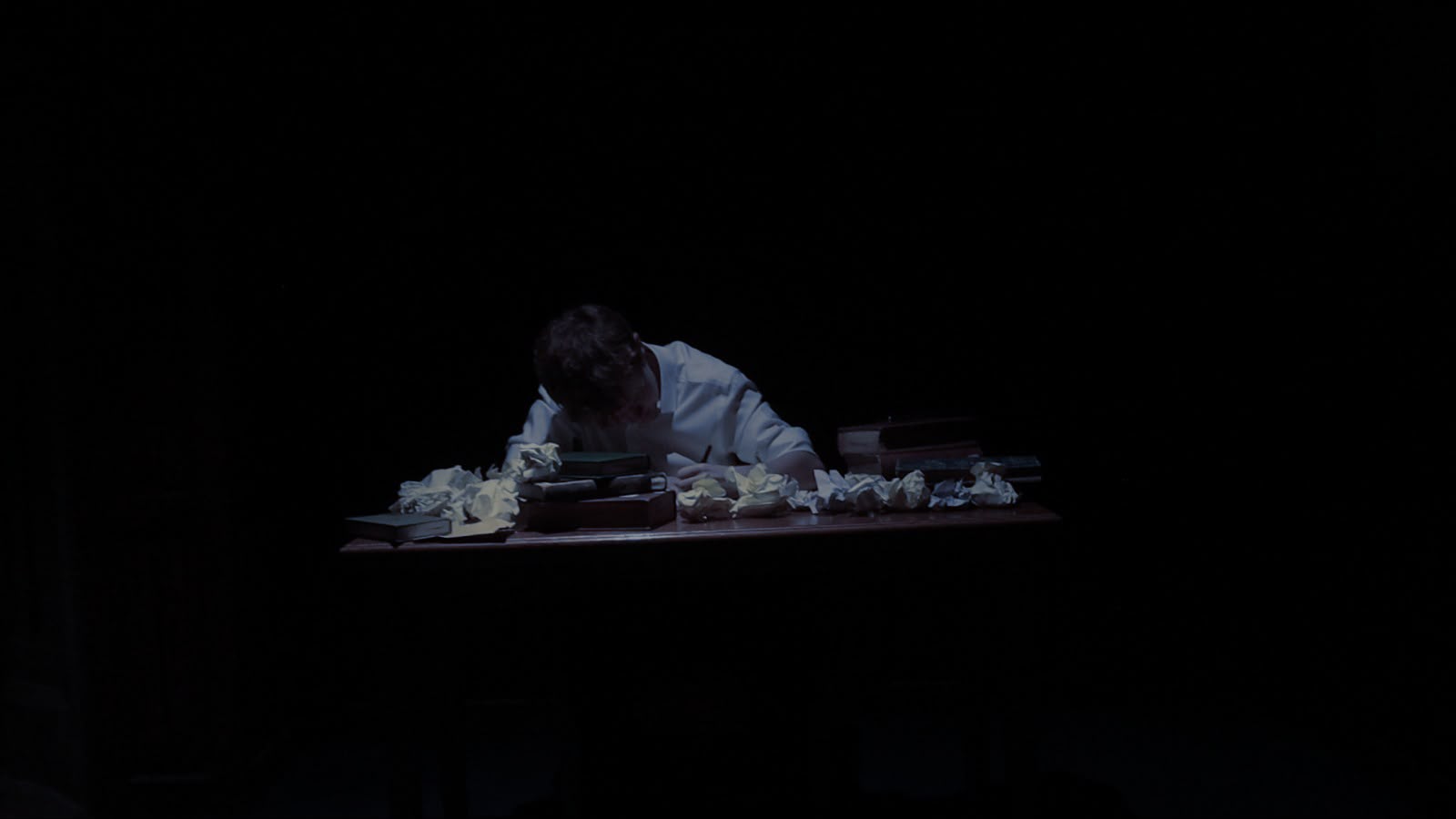
Agamemnon (Seb Forster) at his writing desk
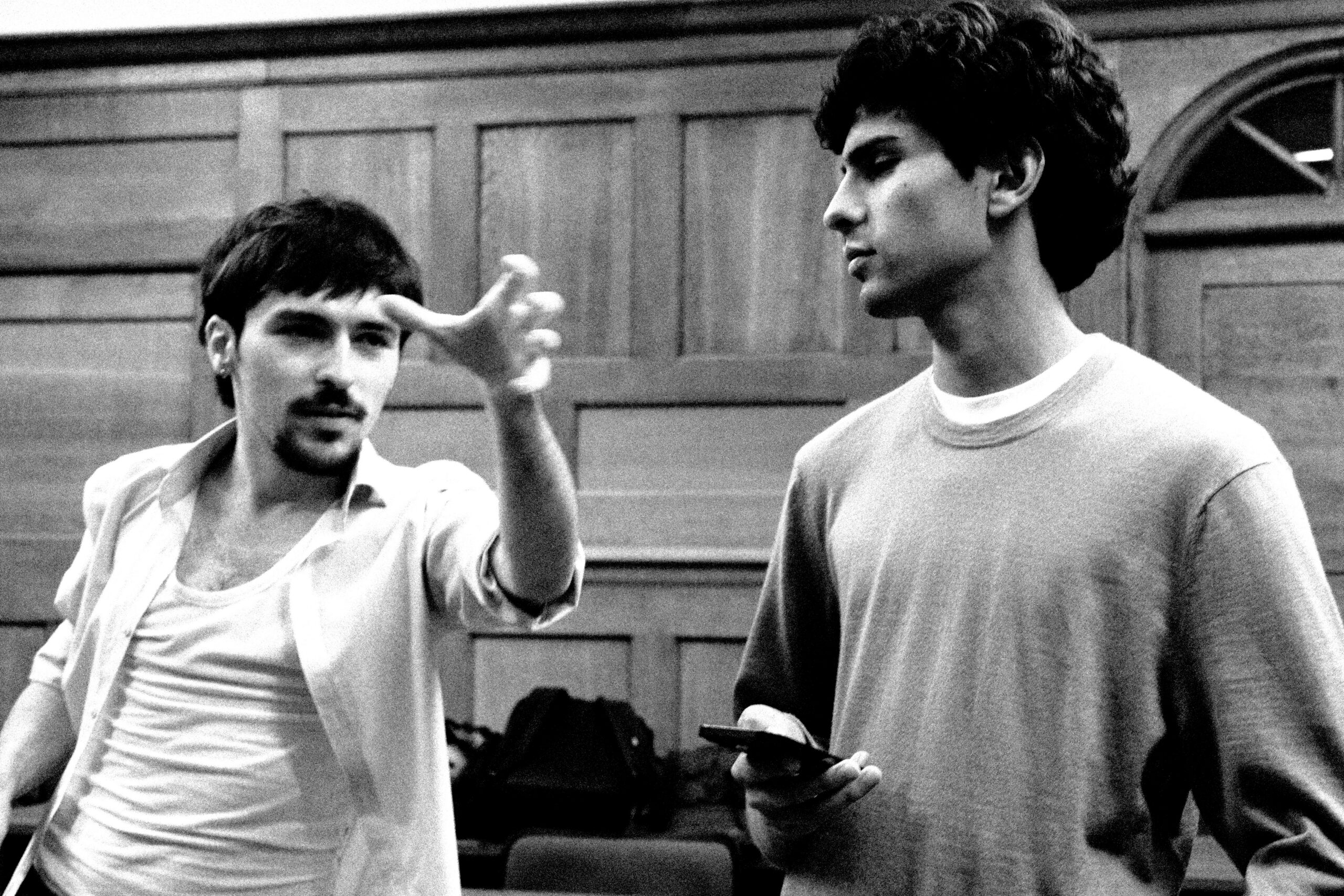
Director Wally McCabe and associate director Kelly Yu have known each other since they were freshers. They’re both reading Classics and English. They each acted in a Greek play the first time they acted with OUDS, and they’re both coming full circle this year in directing Iphigenia at Aulis. It’s clear how passionate they are: Kelly’s been rapidly coining phrases (‘mythic void’) to describe what interests her most about the play; Wally remembers talking about their vision for Iphigenia in first year. Wally hasn’t slept in two days, and is on their way to rehearsal after this interview, having just left a tutorial. It’s really easy directing a show at the Playhouse in your final year, we agree. It’s really not very difficult at all.
Amongst other things, Iphigenia is about sacrifice, nationhood, maternal love, patriarchal control, conquest, and dignity. Though these themes will resonate with modern audiences, Wally doesn’t think it’s a ‘timeless’ play. It was written at the end of the Peloponnesian war, for an Athens anticipating defeat by Sparta, and is in that sense historically specific. Beyond that, its broad themes are less interesting than how the playwright and the directors handle them narratively. Wally and Kelly know as well as their audience that ‘bad people do bad things’ (they say in unison), but how can they complicate that knowledge? How can they make Agamemnon, who’s about to sacrifice his daughter to Artemis, seem layered? How can they make the Greeks, the invading party, seem sympathetic? There’s also the issue of the miracle ending, in which, in some versions of the myth, Athena switches Iphigenia with a doe at the last moment – what are they going to do with that?
That leads us to the Irish thematic and aesthetic influence on the show. Wally, who grew up in Dublin, explains the resonances that led them to take this Celtic slant on Euripides, particularly martyrdom. Iphigenia asks whether there is anything inherently noble about self-sacrifice, whether dying for a cause is justifiable or even effective, and whether killing for a cause is, too. These are central problems in Irish political history. Martyrdom, Wally thinks, doesn’t bring back the dead, but it is a way to find meaning in death. By disregarding martyrdom as a concept, you might undermine Agamemnon, sure, but you’d also undermine Iphigenia.
The show facilitates interaction between languages and cultures, as on Agamemnon’s radio at the beginning; it’ll be partly performed in ancient Greek, with a live translation. In some ways, Greek theatre is about language. It’s metred, and stylised, and a bit like music, says Wally, whose work with OUDS has been primarily in musical theatre with OUDS. Peter Hardisty, the play’s composer, has written a trad-fusion score for the play. He tells me about his research into Irish and Greek musical and poetic forms, and how he’s introduced more modern styles and instruments into, effectively, a traditional cèilidh band (we’re promised a bass and two keyboards). At a crucial moment, Iphigenia will sing the words of a Greek monody in the form of an Irish sean-nós song (‘old-style’ – traditional unaccompanied singing). It’s important to Peter, Wally and Kelly that the score is performed live: they all agree the music should respond to and support the actors, not the other way around. No stylistic element of this play, I think, will be detached from another.
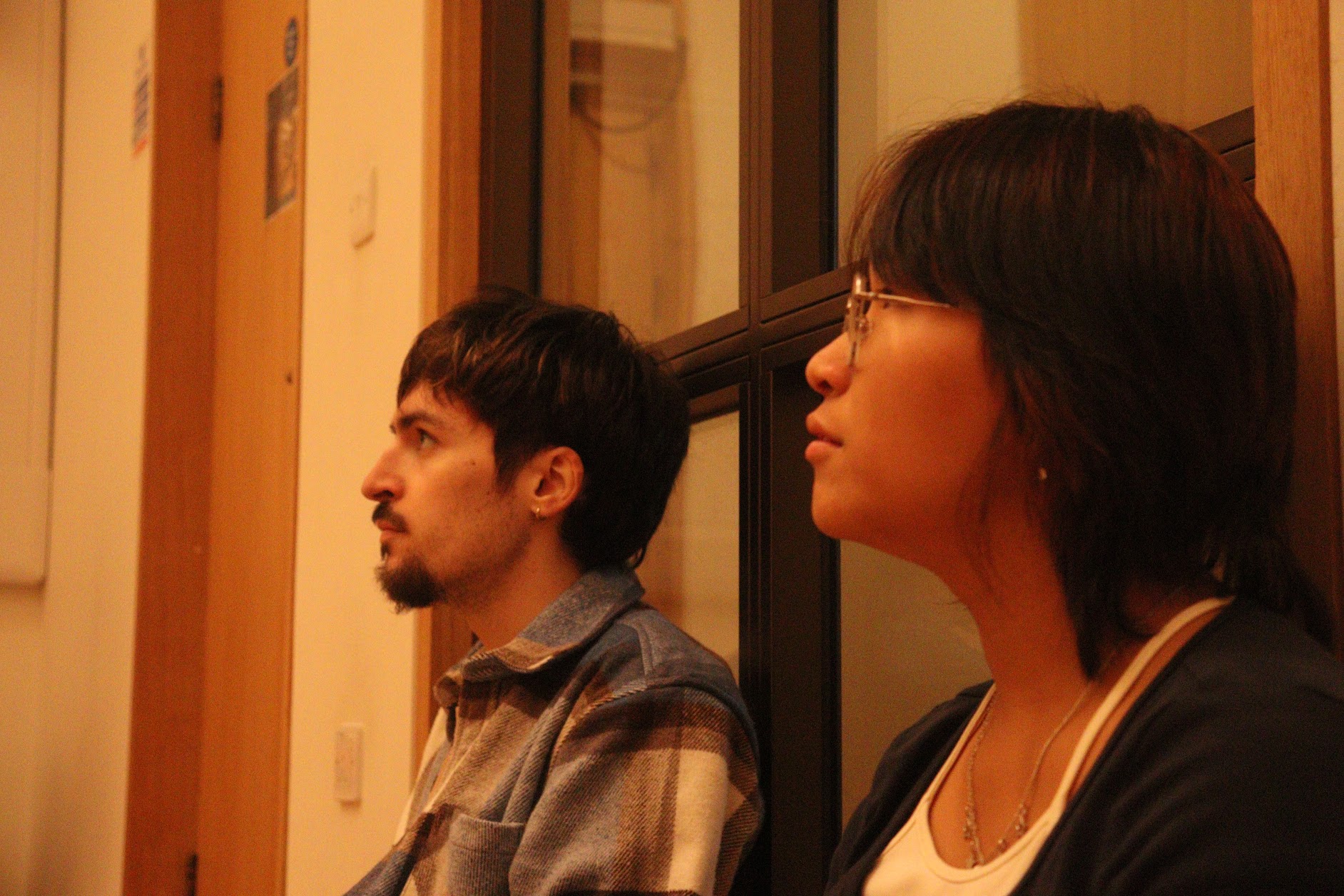
Wally and Kelly in rehearsal
When I arrive in the rehearsal room, the cast are welcoming, and funny. Georgia Graham, a chorus member, tells me how it’s interesting that the chorus is composed of young newlywed women – parallels for Iphigenia – and about how significant movement and dance are for this role; I’m looking forward to seeing the product of choreographer Azriel Farlam’s work with the chorus. This gets me wondering about how other characters see Iphigenia, so I then join Clytemnestra’s actress, Michelle Rodrigues, on the floor. We talk about how Clytemnestra, like most other characters, thinks she’s in a different, lighter genre than she is (‘The Marriage of Iphigenia’, Wally suggests). She arrives in the play, after all, thinking she’s about to watch her daughter’s joyful wedding to Achilles. It’s Agamemnon that brings tragedy with him. The show will make good use of the comedy that develops from her misunderstanding, but Clytemnestra isn’t a flatly comic character. Language is central again: Clytemnestra becomes less the mother of the bride and more the rhetorician as the play develops. The only defence she can offer her daughter is emotional appeal through beautiful speech. I want to know about Iphigenia and language, too, so I speak to Ademide Obagun, who’s playing Iphigenia, about learning the ancient Greek. She explains that the placement of the moments in Greek, and its distribution between characters, is important, though Wally and Kelly want to leave it to the audience to figure out how.
As you know, I’ve promised not to give you any concrete spoilers. I wish I could say more, but I think Wally, Kelly and the cast and crew of Iphigenia are going to say it better than I can.
Words by Grace Lea. Photos courtesy of Hannah Bridgeland.
Iphigenia at Aulis is at the Oxford Playhouse from the 4th to the 7th of November
You may also like
The Last Dinner Party: you are cordially invited to tone it up
The Last Dinner Party have only released one single and yet they’ve supported the Rolling Stones a

Sri Lanka Needs a Prayer – But it Also Needs a Revolution
Ten years after the end of Sri Lanka’s civil war, terror has returned to plague our country once m

The Slav Defence
There are no windows in the Carlton conference hall, only chandeliers sagging heavy with diam