

Under Pressure: Oxford Fashion Gala
About a year ago now, I came across a Cherwell piece on the origins of the word ‘diva’. Before even reading, I texted my friends: ‘Bet you there’s no explicit reference to its roots in black queer history’
Unsurprisingly, I was right. Beyonce is mentioned, as is queer culture, yet its explicit origins in black queer spaces was all but ignored. How do you write an essay on the etymology of a word, without knowing the etymology of said word? Such errors are confusing beyond my comprehension, yet I’ve become astutely aware of the co-opting of language popularised in black spaces, and subsequent erasure of context. To label this a form of micro-colonisation would likely be met with pushback, discomfort and shock—surely it was an innocent mistake.
Who exactly is it innocent to?
This year, the annual Oxford Fashion Gala has announced their theme: ‘Diva’. This will be held at Rhodes House, named in memory of Cecil Rhodes: British Imperialist and former prime minister of the Cape Colony, whose companies enacted mass violence, colonial conquest, starvation, hangings, racial segregation and genocide in present day Zimbabwe. Upon entry to this university, I distinctly remember feeling taunted by claims of wanting to protect black students, while refusing to remove a statue heralding a figure of racial violence. Insistence that the Rhodes scholarship was something those from the Global South should be grateful for, coexisting with the reality that during the 2015–16 Rhodes Must Fall campaign at Oxford, reports indicated that some donors and alumni threatened to withdraw substantial financial support from Oriel College if the Cecil Rhodes statue was removed. And now, the idea of uplifting and honouring black and brown queer people in the home of someone who dedicated his life to the murder and pillaging of those who looked like them and their land.
The Oxford Fashion Gala, on Instagram, declared: ‘This year’s theme, Diva, honours the legacy of queer people of colour. These images, some taken from Paris Is Burning, pay tribute to the Black and Latino queer communities whose creativity, resistance, and self-fashioning shaped ballroom culture, fashion, performance, and nightlife.’
This provoked an intense, visceral discomfort. To put it simply, what gives you the right to take from the archives of the ballroom, in Oxford of all places? Who says queer black and brown people wish to be honoured by you? The entitlement to cultural ownership possessed by those outside of marginalized groups; specifically in the context of anti-blackness, is an audacity repetitive yet full of surprises with how far it will go. When the US currently detains black and brown people in camps, when a black boy was shot dead for supposedly stealing four waters, and with Uganda introducing new anti LGBTQ+ legislation, I wonder how the unsolicited drawing from ballroom archives does anything to aid queer black and brown rights. It is equally questionable whether this unsolicited homage justifies the personal desire to engage in a cultural practice that is not your own.
I observed the reaction of the queer black and brown people around me, this immediate agreement, recognition that this is uncomfortable and undesired. Accompanied by the fact that the real proprietors of this cultural movement, are located in the United States and there are truly so few true representatives of what is being highlighted at this gala. So instead I turned to those who are authorities on ballroom culture to understand if this was a phenomenon they were familiar with, and what was to be said and done.
Jose Esteban Munoz’s Disidentification, consistently declares that queer performance creates worlds beyond identity. Underground culture became something extravagant and undeniably its own—queer performance was about ‘transformation, about the powerful and charged transformation of the world, about the world that is born through performance,’surpassing archives, references and aesthetics. Munoz’s labelling of ethnic minorities as ‘minoritarian’ and predominantly white cultures as ‘majoritarian’ is applicable with respect to the fashion gala. Disidentifications argues that minoritarians are excluded from majoritarian spheres, therefore create alternative social worlds of their own, spaces functioning as sites of survival and resistance against ‘the hegemonic supremacy of the majoritarian public sphere.’ Then a problem occurs; the majoritarian encounters the minoritarians’ culture.
Now before I continue with Munoz, I think it is important to note that oftentimes the worst thing that can happen to a majorly black cultural space is for what we create to reach the public sphere: once it has been captured, it becomes immensely difficult to preserve. Munoz warns that majoritarian spaces and weak multiculturalism often operate through absorption, as opposed to transformation. The cultural practices of the minoritarian are incorporated into dominant institutions whilst neutralising their political force and, importantly, insisting they are doing the opposite often in direct opposition to the critique of minoritarians. What begins as a counterpublic practice becomes subsumed, turned into spectacle, and celebrated for its aesthetic value whilst the histories of exclusion and struggle which produced it are amputated.
It was at the two-year point of attending this university that my disillusionment with any space that championed being inclusive of black people reached new heights. Frank B Wilderson’s theory of Afropessimism returned constantly to mind. What was once overly pessimistic to me, increasingly became my reality. Wilderson argues that anti-blackness is a foundational structure upon which projects themselves are built. It persists even within spaces that understand themselves as oppositional to domination. Wilderson identifies a ‘third tier of terror’ found in counter-hegemonic and revolutionary thought, where black flesh and energies are mobilised in service of broader liberationist agendas without authorising specifically black ethical and political concerns. The Fashion Gala’s claims of honouring black and brown queer cultural production was also unsettling and a stark reminder of the way in which anti-blackness continues to reproduce itself even through gestures ostensibly intended as celebration.
The fashion gala’s invocation of ballroom culture also raises questions about whether the event engages with ballroom as living minoritarian tradition, or whether it participates in the majoritarian appropriation and depoliticisation of cultural production by marginalised communities under the guise of language of inclusion and celebration. Perhaps the obvious response is that the Fashion Gala makes no attempt to recreate ballroom culture, as their language suggests an exploration of camp and ‘diva’ culture in opposition to rising ‘beige minimalism’. Returning to that article that has lived in my mind since I read it a year ago—contemporary understanding of black queer cultural production, from ballroom archives to AAVE, as well as terms like ‘diva’ and ‘camp’, routinely detaches cultural practices from their origins once they enter the public sphere.
Whilst often understood through Susan Sontag’s famously depoliticised account, camp has long functioned as a mode of political expression and performance from those excluded from dominant structures. To invoke camp as though it exists independently of these histories risks repeating precisely the process Muñoz describes. The cultural form is aesthetically preserved, whilst essential conditions that produced it are rendered secondary. There is a particular irony in positioning ‘diva’ against beige minimalism and quiet luxury. Even if the gala’s interest lies less in ballroom culture itself than in a broader culture of theatricality and diva performance, these are inseparable from race and class. The diva of the 2000s exists beyond a relic of twenty-first century celebrity culture. The category was racialised. Black women were divas because of carried assumptions of entitlement or difficulty, whilst white women had their racism against black people ignored in favour of viewing them as cultural icons and spotlighting their experience in a misogynistic industry.
Most frustrating of all, public critique opens the doors of response. In making people aware of the disdain of black queer communities who reject this cultural appropriation, I inadvertently consent to a carefully scripted public statement explaining and justifying said cultural appropriation which may appear politically correct, but ultimately is the same tired response black people have heard time and time again. Whether it be to protect the platform of those who have used racial slurs, worn blackface, bullied black people or even murdered them, it all boils down to the same statement: an unbreakable shield to protect the appropriator that is so often unavoidable for the black person who challenges their action.
At this point, someone might reasonably ask what exactly the alternative would be. After all, black models appear in the promotional material, money is being raised for a worthwhile cause, and the gala has highlighted a black female designer so this is all good, right? Well, my discomfort has never been reducible to a question of representation.There is no checklist of performed acts of inclusion capable of resolving deeper contradiction. The issue is not that there are too few black faces in the room, it is the room itself. It is that resistance to exclusionary structures which brought ballroom, camp, and black queer cultural production is ignored by the celebration taking place within an institution with unseverable ties to empire and power. Sometimes, the most politically responsible decision is not to search for the most inclusive way of doing something. Sometimes, it is to recognise that not every cultural form requires institutional adoption and should instead be left alone.
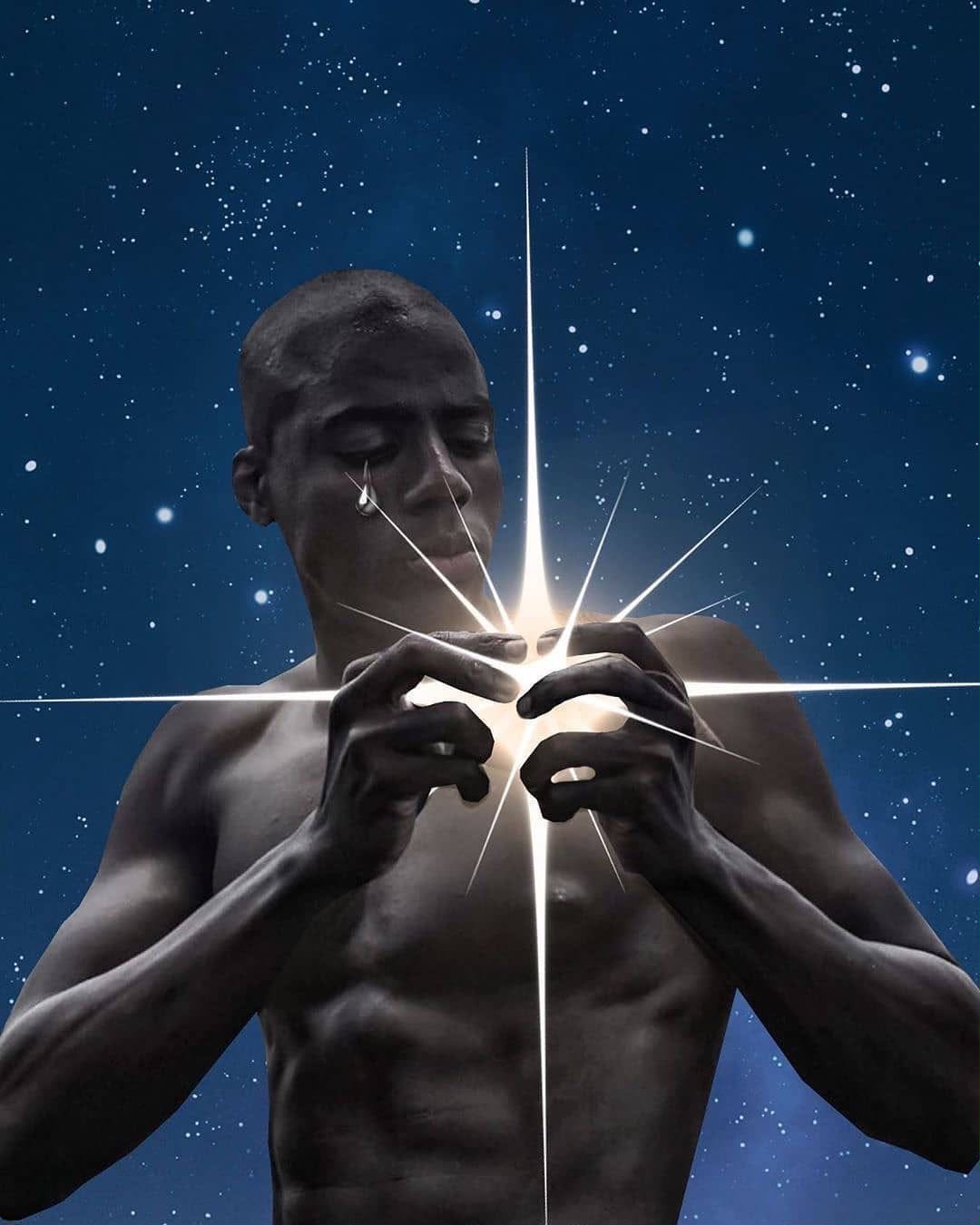
Words by Damola Sijuwade. Artwork is ‘Field of Hearts’ by Alexis Tsegba
You may also like
Human wrongs in Geneva
Numerous underground nuclear shelters are now being used to house Geneva’s asylum seekers, out of
Sissy fascism; a watershed moment
The Lover is playing at the Keble O’Reilly Theatre tonight at 7:30pm for the last show of its run.

Icon of the Week: Pedr Charlesworth, The Man Behind Byke
Pedr Charlesworth is the man behind Byke (formerly Oxbikes), the business re-vamping old bikes and g