‘What the fuck are they feeding you guys?!’: on the persistence of creativity in a digitally entrenched generation
For a platform so routinely cast as the emblem of cultural decline, accused of eroding attention spans, diluting originality, and trapping us within an endless scroll, TikTok has unexpectedly presented us with a startling contradiction — becoming a fertile ground for one of the most radical creative renaissances of the last decade. Its anonymous, unpaid and untrained, video and music editors are mutating creativity in the most innovative of ways, producing some of the most compelling audiovisual art of the moment. So the question isn’t, ‘is creativity dead’ but rather, ‘what the fuck are they feeding you guys?’
The paradox has to lie in perception. Whilst the digital sphere is often dismissed as a zone of derivative content and commercial mimicry, TikTok evidently has the ability to defy that binary. It’s very easy to mock the endless dances, influencer culture or AI-generated slop that populates its surface, I get it, but beneath the algorithmic sludge lies unexpected innovation. The platforms editing culture, often born from bedrooms and burst onto millions of screens in seconds, is one of obsessive detail, sonic precision, and visual alchemy. What’s particularly moving to me, and in some ways, radical, is the lack of ego. There is an anonymity to this work that borders on spirituality, a hunger for recognition without ego, for the satisfaction of timing a clip to cut to an 808 drop with split second precision.
The platform has recently become a playground for sonic experimentation, with international styles and internet-born genres colliding in unexpected ways. Jersey club, trap, Brazilian Phonk and DIY drill are circulating alongside each other, generating hybrids that feel both chaotic and precise. Producers are layering Michael Jackson hooks onto hoodtrap beats, and mixing the hypnotic vocals of Sade onto infectious Jersey kick patterns. They are flipping vocals and chopping them onto phonk bass, speeding them up into breathless and addictive loops that are impossible to resist. They are taking the old and reworking it. Sampling and distorting in order to reimagine, a process through which an entire generation is articulating themselves through remix, rhythm and visual play.
This same logic extends to video culture. Entire editing subcultures are dedicated to reassembling fragments from some of the most visually resonant film and television of the past decade. Ryan Coogler’s Creed, John Singleton’s Snowfall, surreal montages of the work of Jordan Peele are lifted from their original contexts and reimagined against new sonic backdrops. In this process, irreverence becomes a mode of reverence, with the willingness to cut, distort, and repurpose testifying to the enduring power of the source material – even as it is being pulled apart. They are saying nothing is sacred, everything can be made new. And yet, what are the implications when a looped beat posted by an unknown teenager in São Paulo becomes the sonic backdrop for hundreds of thousands of other videos, each remixing it further? Ownership is blurring into an originality that transforms art into an endlessly circulating process through the constant reimagining of what already exists.
By no means is this an attempt to glorify TikTok, but rather an opportunity to talk about the refusal of institutional legitimacy that makes the creativity on the platform all the more fascinating. The lack of strict copyright enforcement in the traditional sense means that creators are freed from the bureaucracies of ownership, and as such can repurpose and remix without constraint. We have been historically taught to recognise successful creativity through markers such as publication, exhibition, monetisation and permanence. TikTok destabilises these very hierarchies as its art is transient, fast, communal and remixable. It doesn’t wait for approval, or ask for permission. Perhaps this is what makes it so powerful, and maybe also so terrifying for those who mistake youth for apathy. These creators are not driven by gallery invites, grants, or even financial return, the currency is the love of the game.
Of course, there are risks in overstating the utopianism of TikTok creativity. Algorithms are not neutral. TikTok undeniably suppresses, censors, and flattens just as much as it amplifies. Much of the best work still operates in the shadows of the app, often without due credit as ideas are easily copied and co-opted into trend cycles. The speed of TikTok culture also means that truly boundary pushing edits might disappear further into the scroll. But this makes the labour of these creators even more profound, the fact that they create despite this system.
Perhaps the question is not, ‘is this art?’ but rather, ‘how do we reconcile with the fact that it is?’ That some of the most meaningful and moving cultural production happening right now is ephemeral, unsigned, unpaid and unaccredited? This very format resists permanence, how can we ever archive a medium designed for disposability, or honour a genre made the scroll? Because, the reality is, once I’ve seen it, liked it, saved it, and sent it on, I scroll onto the next. Yet, this transience does not diminish its value, these edits are sincere and the skill required is undeniable. They demand micro-timing, chromatic shifts, visual literacy, and cultural intuition which are all rigorous and time demanding forms of expertise.
To dismiss such work as trivial is to simply misunderstand the stakes. This creativity is layering sound and image in ways that insist on a new critical vocabulary, refusing the boundaries of genre or medium. This gestures toward a future in which form and feeling are inseparable, and where artistry emerges not despite the algorithm but in active dialogue with it. These creators are not passive consumers of digital culture, but are instead subverting its structures, bending them into spaces where personal obsession and collective memory collide. Creativity, then, has evidently shifted its ground, taking root in the most unlikely of places, pulsing not in galleries or concert halls but in your very pocket.
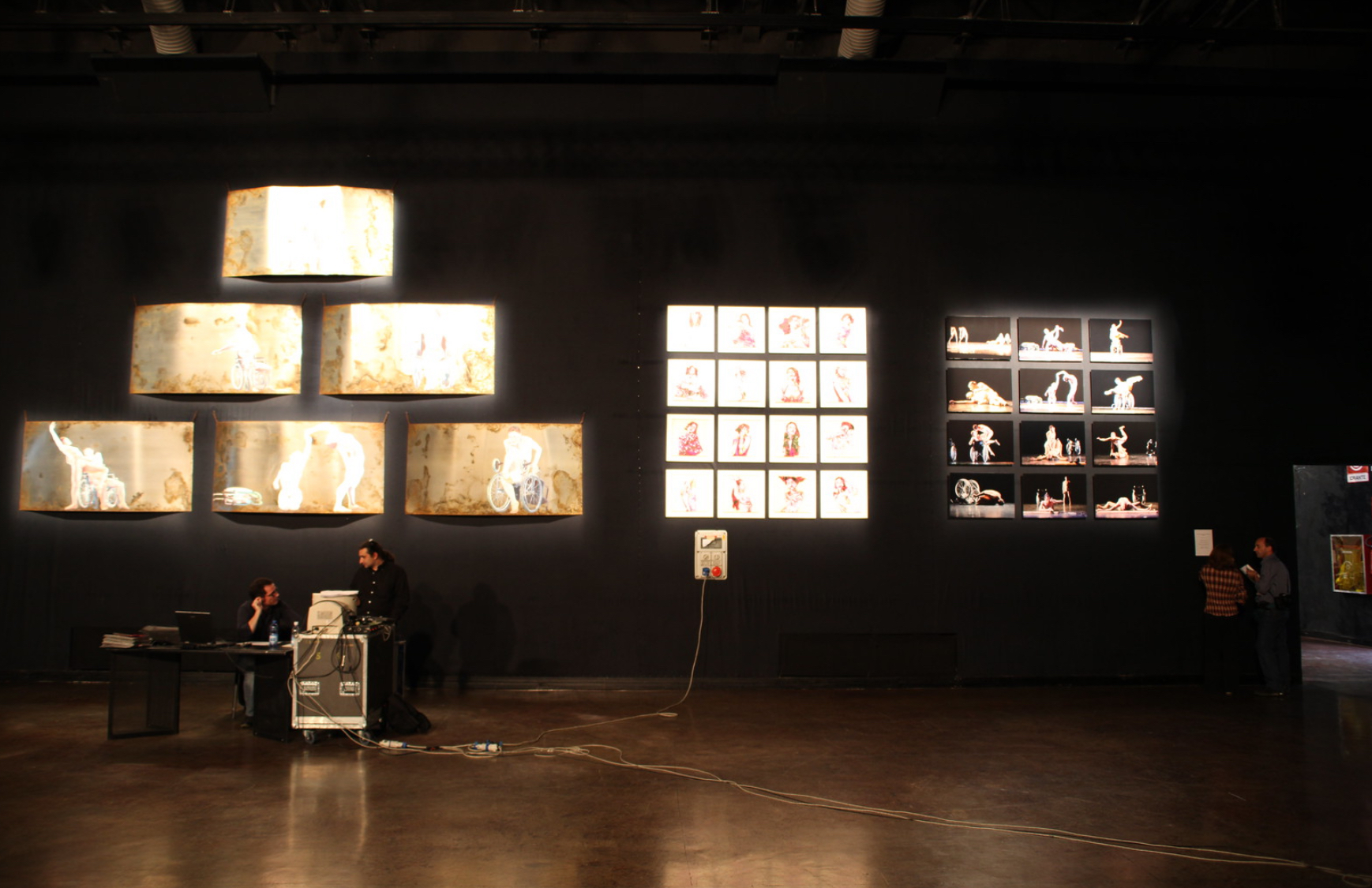
Words by Gabriella Ofo. Image courtesy of Bruno Cordioli via Flickr.
You may also like

The Isis on coverjunkie
The Isis is featured on coverjunkie, a website dedicated to the best magazine covers
Behind the scenes of Closer
‘Whether you half arse it or give it everything, student drama will take up a lot of
Switching Off: The Pleasures of Idleness
Boredom today is the absence of a good 3G signal. I think that it’s worth asking whether or not th