

This scene kicks and screams: A response to ‘Ecology of a scene, or Why Oxford is, and always will be, a wasteland of musical creativity’
To the Editor,
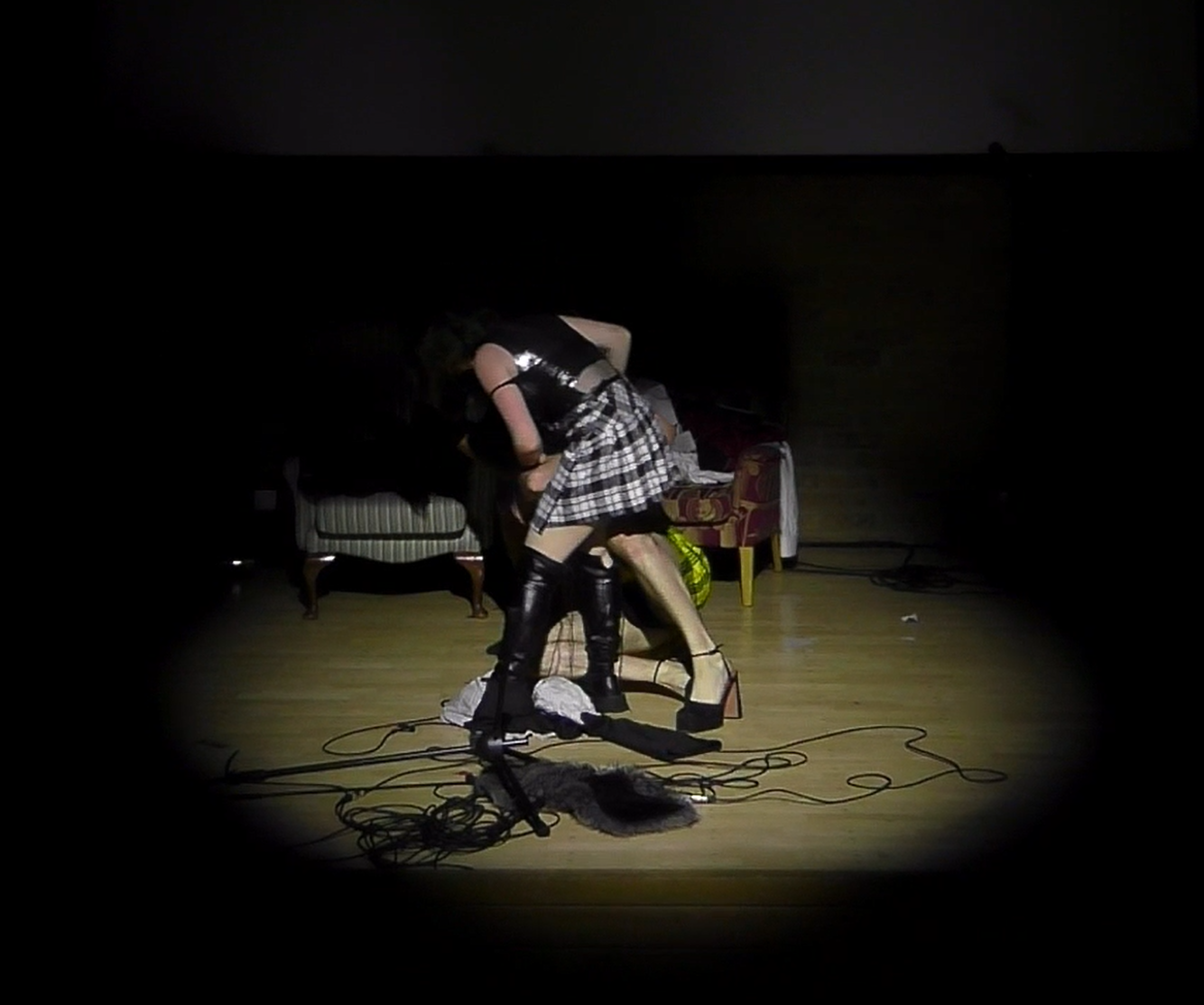
It’s around 8.30pm and I’m backstage at the JdP music building at St Hilda’s. I’m sweaty and can barely walk in the tight dress I chose completely of my own volition. The second half of the concert is about to start and, as is typical of me, I’m not sure when I’m supposed to be on stage, so I tentatively tap on the bathroom door. I hear the whirr of a razor—Giuliana Tritto is in there, putting the finishing touches on her newly shaved head, which she shaved on stage, in silence, at the end of the first half. I feel bad disturbing her with my silly logistical questions, especially after what must have been a physically and emotionally taxing show: on a blistering June day, the performers and composers have been convulsing on the floor, screaming, hysterically laughing, play-fighting, running into walls repeatedly. In the second half they will continue to scream. Despite this, she’s as friendly and helpful as ever.
Giuli is one of the creators of Screaming Mouth, a new music collective in Oxford. Their inaugural concert I pledge allegiance to angry women was centred around female rage, an ‘evening of sound and fury’. When I was invited to participate I felt the offer was too enticing to refuse. Many of the works were hybrids between musical pieces and performance art, a mix of pre-recorded and live performances. Many were difficult, even harrowing, to watch: Giuli’s bury your dead deep in the earth, Ynyr Pritchard’s FIGHT, BABY, STAY, BABY, SEXY, BABY, and Leandro Landolina’s abject larynx come to mind—look them up on YouTube! The concert went on for at least an hour longer than advertised, leaving everyone, from performers to stagehands to audience, in varying stages of tiredness. I lost my voice for at least an evening after going a bit too hard on the whole screaming aspect, but I guess that’s the price to be paid for a good old cathartic collective musical experience.
Where might Screaming Mouth sit on Cameron Bilsland’s food chain of a musical scene? Probably amongst the ‘punks of the DIY movement’, a catch-all using ‘punk’ to encompass anything outside of the mainstream; or perhaps meaning ‘punk’ in a literal 1970s sense. Either way, this hierarchy doesn’t make any mention of experimental music, or even classical music, or really anything outside of pop, rock, jazz.
I would like to put a word in for the experimental and contemporary classical music at Oxford, of which there is a fair amount, if you know where to look: Ensemble Isis, an experimental ensemble made up of students; EXMO (Experimental Music Oxford), run by Zach DiLello; EMPRes (Electronic Music Practice Research group); Red Lipstick; avant-garde composer Jennifer Walshe, a Professor of composition. The music made by these experimental composers and collectives is not easy listening, and it’s a far cry from the mainstream, the ‘endless hordes of cover bands and jazz groups’ in Oxford.
But avant-garde and popular music have not always been as separate as they might seem to be now. From The Beatles taking inspiration from Pierre Schaeffer’s Musique concrète to Brian Eno and Aphex Twin’s John Cage-inspired ambient music, the two genres have long existed in a co-constitutive, dynamic relationship that has been consummated again and again by digital sampling, interpolation, indirect and direct inspiration. Nowadays you might look to artists like Björk, FKA twigs and Arca for evidence of how experimentalism has made its way into the mainstream.
As for Oxford’s music scene, I don’t believe that it’s as inherent to any fundamental essence of the city as perhaps it once was. I’m sure that if you squeezed Christ Church’s halls hard enough the sounds of organ-accompanied choral music would be what leaked through. But this hardly seems relevant in a musical landscape that reflects our current globalised condition. While place always plays a part in the performances we hear, Oxford’s music scene is kinetic, uniquely characterised by movement, because the students and academics who partly constitute it are often only around for short periods. Whilst it is tied to Oxford, I see these ties as loose, like a kite tied to the city’s trees, floating above it, buffeted by winds that waft musicians and ideas and genres around.
When I’m talking about the movement of musicians, I’m thinking for example of a concert I saw last term in Oxford by Samuel Boateng, a research fellow in music at St John’s as well as a jazz pianist, composer, and playwright, with the Adepa ensemble, and various other artists. Samuel’s music explores questions of identity, Pan-Africanism, and transnationalism. While it was a jazz concert, it was also conceptual in some ways, touching on environmental themes and bridging cultures, with a virtuosic performance by vocalist and mbira player John Falsetto. A particularly touching song by Samuel was called ‘Put me in your pocket’ and explored themes of place, displacement and homesickness.
Listening to some of the music I’ve described here does, to Cameron’s credit, require a ‘degree of self-effacement’, even sometimes putting yourself through ‘humiliation rituals’. Ynyr Pritchard’s piece at I pledge allegiance was acutely attentive to the performativity of performance, an exercise in humiliation. Watching them ask the audience (in a tone both provocative and despairingly resigned): ‘Do you want to see me do it again?’ before repeatedly running into a wall would be an embarrassing, uncomfortable experience for those of us used to the easy cheer of pop music.
Listening to music is a deeply personal, intimate experience, possibly more so than watching a play or looking at an art piece. In the age of digital streaming on personal devices, many of us use music to colour our lives while we work, travel, and run our daily errands. Because of this, experimental music will inevitably draw smaller audiences than more popular styles—it requires a level of concentration and attention that our listening habits don’t often permit. It has the capacity to disturb, to cause discomfort.
But Pritchard’s piece, like the others performed at this concert, as well as those by the other artists I’ve mentioned, is original and poignant. This is music that is about something. The crowd at I pledge allegiancewas small and mostly composed of friends and family members, but this does not negate that the composers here are an integral, unique part of Oxford’s music scene. This is a scene which does contain originality and innovation, even if some might consider it ‘unlistenable’. Even if you have to peruse the ‘dark and murky areas’ of the map to find it.
Most of what I’ve mentioned here is drawn from my own experience, from the musicians around me whom I admire. Some of it is easily listenable, and some of it isn’t. I don’t have an encyclopaedic knowledge of Oxford’s music scene, but I do have immense faith in it. So, maybe consider challenging yourself in your listening—go to Screaming Mouth’s next concert, perhaps. Or don’t. But I’ll definitely be there.
Yours sincerely,
Lilia Goldstein
Read Cameron Bilsland’s original piece here.
Words by Lilia Goldstein. Image by Franco Lopez, with permission. Thank you to the Jacqueline du Pre music building for hosting this event.
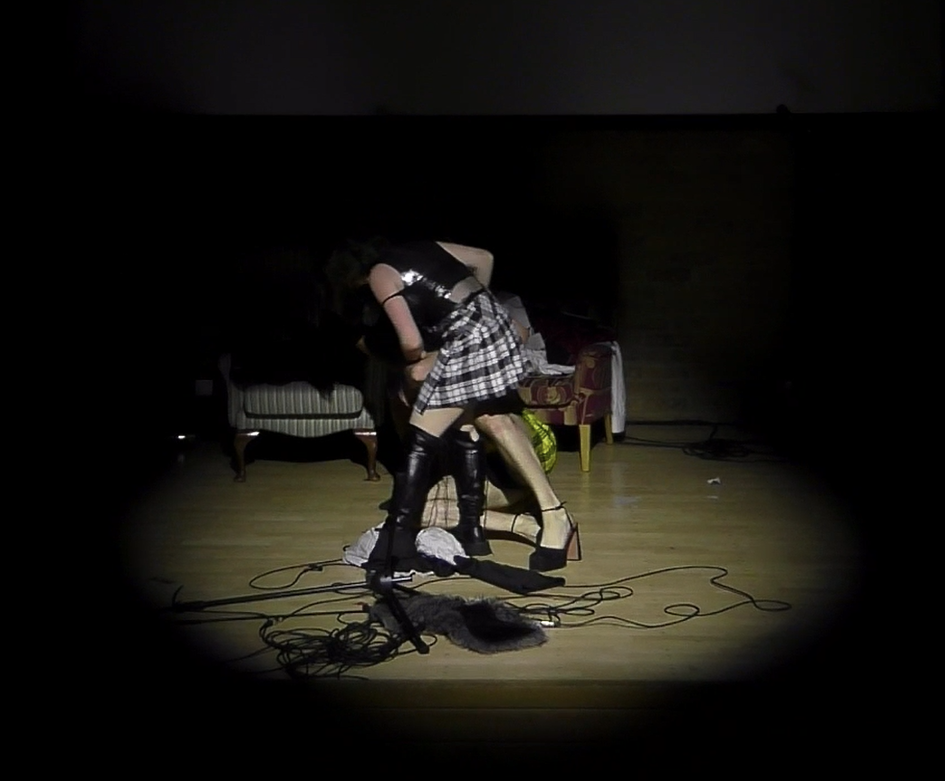
Image by Franco Lopez, with permission
You may also like
Photo Essay
This project started with a two-hour conversation about waistlines. I started thinking about how an
Julia Kristeva: An Intellectual Rebirth
In a recent talk on the subject of French Intellectuals, Noam Chomsky asserted that “France is
Beer is Arab, but whiskey is European: Part II
Part I of this essay can be viewed here. In 1954, Cheikha Rimitti released ‘Charrak Gattah,