TW: Genocide
In times of conflict, the images that reach us don’t just inform us, but play a vital role in deciding who, and what, the world chooses to remember. During the Vietnam War, widespread access to television sets brought the scenes of violence into American living rooms, eroding support for the conflict and accelerating U.S. withdrawal. In 1991, a videotape of the LAPD brutally attacking Rodney King sparked nationwide outrage, and bought attention to the issue of police brutality. In 2004, leaked photographs of abuse at Abu Ghraib prison in Iraq undermined U.S. claims to moral authority and deepened opposition to the Iraq War.
Time and again, we have seen how access to new forms of media has shifted who gets to tell the story. When LBJ announced he would not be re-running for election largely as a result of the Vietnam War’s unpopularity, he questioned whether previous U.S. military campaigns would have succeeded in the age of television. Gone are the days where a single (government-backed) narrative could dominate public perception: control over the narrative has become heavily contested. Today with two-thirds of the world’s population on social media, everything is recorded, and circulated globally.
Or it should be.
Unlike television and video footage, what reaches us is no longer simply a question of what is recorded, or access to said recordings — it is dictated by our own personal algorithms. The algorithm caters to all varieties of your interests with inconceivable specificity, meaning there is no escaping its pull. It is an exact science of the new and known, a balance of the mainstream and the individualised. In one doomscrolling session, my feed can vary anywhere between AI-generated filler videos and starving children in Gaza begging for my attention.
These videos of Palestinians stand out starkly on my feed. They serve as a reminder of the acute pain felt by millions, so distant from the liminal space of social media where reality is overwhelmingly blurred with entertainment. It is not only the content of the videos, but the context, the urgency that hurries me into liking, sharing, donating. And, as expected, my engagement triggers the algorithm into recommending me more. Each video, a new child tripping over their own tongue, forced to beg for help in the language of the men who dictated the journey of their lives before they had even drawn breath.
The genocide in Gaza is the first to be livestreamed in real time, producing an unwilling generation of influencers, children and families compelled to package their suffering for visibility. Nowhere is this problem of the algorithm more disturbing than in the context of Gaza: even suffering must be curated for maximum engagement. The concept of the attention economy was coined in 1971 by Herbert A. Simon to describe the dangers posed by the availability of information alongside the rapid development of (and access to) technology. By recognising the relationship between information overload and attention scarcity, Simon wrote, ‘a wealth of information creates a poverty of attention.’ We are constantly in a state of information overload, and with the coverage of news and trending topics converging on social media, it is our highly personalised algorithms that decide what we give importance to.
And when videos compete by attention and engagement for visibility, content risks losing any value beyond engagement metrics. Social media fragments our realities, my algorithm shows me these videos from Gaza whilst others may never encounter the issue. We consume what we find engaging and what we find controversial, making it almost impossible for collective attention to form around any single issue.
There is no news on social media — only content, and the currency of our time has become the attention to which we give an issue.
In recognition of this worrying shift, some Palestinian creators lean fully into this ‘clickbait’ role, attempting to harness the algorithm. Some begin their videos with memes before switching to their devastation. Others have become so attuned to the algorithm that they know which words to highlight, and which phrases to increase engagement. And what happens when the right buzzwords alone fail to garner traction? Each video must become shockingly graphic — because it is not just the algorithm, but some sort of voyeuristic Western saviour complex that rewards these extremities.
Fawzaia is one such creator. Having amassed 103 thousand followers on Tiktok, and 3.9 million likes, Fawzaia is well-accustomed to the methods needed to boost attention. In watching her videos however, it becomes apparent just how weary Palestinians have grown of appealing to the facts alone. Do we celebrate the fact that Fawzaia, living in a warzone, has access to the same devices as us, and has been able to reach us? Or do we face the discomfort of seeing such images, and focus on questioning the need for such videos.
This is the paradox of social media. Since its rise, we have debated whether social media fosters solidarity or division. We point to its ability to connect us as proof of its power, yet in allowing the algorithm to control platforms, we’ve allowed it to dictate who and what we see. Too often, our conversations stop at how algorithms shape our own experiences. We lament over our ever-shortening attention spans, growing screen times, and living in a state of endless comparison. This self-centered view risks ignoring the communities who rely on visibility to survive. Which raises the question, what can we do? Like and share more? Try to boost their engagement? It seems that all forms of activism on social media become passive, and so we must ensure that we are active in our resistance to oppression.
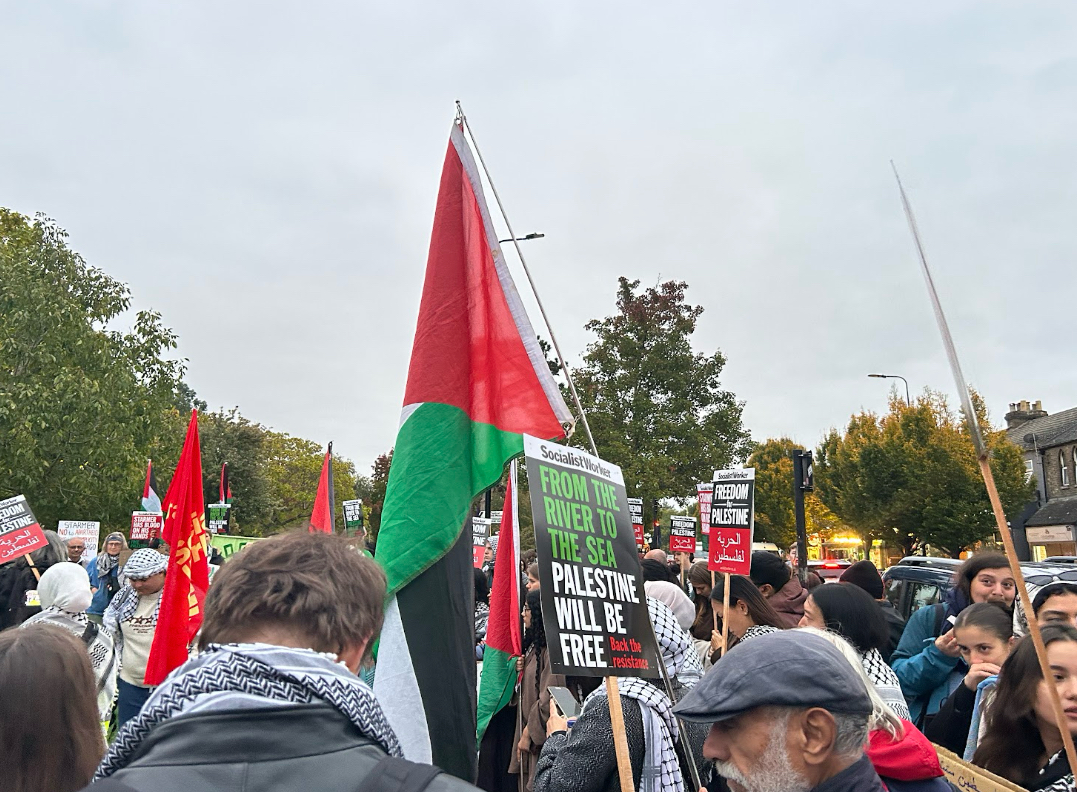
Because, even with access to the same devices, with the same power to reach millions, we have a status of privilege as viewers in this context. Social media gives the illusion of equality — anyone can post, anyone can go viral — but outside the screen, this is not the case. As viewers in the West, we have more economic privilege and political power, and a level of safety that Palestinians do not. So the responsibility lies with us: to boycott, to donate, to protest, and to apply pressure to our governments. Otherwise, social media risks becoming a stage where suffering is continuously presented, but never alleviated. When faced with fleeting glimpses into their suffering, we must do everything in our power to ensure that Palestinians exist in our conversations and actions — in our conscience — with growing permanence.
Words by Naima Aden. Image by Naima Aden.
You may also like
02/06/17: The ISIS Launch TT17
~ Join the ISIS team in Café Tarifa for the launch of this terms magazine ~ It’s been another
Greetings from Boston
Boston seems to stand alone amid the current political clusterfuck of America. Clusterfuck is not a
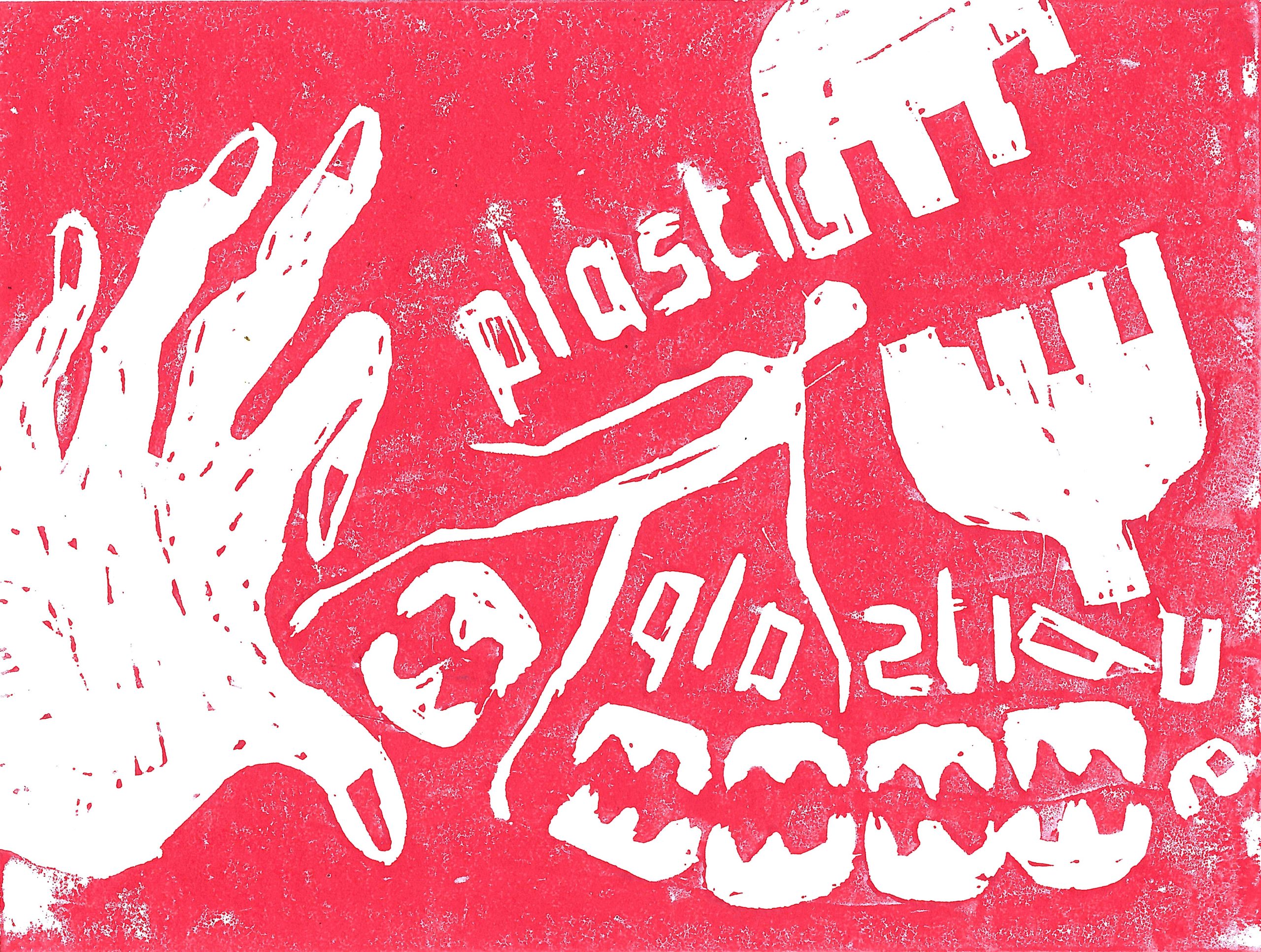
ARTIST SPOTLIGHT: Philip Kerr
‘Untitled’ Linocut print, 20x15cm “This piece represents the industrial p