
Go Figure
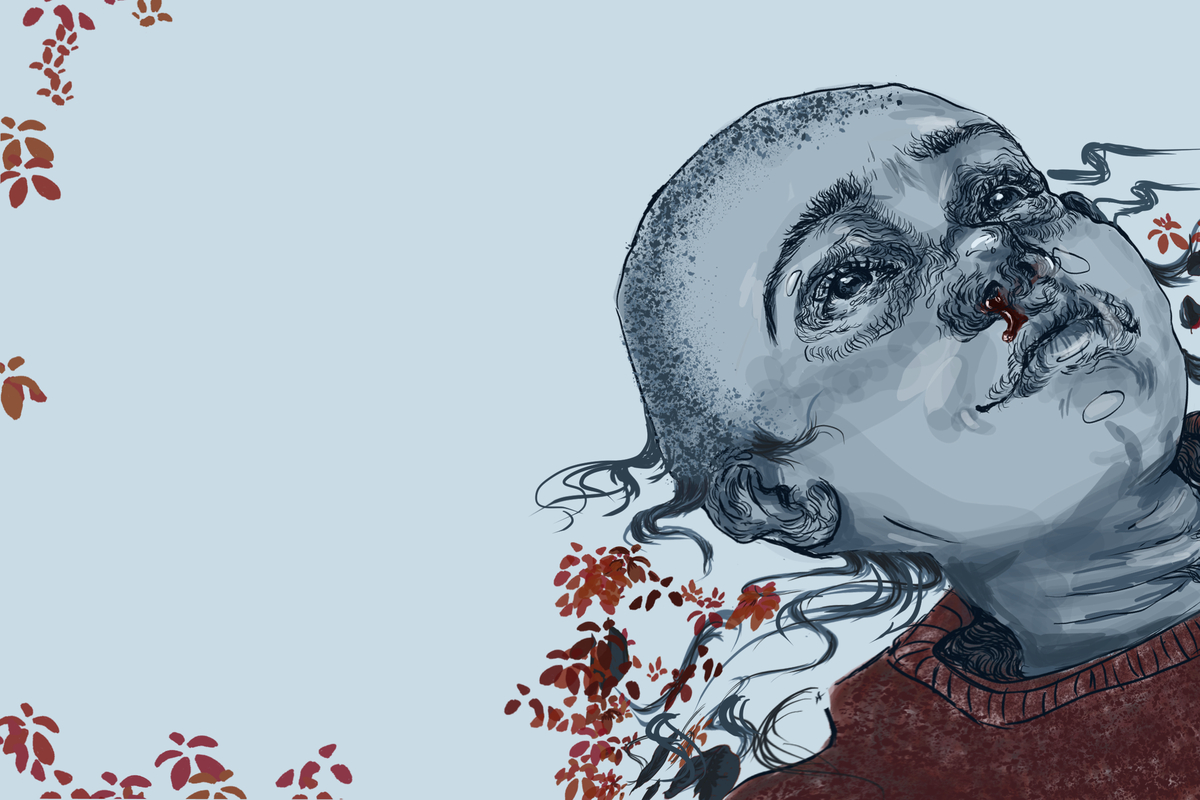
“During those days, women were mistreated to spare the guilty from chastisement. They even went as far as shaving women’s heads.”
Go figure.
I, whose remorse was
The wretched woman
Left on the pavement.
The conceivable victim,
Her dress in tatters,
With the look of a lost child;
Decollated, disfigured:
An echo of the departed
Who died for being loved.
A girl meant for a bouquet of flowers,
And smeared
With the black spittle of darkness.
A spirited girl,
Like a May Day dawn;
The kindest of creatures.
Defiled, but not understanding
That she has been defiled.
An animal entrapped in a cage,
By lovers of beauty.
And my mother; the woman,
Would happily cosset
This perfect image
Of her despair on earth.
Following the Liberation of France in 1944, French women across the country were accused of collaboration horizontale: having sexual relations with German soldiers. They were publicly shamed and dragged into the streets like animals to be shorn. It was in this context that Paul Éluard, a French Resistance poet, wrote ‘Comprenne qui voudra’ (1944). He took a radically different standpoint to his contemporaries: he did not condemn the femme tondue nor condone her punishment. Unfortunately, however, the poem has only been translated a handful of times into English, and often unsuccessfully. Lloyd Alexander’s ‘Understand who will’ (1951) stands out as a particularly problematic rendering; he indirectly bolsters the misogynistic, silencing discourses which prevailed at the Liberation, for example through his decision to translate ‘les filles’ as ‘prostitutes’. By providing an English version much more in line with Éluard’s original aims in writing, my translation challenges the cultural stigma which has clouded historical discussion of the tontes for decades. ∎
Words by Grace Taylor-West. Art by Faye Song.
You may also like
Frozen In Time: A Classicist’s Portrait of Interwar Oxford
In one of the more blatantly cliché moments of my life, I watched the 1981 TV adaptation of Evelyn
Eggshell
Today she has scarcely moved. If there is understanding then that is what she feels this chrysalis S
BAIAE
Noon estranged all living things, Taking black heaven; Sucking in the sea, the (seven) hills.