
John Stezaker: The Future of Photography
The Photographer’s Gallery is tucked away behind the bustle of Oxford Street, a converted warehouse hosting three floors of gallery space. It is, it proudly boasts, the largest public gallery in London dedicated entirely to photography, and an institution “instrumental in establishing photography’s important role in culture and society”. Founded in 1971 by Sue Davies, it has been the champion of a medium that has often struggled to be regarded as an art form. Since 1996, its’ annual photography prize has offered a £30,000 reward to an individual who has “significantly contributed to the medium of photography”, with a list of previous winners including Juergen Teller and Corinne Day.
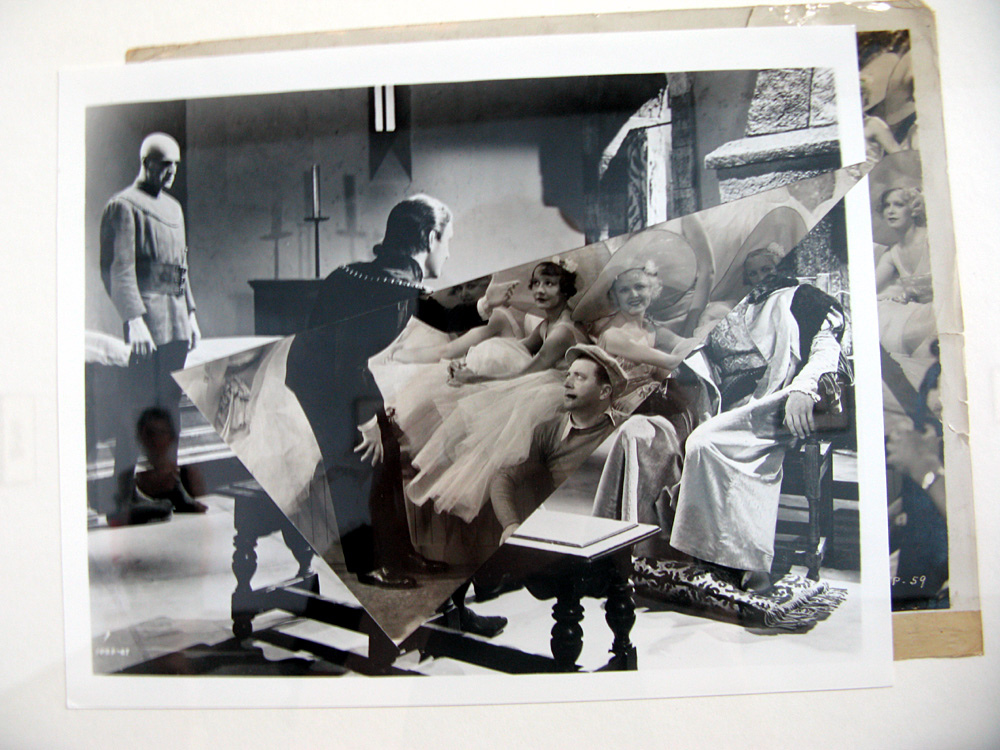
This summer the prize was awarded to John Stezaker, a collagist. Stezaker uses ‘found’ images, 1950s photographs of classic film stars and old postcards, and juxtaposes them to create new, hybrid images. In his series ‘Marriage’ he exploits the concept of portraiture and overlays faces to witty and often surprising effect. The images echo Dada/Surrealist photomontage and reference the collages of Hannah Höch and Joseph Cornell. But they are not his photographs, and Stezaker, from this output, cannot be called a photographer.
Despite visual brilliance, the technique and nature of Stezaker’s work has ignited fierce debate regarding the development of photography and the perceived failure of the prize to uphold the medium as a progressive art form. Stezaker’s work is fundamentally different to those of the other finalists. Included in the exhibition are several stark portraits by Pieter Hugo, taken from his series ‘Permanent Error’, and the works of the Japanese photographer Rinko Kawauchi. Both Hugo and Kawauchi approach photography in a manner clearly in tune with the ethos of the gallery; through his photojournalistic approach to portraiture, Hugo poses ethical, social and environmental questions, while Kawauchi captures brief moments of temporality that in themselves reflect the nature of photography.
The prize advertises itself as a “focus for debate and discussion”, which this summer it certainly proved to be. But is also advertises the forward-momentum of photography, and an individual’s significant contribution to the form. While recognition of Stezaker’s work seems to represent a move towards a greater appreciation of collage and old-fashioned techniques, the crucial paradox lies in the judges’ awareness that Stezaker is not a photographer, in the sense that he doesn’t use a camera and, more importantly, he doesn’t create his own images. This begs the immediate question: how and why did he win a prestigious photography prize?
First published in November 2012
You may also like
The Rise and Fall of Internet Poetry
What if someone were to tell you that practically everything on the internet – from LOLcats to fac
On Jean Jones
Centered in Pembroke JCR’s Jean Jones exhibition, disrupting the otherwise conventional gallery la
(translated from French)
When we were finally dressed up fit for a Sunday, Elsi would drive us to the Auberge du Cheval Blanc