

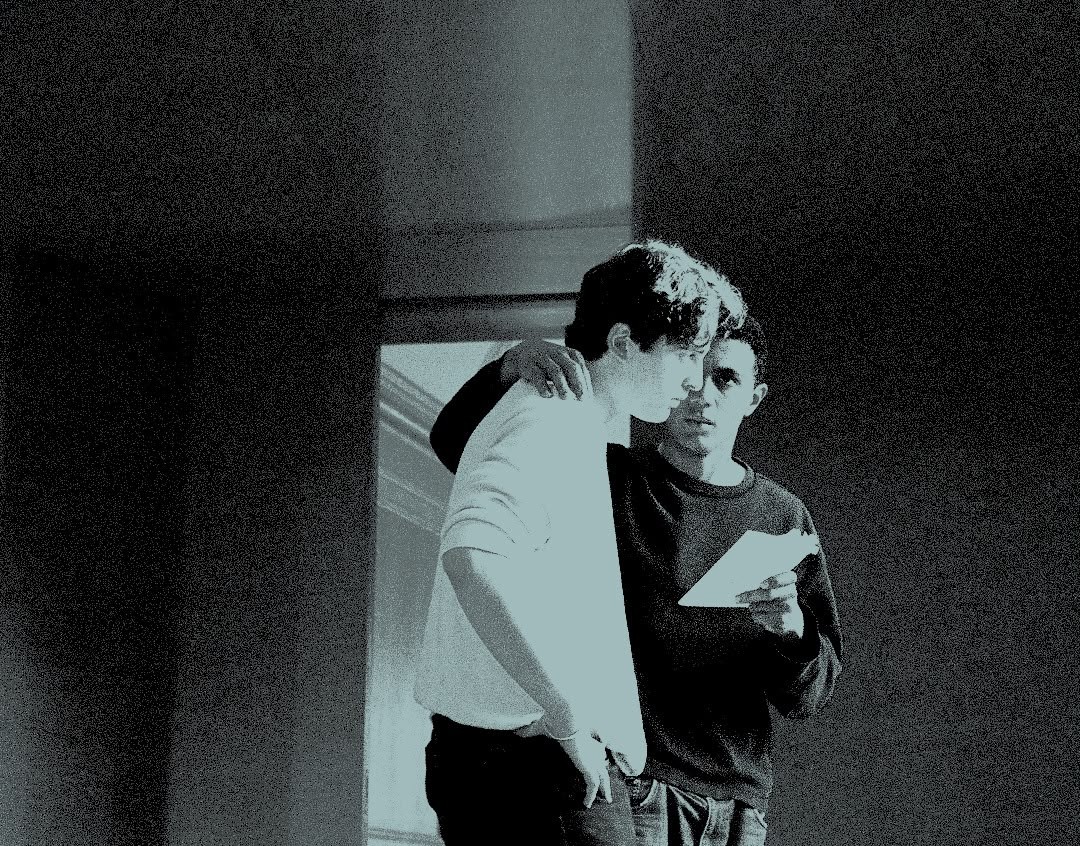
The Seagull – In Conversation with Lighthouse Productions
On the 17th of October 1896, Anton Chekhov’s new play was hissed off the stage of St Petersburg’s Alexandrinsky Theatre. The audience had come for an easy comedy, laughed in the wrong places and then in none, and the playwright, so the legend goes, slipped out into the street and vowed never to write for the theatre again. The play was The Seagull. Two years later, the Moscow Art Theatre staged it to acclaim, even adopting the bird as its emblem that still hangs on its curtain to date. Yet Chekhov, who had called the play a comedy and meant it, remained uneasy about its reception. Over a century of reverent productions have made the term ‘Chekhovian’ shorthand for handsome sorrow, extended silences, and actors ‘gazing into the middle distance’. Yet beneath the stillness of The Seagull, is a play full of restless ambition, bruised egos, and comic misfires in which everyone wants to make something of themselves and to be loved for it. Lighthouse Productions’ forthcoming staging at the Oxford Playhouse seeks to recover this volatility, challenging the solemnity that has come to define Chekhov and bringing the play’s frustrations, absurdities and longings into sharper focus.
Set on a country estate in late nineteenth-century Russia, The Seagull follows a group of artists and their circle of family and friends as their ambitions and affections become increasingly entangled. Now in a modernised production by Alys Young, at its centre is Konstantin, a young playwright struggling to establish a new form of theatre and to win the approval of his mother, Irina Arkadina, a celebrated actress. His romantic interest in Nina, a young woman who dreams of becoming an actress, is complicated by her attraction to Irina’s lover, the successful writer Boris Trigorin. As desire, artistic rivalry, and unfulfilled ambition draw the characters into conflict, Chekhov traces the distance between the lives they imagine for themselves and the realities they struggle to accept. Konstantin, Chekhov’s young playwright, played by Ezana Betru, wants to make theatre that allows audiences to imagine beyond the world they know. As Betru puts it, theatre is a ‘dreamspace’ where ‘we wait for more sleep’ to go and ‘dream about the world.’ For Konstantin, the stage should open up possibilities that ordinary life cannot offer, rather than simply reproduce what is already there.
The desire to make theatre this form of revelation lies at the heart of Konstantin’s artistic ambitions, and of the play’s enduring uncertainty about what an audience comes to the theatre to see. The aspiration is grand, but Konstantin’s own relationship with art is much less straightforward. Initially, Betru understood his character’s pursuit of success largely through his work, but he has since come to suspect that Konstantin cares less about the work itself than ‘the way he’s received, especially by his mother’, the celebrated actress Irina Arkadina (played by Rowan Brown). Art becomes a means of securing recognition from someone whose approval he cannot seem to win.
For Alys Young, Lighthouse’s director, the question of what it means to create something new extends beyond Konstantin’s ambitions to the history of the play itself. Chekhov, she argues, has been ‘imprisoned by a very Stanislavski way of performing’, and the naturalistic tradition has too often converted a comedy into a slow drama which obscures ‘a lot of the energy bubbling beneath the surface of the script.’ The familiar idea of the ‘Chekhovian’ has become an obstacle in its own right, encouraging both reverence and dread where there should be curiosity. Young wants the company to approach the play as ‘new writing’, as assistant director Kate Burke puts it, attending to what is actually on the page rather than reproducing an inherited idea of how Chekhov ought to be. It is an argument for artistic freedom grounded in close attention, as the text must be understood before it can be made strange again.
The company that must make good on this artistic commitment was assembled from almost a hundred auditionees for only eleven places. What struck me most in speaking with the cast that the directorial team ultimately chose, was the precision and depth with which they spoke about their craft; thoughtful, introspective and technically assured, each bringing a distinct perspective to the work while sharing a palpable belief in theatre’s possibilities. They are a fiercely engaged ensemble, united by a desire to push at the limits of theatre and to bring something new to the Playhouse stage.
Rowan Brown reads The Seagull as a study in suppression, in which people ‘never say what they really feel,’ leaving the audience with only ‘the remnants of communication gone wrong’. Much of the play’s drama, to Brown, takes place in the distance between what a character says and what they mean. Betru identifies a corresponding selfishness as everyone is occupied with their own display of grief, meaning that no one is really ‘hearing anyone else’s thoughts and fears.’ These characters have an extraordinary amount to say about their disappointments, ambitions, and the lives they believe they should have, but what they struggle to do is make room for anybody else’s account of the world.
Cohen Rowland who plays Simeon, recognises the peculiar satisfaction that this sentiment affords an audience. There is something ‘cathartic’, he says, in watching someone complain on our behalf to no effect. This pleasure has an underside: ‘we’re quite happy that it’s gone wrong for them because it means it’s not going to go wrong for us.’ Theatre offers a distance from which to inspect other people’s failures, and perhaps to enjoy them, whilst leaving our own habits undisturbed. Yet that distance can collapse when we recognise ourselves in those onstage, as the behaviour we come to observe from a safe remove becomes uncomfortably familiar and we are confronted with the possibility that we might leave the theatre seeing our own relationships differently.
The cast’s interpretations of the play’s relationships extend this problem into the language of desire. Rufus Shutter, who plays Doctor Hugo Dorn and is among the play’s most detached observers, understands Dorn’s remark that, ‘all this love does nobody any good’ as a criticism of affection that falls short of genuine intimacy. What passes for love, he suggests, is often ‘romantic desire rather than seeing people as themselves’. The distinction runs through the play’s relationships, in which the characters become attached to what another person might provide, whether that be reassurance, status, artistic inspiration or the promise of a different life. Across the estate, Brown finds a ‘desperate, desperate search for stability’, although everyone is always moving, always losing something. Ambition promises to arrest that movement, and to make life feel more secure through achievement or recognition. Georgie Cotes as Marcia, offers a more direct diagnosis of the same impulse, ‘if you don’t actually like yourself, nothing you get will make you like yourself,’ showing that the characters’ unhappiness lies partly in their conviction that fulfillment is always elsewhere rather than in any reckoning with themselves.
For Sanaa Pasha, her understanding of her character Pauline leads her to a broader observation about artistic creation, stating that ‘the creation of art inherently holds both power and vulnerability’, and when it comes into contact with desire in the play, the tension between the two is ‘inherently quite erotic.’ The artist must expose something of themselves to another person while retaining control over how that exposure is shaped and received. In The Seagull, that exchange repeatedly becomes a form of seduction, seen in how Marcia reaches towards Konstantin through his writing and Irina draws Trigorin back towards her by praising his stories. To be recognised as an artist is also to be desired.
The boundaries between artistic admiration and personal affection, therefore, become difficult to maintain. The play’s central artistic conflict, between Konstantin’s experimental theatre and Irina’s established profession, is entangled in the same desire for recognition. Though Konstantin presents himself as a challenger to convention, Betru’s reading complicates the image of the uncompromising young artist. If his ambition depends on his mother’s approval, his rebellion remains bound to the very authority he claims to reject. Brown is struck by Chekhov’s refusal to provide a clear hero: Konstantin’s vision is hazy, Irina’s conservatism is closed, and neither can recognise what lies ‘right in the face’ of them both, that art is ‘a collision again and again and again of the old and the new’. In defending their respective positions, they ‘forego the actual process of creation completely’.
Danya Griver is careful to distinguish the production’s own experimentation from a wholesale rejection of tradition. ‘In order to break the rules, you have to really understand what the rules are first,’ she says. There is no single correct way to make art, and ‘there is a place for everyone within art’. Ediz Ozer as Leo meanwhile, sees the conflict as cyclical, ‘the avant-garde eventually becomes the establishment, its conventions harden, and another generation arrives to rebel against them.’ The cast recognise that artistic change cannot be secured by declaring the old forms obsolete, but requires an engagement with what has come before, and a willingness to let other perspectives complicate one’s own. This is also what makes the cast’s reflections on their craft so compelling. They speak about artistic freedom alongside the discipline it demands, as well as the need to develop an individual interpretation while remaining attentive to the work and to one another. Their understanding of performance is distinctly collective. An actor cannot simply impose a private reading upon a play and expect it to live. Meaning emerges through the encounter between performers, through the adjustments of timing, gesture, and attention that allow one person’s action to become another’s response. The ensemble must negotiate differences without erasing them, creating something shared from distinct ways of seeing. Chekhov’s characters struggle to do precisely this.
Griver speaks thoughtfully about Nina’s development, tracing how ‘real optimism is redefined throughout the play’ as her romantic vision of artistic life gives way to a more difficult understanding of its demands. Nina’s identification with the seagull as a ‘homeless wanderer’ captures the loneliness that can accompany ambition, a cost Griver articulates with striking clarity, ‘the pursuit of ambition can be a lonely one’. She sees Nina as an archetype being deconstructed, whose growth lies in the painful distance between what she imagined and what she experiences. The optimism Griver finds in her is not a promise of success, but the capacity to continue without the assurance of recognition. In this, Nina offers us a counterpoint to Konstantin, whose need to be seen makes rejection almost impossible to bear. Where he struggles to separate the worth of his art from the approval it brings him, Nina gradually discovers that the work itself might be reason enough to carry on.
Young’s production makes that tension visible through its central design of a glass box, placing the characters on display whilst enclosing them within a space of their own making. It also allows her to stage turning points that Chekhov leaves offstage, bringing the consequences of the characters’ actions into the audience’s view. Griver describes the structure as a ‘visual aid in terms of its exploration of public and private’, a space at once both ‘constrictive’ and ‘intimate’. She sees in it an image of acting itself, ‘an inherently vulnerable thing, but at the same time, completely exhibitionist as well’. The performer must be willing to be seen, yet cannot fully control what that visibility means to someone else. The box becomes both a place of exposure and a form of confinement, an image of the condition of the arts, which Young describes as ‘as precarious as glass’ and ‘only kept alive by the passionate few’. The production’s physical vocabulary further extends beyond the box. Choreography embodies the bird, becoming ‘a living, breathing metaphor on stage’ for Konstantin’s inspiration. As that inspiration fails, its movement grows limp and eventually stops. A live orchestra performs an original score by Lucian Ng using pebbles and stones as percussion to recall the natural landscape. These choices make the characters’ inner lives physical, allowing an audience to encounter an idea through movement and sound before it has been fully articulated in words.
The play’s preoccupation with the desire to be seen also brings the responsibilities of performance into focus as the actor must command vulnerability without making it an end in itself. Shutter describes Chekhov as ‘an actor’s dream’, with language so rich that the danger lies in becoming ‘self-indulgent.’ The discipline, he says, is remembering that you are ‘actually doing something for other people’, ‘serving a goal rather than just sitting in the character’. His distinction speaks to the difference between inhabiting a role and making a performance that can reach beyond oneself. An actor’s emotional investment is necessary, but it is not the final purpose of the work. It must be shaped into something another person can receive. Pasha similarly understands performance as ‘a co-creation of art’, rather than a verdict on the performer. The actor’s responsibility is to ‘present that character’s truth’ and allow the audience to interpret it for themselves.
When asked about their opinions of the Playhouse stage, Director Young is wary of allowing the prestige of a venue to dictate the work, arguing that ‘as soon as you give it power over what you do, the less you let the story just do the work’. Rowland, meanwhile, relishes the incongruity of staging Chekhov at the Playhouse, a venue more commonly associated with musicals. The setting demands that the cast ‘be electric and fill the space’. Together, these reflections reveal an ensemble thinking carefully about what it means to perform for others and to give a work its fullest expression without dictating what it must mean, and to trust an audience to meet it on its own terms.
The play’s longing, as Brown describes it, is for ‘an intimacy between people that they never quite reach. But it’s always kind of flickering there.’ Pasha locates that longing in the desire ‘to be seen and loved for who you are’. It is a desire the characters repeatedly frustrate, mistaking attention for understanding and admiration for affection. Rowland’s insistence on the limited sphere of the play’s events offers another way of seeing them. Everything is ‘inconsequential, no matter how dramatic it is’, he says: ‘they’re not the big moments, they’re the small ones.’ Chekhov’s characters are not transformed by a single revelation, but shaped by the ordinary encounters in which they fail to listen, fail to respond, or briefly glimpse the possibility of doing otherwise. The cast consider these failures of human connection with profound introspection and clarity. Their reflections on acting are returned repeatedly to attention, vulnerability, and the discipline of making something with and for other people. There is a striking distinction here between the characters’ inability to look beyond themselves and the ensemble’s evident commitment to understanding one another, to bringing their different interpretations into a shared piece of work. This does not mean that making art necessarily makes people more generous, or that collaboration resolves the conflicts Chekhov leaves open. Rather, the cast’s own practice offers a glimpse of what the characters struggle to achieve, a willingness to be changed by another person, and to make something together that neither could have been made alone.
The history of The Seagull is itself a testament to the possibility of art. Jeered at its premiere, the play found new life in the hands of a different company, and is continually remade by the actors who inhabit it and the audiences who encounter it. What distinguishes this production is not just the willingness to challenge the conventions through which Chekhov is understood, but the thoughtfulness with which its cast approach the work, and one another. They understand that to make theatre is to work in the space between certainty and possibility, between the desire to express something and the willingness to discover what it might become in another person’s hands. Art cannot promise that we will understand one another, any more than it can guarantee that its pursuit will bring us closer. But perhaps its enduring value lies in the struggle, in the decision to make something that asks to be encountered, and in the hope that what passes between stage and audience might alter how we see the world beyond it. Konstantin longs to create something that will finally make him visible. The actors who bring his longing to life offer a more generous understanding of the endeavour.
A century and three decades after The Seagull first met its audience, another October night brings the play back to the stage. What will happen there remains, as it did in 1896, uncertain. That is theatre’s promise, not that art will resolve the contradictions of being human, but that a group of people can gather to explore them. Theatre is not simply the means by which we ask to be seen, but the space in which we learn to see. Once the lights go down, what they create makes new possibilities, and the work begins once more.
The Seagull Runs at The Oxford Playhouse between 21st-24th October.
Words by Gabriella Ofo.
Art by Naia Searight.
You may also like
Notes on Port Meadow
Robert Lindsey, a Freeman since he was eighteen, explained to me that any non-Freeman wanting to kee
Speaker Event: Video
Clips from October's Robert King Speaker Event
Set in Stone: How Oxford’s buildings uphold elitism
On 10 February 1355, two Oxford students drinking in the Swindlestock Tavern complained to the l