

‘Think more like an Etonian’: The Hidden Curriculum at Oxford
I was not allowed to speak English at home until I was around ten years old. My parents refused to teach it to me at all. My primary school teachers grew concerned and labelled them negligent, but my parents’ intentions were protective. With Darija and Kabyle spoken at home, they wanted to ensure that I retained my native languages and that I could still communicate with my grandparents who lived in the beautiful province of Tizi Ouzou, Algeria.
As I grew older, I became deeply grateful for their decision. Some of my friends from immigrant backgrounds had lost the ability to speak comfortably with family members because English had overtaken their mother tongues. What my parents did not fully recognise, however, was the academic delay this would impose. I struggled to read for years and my reading age lagged far behind that of my peers.
Still, I made it to Oxford.
In 2024, 66.2% of Oxford’s admitted students came from state schools. After years of outreach programmes run by the University and organisations such as the Sutton Trust, many of the traditional myths surrounding Oxford seemed to dissolve. We were told the divide between private and state school students was no longer as stark as it once had been; that people here were down to earth; that everyone would be viewed equally.
So I applied to study English, the language I had once been unable to speak. My offer came with a place on Opportunity Oxford, the University’s bridging programme designed to support students from underrepresented backgrounds before they begin their degrees. At first, I was offended. Why did I need to be ‘bridged’ into Oxford?
In hindsight, Opportunity Oxford became one of the most important experiences of my life. I met some of my closest friends there, and for the first time I was explicitly taught many of the academic and social skills expected at university. A prerequisite for Oxford is knowing how to conduct yourself at a formal. More often than not, you might find yourself seated beside a world-renowned Professor of English Literature, quietly panicking over something as simple as which bread roll is actually yours. As amusing as it sounds, that cultural gap is very real. State school students are rarely taught the unspoken rules of formals, which cutlery to start with, what to wear, or the etiquette that surrounds these traditions. Opportunity Oxford taught us all of that. I thought I was ready when Michaelmas arrived—but I was wrong.
During a conversation with my tute partner, they said: ‘If I hang out with you, I’ll degenerate to the lowest kind of speech.’
It was the first time I had ever been criticised for the way I spoke, an accent shaped by a mixture of North African languages, East London suburbia, and a newly established state school. I remember feeling embarrassed and unsure how to respond.
The comment lingered long after the conversation ended. It echoed in every essay I wrote afterwards. Suddenly, my writing no longer felt good enough. I became hyperaware of every sentence thenceforth, convinced that my work sounded wrong because it did not sound sufficiently ‘Oxford’. Writing stopped feeling intellectual and instead became performative, an exhausting attempt to produce prose that sounded like the most intellectually intricate, sophisticated, effortlessly academic work I could produce.
That was the first time I encountered Oxford’s hidden curriculum. Beyond lectures and reading lists, the University often teaches students an unspoken set of social expectations: how to speak, how to write, how to think, how intelligence itself is supposed to sound.
At first, I convinced myself it was isolated. The comment had come from a student, not an academic authority. My tutors consistently praised my work; objectively, I was doing well. I wanted to believe that only a handful of individuals carried these outdated prejudices. I soon became involved in the University’s access and outreach work. I worked on Open Days, UNIQ, BeUNIQ, Target Oxbridge, and countless webinars aimed at students from underrepresented backgrounds. I spoke enthusiastically about opportunity and inclusion. I reassured prospective applicants that Oxford was changing; that they would belong here regardless of their background. The work felt meaningful until its contradictions became impossible to ignore.
One evening, a friend who I had applied with came to me in shock after hearing feedback her tutor gave on a history essay. Written across the page was: ‘Get some grammar classes… I can tell English is not your first language.’
Another friend was told by a tutor to ‘learn how to think like an Etonian student…they’re much more intellectually brave.’
The comments were devastating, embedded with the assumption that intellectual authority has a particular accent, a particular confidence, a particular educational pedigree. ‘Etonian’ was not being used descriptively; it was being invoked as an academic standard. This is precisely how class reproduces itself within elite institutions. The explicit exclusion is the easiest to deal with, while the quieter policing of taste, speech, confidence, and cultural familiarity is much harder to detect and confront.
I began to feel complicit in the very system I was helping to promote. Here I was, employed to widen access to Oxford, encouraging state school students to apply, while students already admitted were being made to feel intellectually inferior for not having been privately educated. The same institution that celebrates diversity in admissions statistics often continues to uphold deeply narrow ideas of what brilliance should look and sound like once students arrive.
What makes these moments particularly insidious is their longevity. A careless comment made in a tutorial can follow someone for the entire length of their degree and beyond. Eventually, imposter syndrome ceases to feel like an internal insecurity and instead becomes a rational response to an environment that repeatedly signals that you don’t belong.
For students from state school, immigrant, and working-class backgrounds, Oxford can often feel like a place that celebrates your admission story more than your actual presence. You are welcomed as evidence of progress, yet quietly pressured to assimilate once you arrive. The greatest myth surrounding Oxford is that the hardest part is getting in. For many students, the hardest part is being here. It is carrying the exhausting awareness that, in rooms shaped for centuries by privilege, confidence is often read as intellect and polish is mistaken for merit.
I’m beginning to realise that the very experiences that once made me feel out of place are also the perspective Oxford desperately needs. I once could not speak English fluently. Today, I carry histories, cultures, and ways of seeing the world that do not emerge from Britain’s private schools or elite institutions. What once felt like an educational disadvantage is also an intellectual inheritance.
Students from immigrant and state school backgrounds do not arrive at Oxford empty handed, waiting to be refined by the institution. We arrive with multilingualism, resilience, adaptability, and forms of knowledge shaped by lives lived beyond elite social circles. The issue is not that we lack intellectual ability; it is that Oxford has historically been conditioned to recognise intelligence only when it appears in familiar packaging.
The answer is not assimilation. It is expansion.
Oxford should not simply widen access while preserving a singular idea of what an ‘Oxford student’ sounds like. A truly inclusive university must also expand its understanding of brilliance. Intellectual curiosity is not the preserve of Etonians; sophistication should not require the erasure of where someone comes from.
For a long time, I believed I had to write, speak, and think myself out of my background in order to belong here. Now, I think the opposite is true. The most powerful thing state school and immigrant students can do at Oxford is refuse to disappear into it.
We did not fight to arrive here simply to become diluted versions of ourselves. We belong here in our entirety.
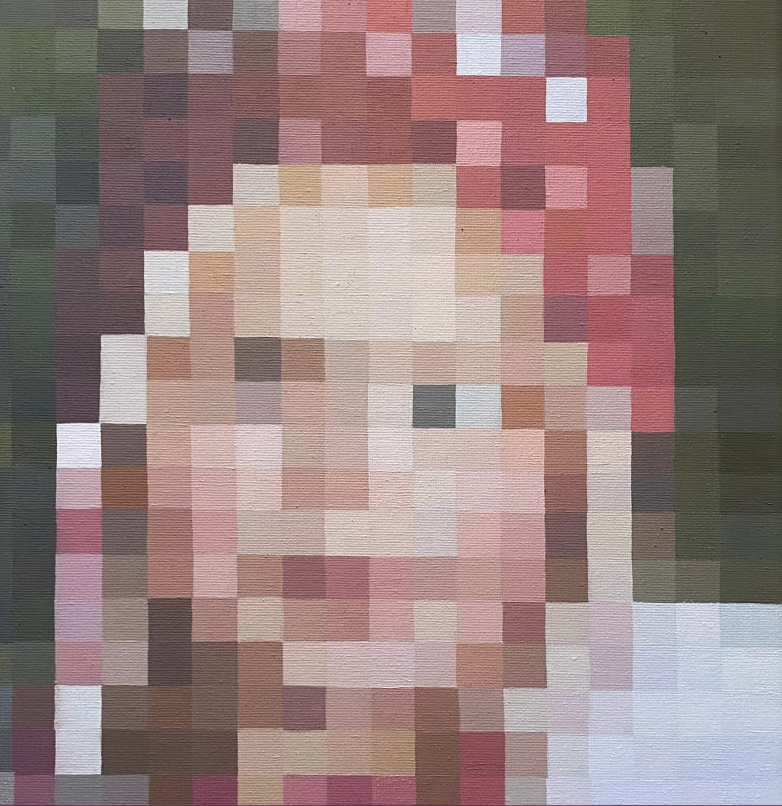
Words by Manelle Maguella, Artwork by Milly Matthews
You may also like
Faux-Bohemianism is obscenely boring.
If you want to break the mould, resist the system, do so. But vice-signalling and aesthetic r

In conversation with: Merve Emre
Merve Emre has a CV to tremble before. She is the author of three award-winning books, is a contribu

Dead Presidents @ Baby Love
The ISIS presents a brand spanking new club night starting Friday of 3rd week (28th October)