

Two-Tiered Care
‘There’s going to be a lot of people around you, but it’s because we care.’
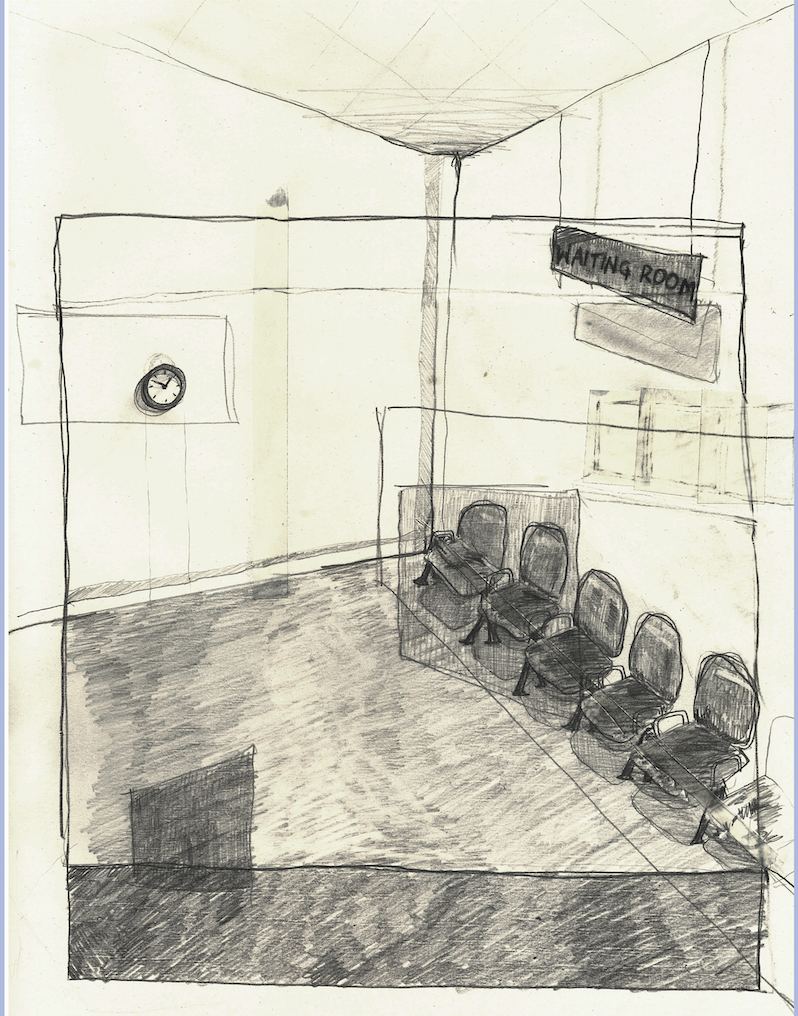
This is what the nurse said to me before rushing me into emergency surgery at my local hospital. It was the shortest time I had ever spent in the waiting room. The gratification I got when I was hurried past everyone else in A&E was slightly weakened by the fact that I was coughing up blood. But only slightly: I had spent a lot of time on those plastic seats.
As well as the queue to be treated in A&E, I also skipped the queue for throat surgery that day. I had been dealing with chronic tonsillitis for the latter half of first year, and had been told it would take over a year to have my tonsils removed on the NHS. To me, a year-long wait before getting rid of my tonsils translated into another year of overdosing on ibuprofen, antibiotics, and salt water gargles; not to mention the threat to my studies, the pain of missing social events and, of course, the pain in my throat. I opted instead for private surgery in the summer after Prelims. Unfortunately, I had the opposite of a smooth recovery. I fell into the unlucky 5% of tonsillectomy patients who hemorrhage shortly after surgery. It was this bleeding, just over a week into my recovery period, that led to me being fast-passed into the emergency room.
It was almost certainly the combination of excessive blood and influx of doctors that led the nurse to say the aforementioned words. He wanted to ensure that I didn’t think the sudden attention, the ‘lot of people’ rushing around my bed, meant I was going to die; that the heart rate monitor they were hooking up to me was out of ‘care’, not because its beeps were about to flatline. His words have stuck with me, like an unexpected squeeze from a supportive hand. Throughout my illness, it had always been implicit that doctors cared, but it was most evident during my debacle in emergency surgery. My previous experience with the NHS had too often been one of lacking. I’m sure that the busy waiting room that I sped through was full of people that would share this sentiment, and I’m sure the room is just as full, busy, and wanting right now.
It is hardly a novel statement to say that the NHS is underfunded. Healthcare in the UK has faced cuts since the actions of the Conservative government in 2015. The current Labour government has promised to keep funding in line with inflation, and the 10 Year Health Plan swears to make the country ‘fit for the future’. Yet statistics continue to show an NHS in crisis. Over 2025, close to 1 million A&E patients were placed in ‘corridor care’, or similar temporary spaces. In March of this year alone, over 150,000 patients waited over 12 hours from arrival before they were placed in a bed. The lack of resources within the UK’s health system is caused by complex, systematic inefficiencies which I won’t attempt to summarise here or pretend to fully understand. I am confident, however, in the reality of an NHS in trouble, because I saw it with my own eyes.
My memories of the A&E waiting room are all stacked on top of each other and fighting to be unpacked. This impressive tower is characterised by sitting next to strangers, hearing abuse thrown at staff, and seeing resilient joy in those who kept smiling despite their injuries; toddlers ushered into the children’s ward by worried parents, elderly figures shadowed by sons and daughters; all perceived through my impatient eyes and ears, sometimes spinning after having my blood taken, sometimes drooping in exhaustion, sometimes lethargic from boredom. I attended A&E frequently because I had moved to a GP in Oxford when I started university, and it was the fastest way—ironically—to get treatment at home. My local NHS hospital is under the North East London ICB (Integrated Care Board). It ranks 5th out of the 42 ICBs for patient waiting times. This means I was attending one of the country’s best hospitals in terms of getting quick A&E treatment, but it didn’t once feel like it.
Once through the waiting room, I often settled into ‘corridor care’. The NHS officially defined this phrase in March 2026. Criteria includes whether the patient has privacy, dignity, whether they can comfortably sleep, and whether it is a clinically appropriate, safe setting. I would sit on a row of seats directly outside the A&E waiting room, lights and neighbours blaring, watching my toes for moving trollies. There was a continual atmosphere of scarcity. Drip stands, for instance, were a precious commodity. Often, multiple people would use the same one, strung together like paper chains along the hallway. I once saw a doctor hook a patient’s IV onto the side of a nearby bed, telling them to make sure it wasn’t rolled away. This was a valid warning, since beds were just as coveted.
Attending my first consultancy in a private hospital was surreal and eerie in comparison, a performance of silence punctuated by squeaky shoes, empty seats, and vast space. I was used to bringing a water bottle, headphones, a charger, and more to the A&E waiting room. These provisions were quickly made redundant in the private waiting lounge. I was offered refreshments on arrival, a ‘Light Cafe Jazz’ mix saturated the room, and before I had a chance to open my phone, the receptionist was walking over and telling me the doctor would see me now.
It’s not hard to understand why more and more people are ‘going private’ for their healthcare needs. Apart from general ease and comfort in getting appointments, surgery wait times are another issue that payment can quickly solve. In public facilities, surgery queues are painfully long. They exist as an abstract waiting room where you are blind to the other attendants and no one comes to check your vitals. For me, the benefits of getting private surgery outweighed the costs, and I want to emphasise my extreme privilege in having the money to do so. Once, in my usual corridor spot, I watched a daughter translate a doctor’s words to her non-English speaking mother, telling her that surgery would have to wait at least a year. At least a year before the problem that forced her into A&E that morning could be solved. The doctor held up his hands, and every person in the exchange was helpless. A few months later, I was watching the Bob Dylan biopic on a flatscreen, awaiting my private tonsillectomy while my mum perused the wine menu that my room had been provided with. This is the reality of a two-tiered health system.
The NHS was originally set up to be paid for entirely through taxation. It was built to provide healthcare to everyone. The phenomenon of wealthier patients moving to private options is not, as one might assume, taking a strain off the NHS. As more and more go private, the waiting lists seem to shorten, but this should not be mistaken for a straightforward victory. Private sectors are reinforced at the expense of public services. Every year, 6,000 patients treated in private hospitals end up in NHS urgent critical care, costing millions annually. This is precisely what happened to me. I left the private hospital with my tonsils expensively extracted, and returned to my local hospital when I hemorrhaged. Moreover, private surgeries rely significantly on NHS staff—surgeons, anaesthetists, nurses, technicians—reducing their availability for state funded work, and reducing practical training opportunities for students.
I found myself telling people, ‘I had to go private.’ I couldn’t imagine having to wait. I feared being called to surgery in the middle of a busy term, the threat of rustication like a cloud over my head. But I really should be saying, ‘I got to go private.’ When I compare my private treatment experience to the hectic overflow of my NHS memories, a kind of survivor’s guilt creeps up on me. A two-tiered healthcare system is a sinking ship. Those who can afford a lifeboat to a private island will buy one, while everyone else is left treading water, trying not to drown.
Words by Nancy Dawe, artwork by Naia Searight
You may also like
Free-Speech for Progressives
‘No-platforming’ and freedom of speech are in the news at the moment. Under the new regulations

Prophetic Fallacy: The “prosperity theology” of a “faith healer”
“You’ve got cancer of the stomach? Are you ready to burn that cancer out? Here it goes i