

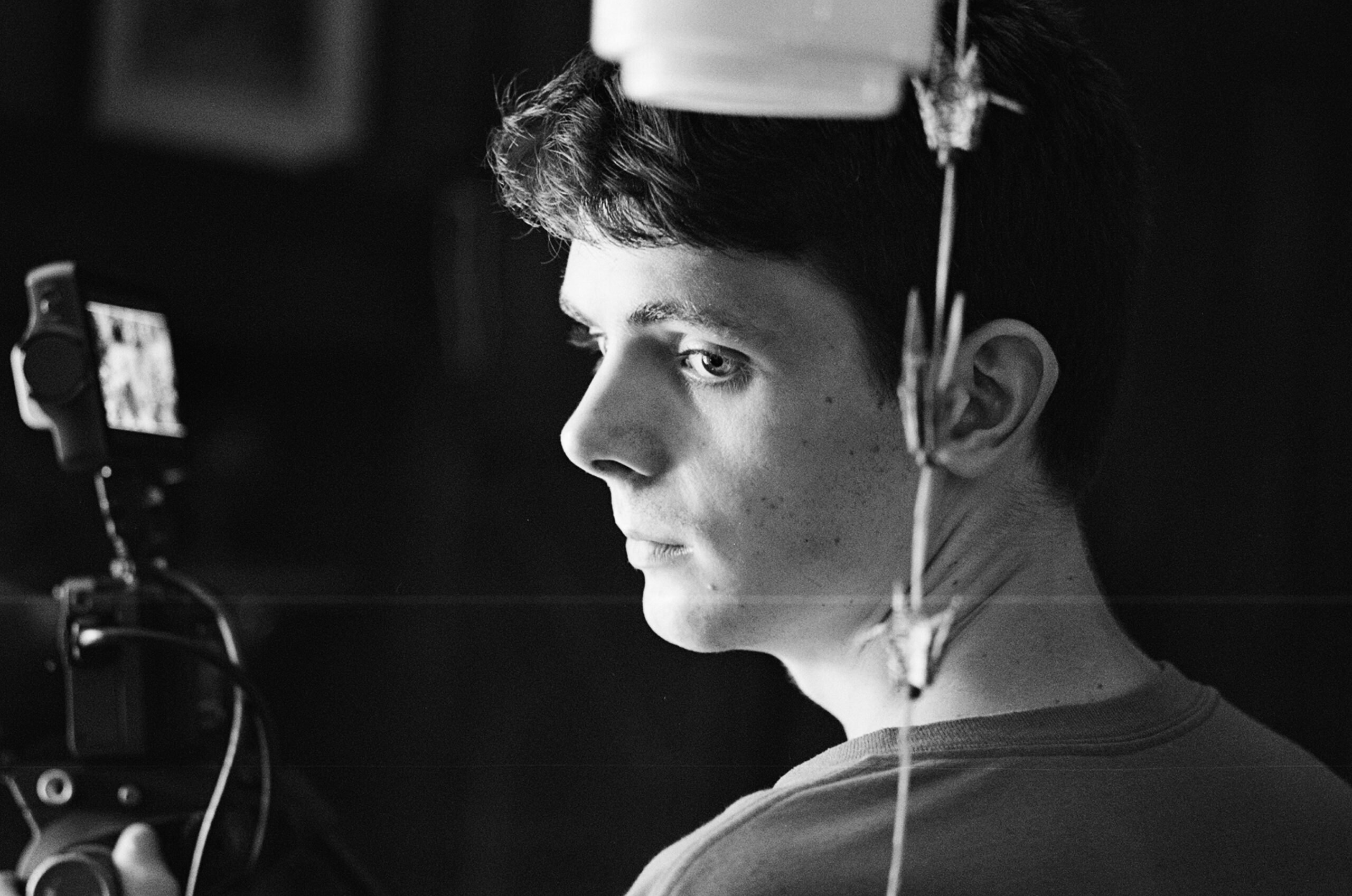
Artist Spotlight: George Robson
Despite my naïve confidence that the heatwave would surely have broken by the day of our interview, George Robson and I sat under a blistering midday sun to discuss his work as co-founder of Crazy Child Film Productions. Lounging leisurely in the Magdalen gardens, I was struck by the rather serendipitous similarity between our location and the setting of George’s film: Summer’s End. Set against a pastoral French backdrop, the film tracks a family in the last few weeks of summer heat. It was this atmosphere—of latent heat, the intensity of emotions produced under a sweltering sun, and the mundane boredom of watching summer slip away—which I learnt had provided the first spark of inspiration for the film.
INTERVIEWER
Do you want to start by introducing yourself? Where does the name come from? What about your work makes it crazy child-esque?
GEORGE
So, I’m George. I am a film and theatre director. Where does the name come from? Well, it started when my friend Magdalena Lacey-Hughes and I decided to make a theater company in Oxford. It comes from the song Vienna—’slow down, you crazy child’. What makes it crazy child-esque? I suppose the song captures a sense of originality, but also maybe a sense of imperfection, and embracing the fact that we’re young people, and it’s okay for things to be a bit unpolished, or a bit wacky.
INTERVIEWER
Your film and drama companies have the same name, and you do a lot of work in the Oxford theater scene. Could you tease out the differences between the two mediums and why you were drawn to film as well as theatre?
GEORGE
I started off doing theater because when I was in school, it felt like an easier thing to step into. But I’ve always loved film—it’s always been the art form that I love and romanticised most. I think theater feels a lot more fulfilling as you go along because the magic happens as you go through the process of preparing and rehearsing. That’s when you get to express yourself creatively as a director. You spend a lot of time actually doing it. Whereas in film, you spend a lot of time planning, doing the admin and technical stuff, and then there’s only a few weeks where you end up actually getting to do the creative thing.
INTERVIEWER
I can imagine that directing a film feels more involved during those short few weeks, because you’re physically with your actors, editing them as they work, whereas when a play is being performed, your input is over. You have to trust the actors to bring your vision to life. Do you think that’s true, and if so, do you think showing your film was a vulnerable experience?
GEORGE
Yeah, definitely. I think it was more vulnerable, because every aspect of the creative process was from the ground up; it wasn’t someone else’s play. With film, there’s also an added sense of trust, because you have to trust the people you’ve hired to make the right decisions in the moment. Obviously you’ve planned and prepared, but you don’t have the kind of freedom you do in theater to try things in different ways and experiment, because you’re limited by time.
But also you don’t necessarily have the feeling you do in theatre—when you see the play as a director, it’s actually really nerve-wracking. I remember one of the first plays that I wrote at school, feeling completely sick watching it, because it feels like you have no control, whereas in film you can edit and tweak things in post. You’re not as helpless, thinking oh my god, I actually have no agency in this now, because I’ve just left it all up to these people.
INTERVIEWER
Would you say that having more control over the film script than you do when buying the rights to a play changed the creative experience?
GEORGE
Yes, it does. The script for this film came about in a different way than I would normally write things, because we based the script off of the location that we decided on, rather than picking it out of an idea that we had had, or a plot point. So it was very much based on the location and off a kind of aesthetic or mood. It was also really nice, because obviously when you’re getting the licensing for plays, they’re really tricky about changing anything, whereas a lot of the scenes that we ended up using in the film are really different from how they were first written on the page. There’s a scene where one of the characters, Theo, is helping another character: he’s supposed to go into the bathroom and they talk and he helps her fold up the washing—it’s a sort of gesture of kindness that he gives her a hand because no one else is. But when we actually started filming the scene, we realised we don’t need any of this dialogue. There was a two page scene that we scrapped because we realised “this is so unnecessary”. Instead, they just go into the room and literally just fold up the clothes, and laugh with each other and it was actually a lot sweeter.
INTERVIEWER
And for those who weren’t able to catch the exclusive friends and family showing, could you give a summary of the project?
GEORGE
It’s a film about this girl called Grace who is staying with her dad on holiday in France, and her mum died 10 years before the film is set, when she was a kid. Her brother brings along his friends to go on this holiday, on what was supposed to be their last family holiday before she goes off to university, and she kind of gradually becomes immersed in the friendship group and there’s a bit of drama, there’s a bit of romance.
That’s the plot but I’d say it’s really about the three family members trying to process grief in different ways, especially a male versus female way of dealing with strong emotions. Because, even though she’s the youngest of the family, Grace is definitely the most mature in how she deals with things, which I think maybe says something about the way that men deal with emotions.
INTERVIEWER
You co-wrote and co-directed the film with your friend, Arthur Siri. What’s it like to work alongside a close friend as creative equals? Do your creative visions differ? Do you prefer to work creatively with others or alone?
GEORGE
I love working with other people. I love working with Arthur. It is tricky, but sometimes those moments of creative disagreement push you to slip away from your stubbornness and rethink a particular idea. Or, you realise the things that you really think should be there, when you have to fight for your idea. It is tricky though, especially since neither me or Arthur are the type of people who would let something happen that we didn’t want to happen. I think we both have very high standards about our projects.
INTERVIEWER
I believe you’re making another film this year. How far along in the process are you, and what did you learn from your last one that you’re implementing in this one?
GEORGE
It’s a weird thing, because it feels so far away—we’re shooting in December, but there’s always so much to be done in advance. This one will have a much bigger team, because last time we didn’t have one at all, and I think that made it quite stressful. There’s obviously things to change, but it’s also quite nice to know you can do it. But there’s also the worry with this one—with Summer’s End, that film could have been pretty shit, but it would have felt like an achievement in itself to have made a feature film—but with this one, it feels like it actually has to be really good or it’s not ticking anything off the bucket list.
INTERVIEWER
In the last one, you drew inspiration from the location. Where are you drawing inspiration for this one? Are you pulling from your lives, the lives of others, or something abstract from yourself entirely?
GEORGE
I think a mix of all of those things. I mean, the film is about three sisters, so it’s not exactly an autobiography. It’s a lot of stuff from people I know, my friends, and also from Arthur’s life as well. A lot of the themes of the film are to do with moving homes and the idea of relocating as a kid which is something I’ve done. And I’ve always found that quite a powerful, interesting storytelling topic, because when you’re that young, it genuinely can feel like the complete end of the world to have to move home. It’s quite a powerful thing for a young person to go through.
INTERVIEWER
Thinking about the future of film beyond your own projects, AI will obviously shape the film industry very significantly. Where do you see the industry going, and are you worried at all about the direction it might be taking?
GEORGE
I think everyone absolutely loves to be part of what they think is a dying art form, because they love to romanticise it, and they love to be like ‘nothing’s good anymore!’ But most of my favorite films have come out since I’ve been alive. I don’t believe for one second that films aren’t as good as they used to be.
I obviously think we need to talk about it, but I also think the most that anyone can really do is keep on making films, and keep on going to see films. The amount of people who will be like, ‘Oh yeah, it’s so terrible, you know, no one goes to the cinema anymore’, but then they don’t go. Do you actually care? Go and see stuff, you know? It does take effort to keep these things alive, but if you care, then you can give up a couple of hours of your life. You’ll probably enjoy it as well. So, I think if people just keep on seeing stuff, and people keep making stuff, I think we’ll be fine—there’s always amazing stuff coming out.
INTERVIEWER
Quite a hopeful rallying cry for everyone to go and see your next film.
Words by Laura Beard. Image via George Robson, Crazy Child Film Productions
You may also like
Oxford: a place for lovers?
What makes a city feel romantic? Oxford, certainly, looks the part: honey-coloured stone, lamplit an
ARTIST SPOTLIGHT: Ursi Mcilwain
‘mind map’ paint on canvas, 120cmx120cm This painting details the passing of t

ARTIST SPOTLIGHT: Lillian Tagg
‘Fresh Linen’ Oil on board, 30 x 30 cm ‘Fresh Linen’ is a study of matern