

Reform: the first anti-university party
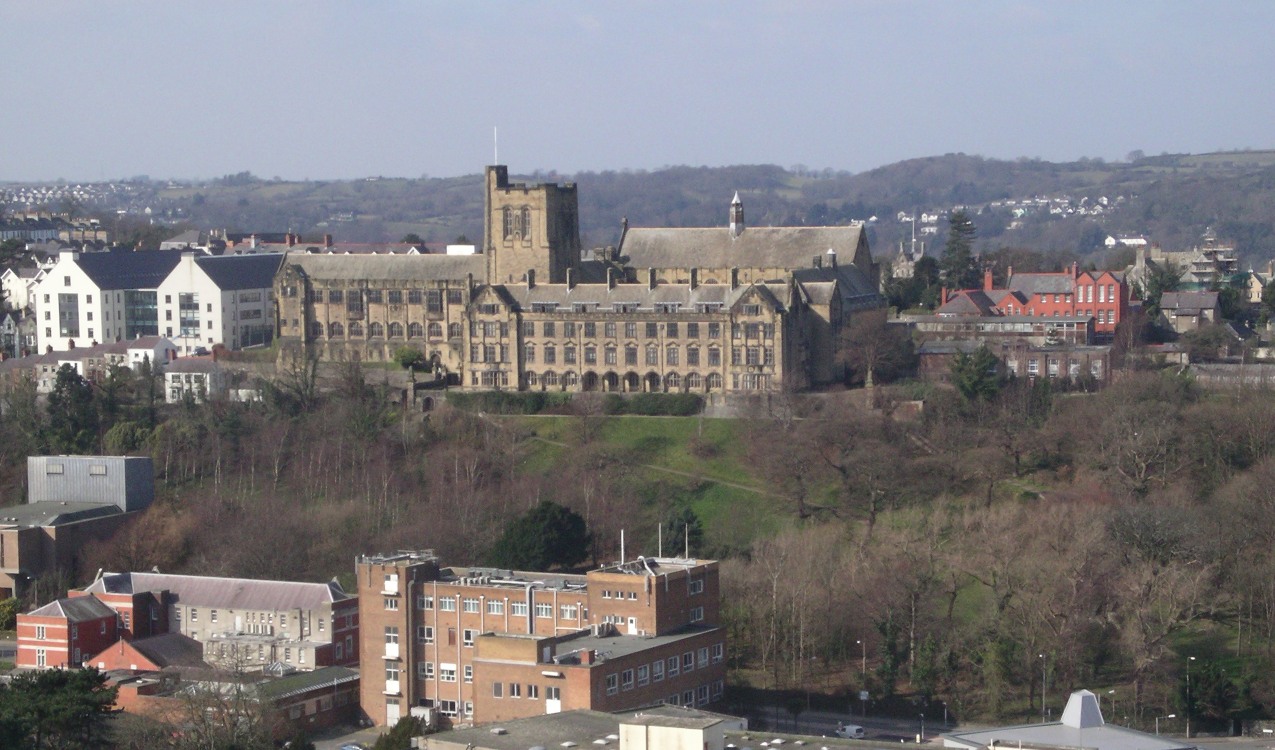
Reform have had a tough time on university campuses. Last month, Bangor University’s Debating and Politics Society rejected a request from Sarah Pochin MP and Jack Anderton, a party spokesman, to give a question-and-answer session at one of their events. Anderton, a key advisor to Nigel Farage, has faced protests at Exeter, York and Edinburgh; his second trip to the Scottish capital came with much less pomp than the first. Not shaken, Reform are fighting back, proudly identifying themselves as the first anti-university party.
In the last few general elections, graduates have voted for left-wing parties. For some, this proves the superiority of left-wing positions; for others, this only reinforces their perception of universities as centres of ideological indoctrination. But these explanations of graduates’ voting behaviour—that universities teach students to think a certain way and students support left-wing politics on account of this—fail when we realise that the left-wing graduate is a recent development in British politics.
The 2017 General Election was the first where being a graduate made one more likely to vote for Labour than the Conservatives; prior to that, someone’s educational background made no difference in who they might vote for. This is in part because so few people went to university historically; appeals to graduates, covert or explicit, would have been appeals to slithers of the electorate.
Now though, following the Blairite focus on ‘education, education, education’, “the graduate” is an increasingly meaningful political archetype, someone with describable characteristics and distinct political interests. They are younger than the median voter, live in the country’s big cities, work white collar jobs, and consider their education important to their identity—76% report this. Young graduates, the bulk of the cohort, have had to navigate student loans, and the idiosyncrasies of that system have created unique political frustrations. Most importantly, in the post-Brexit era, being a graduate has become the best predictor that someone identifies as European.
This also means, perhaps strangely, that not being a graduate has also become an identity. Maybe you’ve come across the flurry of social media commentators who brag about how passing up a university education has afforded them a life of luxury in Thailand or one of the Gulf states. While this is not representative of the experiences of the vast majority of people who do not go to university, it points to the fact that not going to university is gaining the air of the countercultural. The increase in access to higher education means that one’s choice to go to university is becoming exactly that—a choice, rather than an opportunity closed outright because of the circumstances of geography, parental wealth, or social class.
Boris Johnson’s Conservative Party were probably the first to realise this. After the turmoil of the EU membership referendum and the subsequent Parliament, their one-voiced promise to get Brexit done was in part an appeal to pragmatism, but also a bid for the party to re-imagine itself. The Tories downplayed their trademark Thatcherism for a new patriotic politics, swept up in images of a new aspirational Britain. Although ironic in the context of what eventually befell 2020, the Tories’ mood at the turn of the decade was one of genuine optimism. There existed the promise of, set free from Brussels, an exporting, industrial economic powerhouse of a Britain, the kind in which left-behind non-graduates had a part to play.
Reform, the new party of the right, are operating in very similar waters, though they make a more explicit criticism of universities themselves, rather than appeal to the values of non-graduates. The men at the forefront of the party’s leadership, irrespective of their own levels of education, are broadly suspicious of universities.
In response to the fallout in Bangor, Zia Yusuf (LSE), perhaps confusing the students for the administration proper, threatened to withdraw all taxpayer funding from the Welsh university. He was joined in this criticism by non-graduate Lee Anderson MP. Matt Goodwin, once an academic and the party’s candidate in the recent Gorton and Denton by-election, last year published Bad Education, a book outlining what he believes to be a stifling left-wing orthodoxy amongst students and academics. The party’s leader Farage, who worked in the City immediately after leaving school, has accused universities of “poisoning the minds” of young British people. Irrespective of academic background, Reform’s leadership share the feeling that the universities are in some sense responsible for Britain’s political rot.
Scepticism of universities and the academics who come from them is fertile political ground. It’s easy to identify academics as occupying roles of social (and so political) dominance. Titled and credentialled, they only ever seem to appear in public to contradict the public mood. The expert, wielded as a sledgehammer against popular feeling, is a natural target for the populist politician.
But electioneering is different to governing. A party hellbent on winning elections above all else will find it has won them for no gain at all. A party engaged in the assault on academia will find its political projects opposed, with all ardour, by those very bodies once it attains power, not least because an effective bureaucracy requires close links with the institutions responsible for advancing knowledge. In the United States, the Trump administration’s cry that “the professors are the enemy” has most recently resulted in the Pentagon delisting a number of the country’s best universities from helping train its officers. The so-called Department of War is hamstringing itself and its country to win an ill-conceieved culture war.
There is, then, both for anti- and pro-university factions, a tradeoff to be considered: throw away the universities for political gain and make governing much harder; embrace academia and risk alienating an easily mobilised non-graduate population. British politics is, again, coming apart along class lines—class lines are, this time, more strictly defined with respect to higher education.
Words by Nathan Osafo Omane. Image via Wikimedia Commons.
You may also like

An afternoon with Oxford’s nudists
“Peggy, reach over and press the bubbles button, would you?” As the tub comes to life with a lou

Becoming Human in Giuseppe Arcimboldo’s Paintings
It was New Year’s Day, 1569, and the Imperial Court of the Holy Roman Empire was alive with festiv

Invisible Illnesses
Beginning life at the University of Oxford as an international postgraduate is a momentous event and