The problem with a democratic system of culture
Decentralisation has long been an ally of democracy, divesting powerful elites and institutions to confer autonomy and opportunity to the common man. In the UK, we have never been freer, never more decentralised. We often think about this in terms of economic or political power. However, technological developments have granted a cultural power to the individual that is akin to our economic capacity. There are cultural analogues today for lots of our economic freedoms—the freedom to choose our place of work, our occupation, establish our own companies, invest our money, and accrue capital, etc. For example, I get to decide where I consume content, and which content I consume; I get to post content—I can stream, make a TV channel, publish a book; I can invest in the production of content I like.
Go back 20 years: we couldn’t broadcast ideas to millions in seconds. Go back 50 years: there were only three TV channels. Go back 1000 years: you had a chance of reading every book available in English if you had David Goggins’ discipline. Over the last millennium, cultural power has been gradually transferred from the religious and upper classes to every individual in society—to wonderful effect, I might add. The rise of the novel in the 18th century fostered the growth of our democracy and the political emancipation of women because of this diffusion of cultural and political capital. Literacy rates skyrocketed and average people had greater power to engage with and shape the society they lived in.
But, as with all things postmodern, there is a paradox at work.
While we have successfully extended cultural liberties to the digital population, these platforms are controlled by a capitalist oligarchy. Elon Musk’s takeover of Twitter is a pertinent example. I think it’s a good thing. Musk’s buffoonery has dispelled the illusion of digital democracy; our digital rights are fragile. Thanks to him, we have at last seen the straitjacket we wear when we go online, and we know who’s putting it on us.
It reminds me of one of the classic critiques of capitalist democracy: we claim to live in a democracy, but the place we spend most of our lives, the workplace, is patently hierarchical. If we apply this to digital culture, it becomes clear that a socially owned online space would be freer. This puts us at a quandary: are we better off having government regulated online forums where our handcuffs are in plain-sight, or a privately ruled one which makes us think our chains are our power?
Maybe this is where I get controversial: I’d pick the former. I’d much rather know who has power over me than let it dissolve into this obfuscating mist of bureaucracy. At least governments we may hold accountable through voting: if you believe you’re entitled to freer speech, or think that too much misinformation is promulgated online, you can vote to address it at a general election or referendum.
It would also make the subversive members of our society much more hardcore. If you wanted to say something really radical, you’d have to learn to navigate the dark web or join underground mafioso groups. The recent Louvre heist makes me hope that we are headed this way: let’s bring the game back.
I also believe that it would be better for us psychologically. David Foster Wallace spoke extensively about the importance of choosing where you direct your attention. For him, no longer exercising this choice was a kind of death. I, then, find a decentralised culture quite morbid; it appears to necessitate passive engagement. The corporation’s overriding motive in developing its algorithm is to control your attention—attention equals profit. A government, however, has a greater stake in the edification of its people. Frying people’s brains and giving them all kinds of mental problems doesn’t make for a productive or sustainable society.
A centralised culture would have fewer TV channels, maybe 10; book publishing, journalism, movies, and radio could probably stay the same; and there would be one social media platform. The rationale behind this is that TV and social media are necessarily more passive forms of engagement: you do not choose what it is you consume, it is predetermined. By reducing the abundance of TV-programmes you are less likely to find something that wholly arrests you—you probably have to keep thinking while you’re watching to make it enjoyable. You might say radio follows this pattern, but it is far less captivating than other media so I think it’s safe as it is; unless you think about what the hosts are saying, you won’t find it fun. A single socially-owned social media platform would have an algorithm not built for paralysation but education.
If we want national unity (I myself am more inclined towards global unity), we ought to take cultural centralisationseriously; at least we would all be living in the same country, just having disagreements about it. Until our political systems are globalised, it is unproductive to have an international agora on everyone’s doorstep. To be clear, I’m not arguing for a whole-sale nationalisation of cultural platforms. For social media, we should give people voting power in it—and maybe TV but to a lesser extent. We need a culture that thinks, not that stupefies. Looking at a monolith it’s easy to know where you stand; the maelstrom we inhabit today is disorientating.
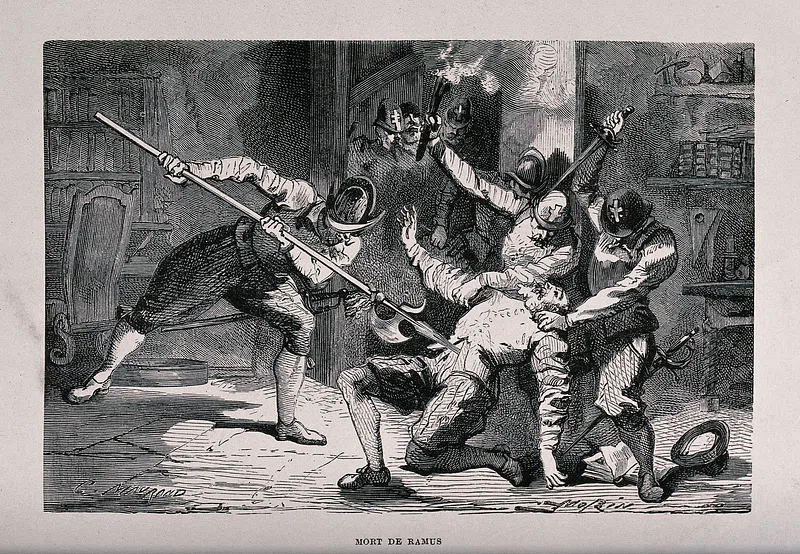
Words by Niccolo Albarosa. Image via Rawpixel.
You may also like
@grok, why doesn’t he love me?
I love reading people’s texts whenever they happen to be seated close to me. You can judge
Panda Porn and Jurassic Park: why should we conserve species that refuse to have sex?
You know the vac has reached a new low when you start searching up panda porn. Not the
‘What the fuck are they feeding you guys?!’: on the persistence of creativity in a digitally entrenched generation
For a platform so routinely cast as the emblem of cultural decline, accused of eroding attention spa