

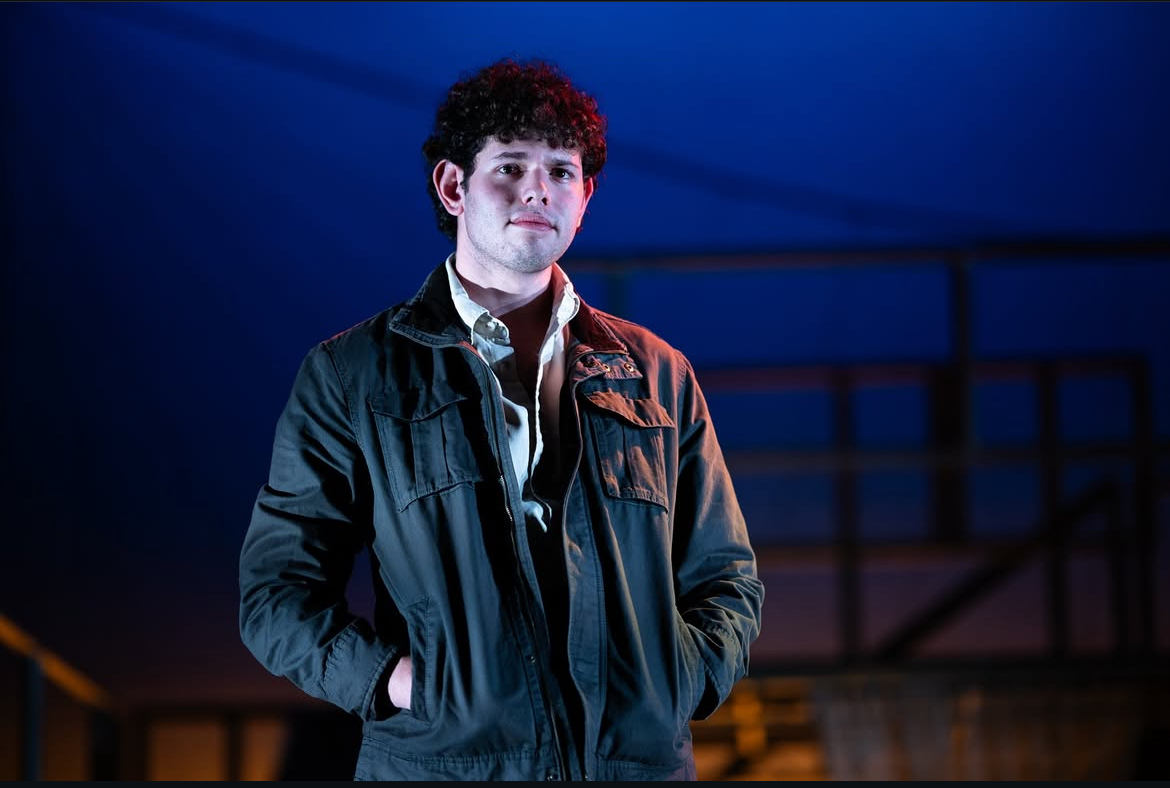
Do not miss A View From the Bridge
When historians, whether AI-generated or human, look back on our time, what will be the singular issue they pick out as having defined this particular era? Perhaps such attempts at a grand theory will be viewed as even more futile then than they already are today. Grand theories may be futile in historical analysis, but authors and playwrights seem to enjoy them. When watching Labyrinth Productions’ version of Arthur Miller’s A View From the Bridge, running at the Playhouse until the 8th of November, it’s difficult not to remember the singular role immigration plays in defining our current era.
Miller can be difficult to stage in the UK— his plays are so deeply American and mid-century, both in their themes and vernacular. A View From the Bridge centres around a second-generation Italian American family in 1950s Brooklyn. The story is overshadowed by the prevailing anti-immigration sentiment the country was experiencing at the time, and feels eerily relevant to our current moment. Seventeen year-old Katie (Catherine Claire), an orphan, lives with her aunt Beatrice (Rose Hemon Martin), a housewife, and uncle Eddie Carbone (Nate Wintraub), a longshoreman. Their lives are upended when their Italian cousins arrive illegally in the US, and Katie begins a relationship with the blond and artistic Rodolpho (Robert Wolfreys). The tragic ending is, in Millerian fashion, constantly foreshadowed by the lawyer Alfieri (Alice Wyles), who functions as a kind of Greek chorus. There’s incest, homophobia, murder and deportation— the play is as entertaining as it is topical.
Director Rosie Morgan-Males’ production is ambitious, and on the whole solid. Its core cast is made up of some of the most talented and well-known names in Oxford drama. Catherine Claire is believably likeable and naive as Katie, and does a good job bringing out nuance and depth in a character that can often feel passive on the page. The stand-out stars, however, are undoubtedly Rose Hemon Martin and Nate Wintraub. Their portrayal of a marriage unravelling is haunting and captivating. In Rose’s hands, Beatrice is infused with a quiet rage and resignation that perfectly complements Nate’s explosive Eddie. Explosivity and anger are notoriously difficult character traits to portray on stage, but Nate more than meets the challenge. He and Catherine are also unsettling and striking in their portrayal of their characters’ borderline incestuous relationship.
Some might say it’s poor form to comment on accents in student drama, as there’s rarely room for significant praise. In this case, however, I was left uncharacteristically impressed: I think most of the cast members deserve a lot of credit. Nate, a native New Yorker whose grandfather apparently worked on the Brooklyn docks, is clearly at an advantage here. A Brooklyn accent is difficult to master, or even to make a good stab at, but both Rose and Catherine handle the challenge very well. They are recognisably American, Brooklyn enough, and always understandable. The actors playing Italian immigrants Marco (Gilon Fox) and Rodolpho (Robert Wolfreys) also manage to be believable without towing the line of vaguely offensive parody. I was, on the whole, pleasantly surprised.
The play is accompanied by a constant original score, composed by Louis Benneyworth (Musical Director), Peter Hardisty (Assistant Musical Director) and Tabby Hopper (Assistant Musical Director). The music itself is stunning and multi-layered. The constant combination of music and dialogue, presumably intended to evoke films of the 1950s, creates a bit of a sensory overload at times- the scenes in Alfieri’s office, for example, might have been stronger against a silent background. At other points, however, the combination works to the production’s advantage, serving to easily raise the emotional tension on stage and create a sense of catharsis towards the end. Stand-out moments include the overture, Catherine and Rodolpho’s intimate scenes, and Eddie’s death. On the whole, it works more than it doesn’t. The production as a whole is well-executed and thoroughly enjoyable— definitely don’t miss what I’m sure will be a highlight of this term’s dramatic offerings.
Labyrinth Productions’ staging of A View from the Bridge is at the Oxford Playhouse until Saturday the 8th of November. Tickets can be purchased at https://www.oxfordplayhouse.com/events/a-view-from-the-bridge
Words by Kalina Hagen. Image by Freddie Houlahan, with permission.
You may also like
The True Cost of Porn: The Monopolisation of the Porn Industry
Open a private browsing tab. Turn on your VPN. Type ‘ethical porn’ into the search bar. Press en

In Review: Into the Woods
Before the show even starts, the new production of Into the Woods at the Oxford Playhouse is

The Scam of the Morning Routine
What does a Successful Person do in the morning? The answer, it would seem, if you read enough artic