

Ballad of a bad bisexual woman
Every time over the last few years that I’ve found myself smitten or stressed or exasperated with a man, it’s occurred to me that I have, in some ways, been doing my sexuality backwards. Traditionally, a woman at university might find in her time there what posh boys for most of history have found at boarding school — a certain level of situational homosexuality, a gay-for-the-stay experimental period. I, however, having recently come out of a long-term queer relationship just before getting to Oxford, found my time here to be the perfect opportunity to experiment with strange and sordid new sexual partners: men. Soon, like many queer women for whom men are (perhaps begrudgingly) a romantic option, I found myself disappointingly and unexpectedly practically heterosexual.
I’d become one of those ‘bisexual’ women that elicit sideways looks from the rest of the queer community. Yet awareness of this did nothing to break my chain of male love interests. The current that pulls so many out-of-practice queer women towards straight-seeming relationships is as strong and widespread as it is derided. There is an understandable temptation for many, especially queer, people to call bullshit on a person claiming an unfalsifiable queerness whilst enjoying all the privilege of heterosexual activity. In defence of all the bad bisexual women of Oxford, I offer an explanation of why so many of us get swept up in the swarms of philosophy bros and rugby boys.
Some benefits of being with a man as a woman, regardless of your sexuality, are as obvious as the man staring you down, straight-faced and anticipatory, from the other side of a sweaty pub. Despite (or maybe because of) a kind of instant misogynistic brotherhood, nothing repels a man like another man. Nothing will stop that drunk bloke eyeing you up from across the bar like another bloke with his arm around your waist. Boyfriends aren’t just romantic partners, they’re guard dogs, and having one guy around seems a small price to pay to ward off the unwanted advances of all the others.
Being in a same-sex relationship as a woman, in my experience, invites further male intrusions— more stares, shouts, and lingering touches. Where evidence of your being romantically attached to a man might scare off another one, signs of a queer relationship are a big fat green light for creeps and misogynists. Somehow, the same men you’re begging for the bare minimum when you date them all of a sudden become, when they observe you being romantic with a woman, all too interested. And often the gayer you seem, the keener they are. Having to correct a man countless times when he referred to my (then) partner and I as ‘lesbians’ whilst hitting on me taught me once at for all that when it comes straight men’s approach to queer women, logic goes out the window.
I am, of course, far from the first person to suggest there’s privilege and protection in heterosexuality for women, whether or not we see queerness as a possibility or a desire. In her seminal 1980 essay ‘Compulsory Heterosexuality and Lesbian Existence’, Adrienne Rich observes that:
‘Women have married because it was necessary, in order to survive economically, in order to remain respectable, in order to do what was expected of women, because […] they wanted to feel “normal” and because heterosexual romance has been represented as the great female adventure.’
Though women in same-sex relationships arguably have more chance of being seen as ‘respectable’ and ‘normal’ today than they ever have, and even though it is much easier for us to ‘economically’ support ourselves and each other, nevertheless ‘heterosexual romance’ often reigns supreme in those for whom it is not the only option, but nevertheless remains a plausible one. In a post-Rich world, same-sex desire is fairly legitimate and accepted in most circles of Oxford students, and the University itself seems to have a supportive (if lack-lustre and hypocritical) approach to at least the L, G and B. Yet the impulse to pair off into opposite-sex relationships remains amongst those of us who’s pride flag flies both ways. Rich notes, ‘the lie of compulsory female heterosexuality […] however we choose to identify ourselves, and however we find ourselves labeled, it flickers across and distorts our lives’. Indeed, it continues to warp many of us queer Oxford women into the straight-passing girlfriends, crushes, and hookups of long lines of straight men.
The draw of mediocre men over beautiful, intelligent women and non-binary people, for our generation, can go beyond the internalised homophobia, conditioned need for male validation, and erasure of lesbianism that Rich identifies. She notes the ‘frequently encountered implication that women turn to women out of hatred for men’ and supports Audre Lorde’s calling for an understanding of the erotic ‘as the empowering joy which “makes us less willing to accept powerlessness, or those other supplied states of being which are not native to me, such as resignation, despair, self-effacement, depression, self-denial”.’ And yet, shamefully, I often find the reverse to be more compelling. I have turned to men out of fear of women, for the refuge of self-effacement and self-denial that you often can’t get away with in a WLW relationship. Despite what every straight girl who thinks she’s being an ally has told me, women are not easier. Not because they’re bossy, or clingy, or just generally bitchy as many straight men would have you believe. They’re difficult because they’re empathetic, observant, and actually care.
Of course, this is all generalisation and reduction, and not much can be said of all women or all men or all the people who don’t conform to either of those categories in their entirety. But I’d be far from the first person to suggest that on average, a young man, by nature of socialisation, is likely to be less emotionally intelligent than a young woman—especially a young woman used to navigating romantic relationships without the cookie cutter expectations of heterosexuality. The very fact that we aren’t fed so many images, ideas and outlines of the way queer relationships should go means that they require more active communication. Whether its what to wear in a wedding ceremony or who should lean in for the first kiss, queer relationships necessitate a constant negotiation of the partners’ respective roles in lieu of a clear blueprint. As a result, they often end up being more centred around what each party actually wants than what they think they should.
The likelihood of this greater emotional intelligence, and greater communication, brings with it the danger of a greater required vulnerability. In my experience, dating women has a different kind of emotional tone than dating men, regardless of the seriousness of the relationship. ‘Seeing’ a man feels like seeing him through a window: the surface that allows me to see him is equally a barrier between us that no level of squinting or staring can allow either or us to cross. ‘Seeing’ a woman, however, feels like looking in a mirror, not because of any physical similarities there might be, but because it is more likely to put things about yourself on display. A person who is actually interested in really seeing you while ‘seeing you’ is more likely to spot something you’re trying to hide, and I’ve found women to be generally more interested in finding those things out. Call it a thinner line between friendship and romance, call it socialised empathy, but it has always seemed to me that women are the people that are more likely to be actually invested in knowing a person, whether that be their sexual preferences or their five-year plan. I’ve always found it easier to put up a wall with men, and living behind the shelter of such a wall can get very comfortable.
But, as is true of your weekly tutorial essay, easier often doesn’t mean better, and the less effort something requires, the less it offers in return. There are countless reasons why being with a woman as a woman is more difficult than being with a man, not in spite of but because you might see each other more clearly. And, of course, women are no less able to break your heart once they’ve dug deep enough to get to it. I urge all my fellow bad bisexual women to dust off your mirrors, and have a long hard look at why it’s been put away for so long—you might see something unexpected and beautiful.
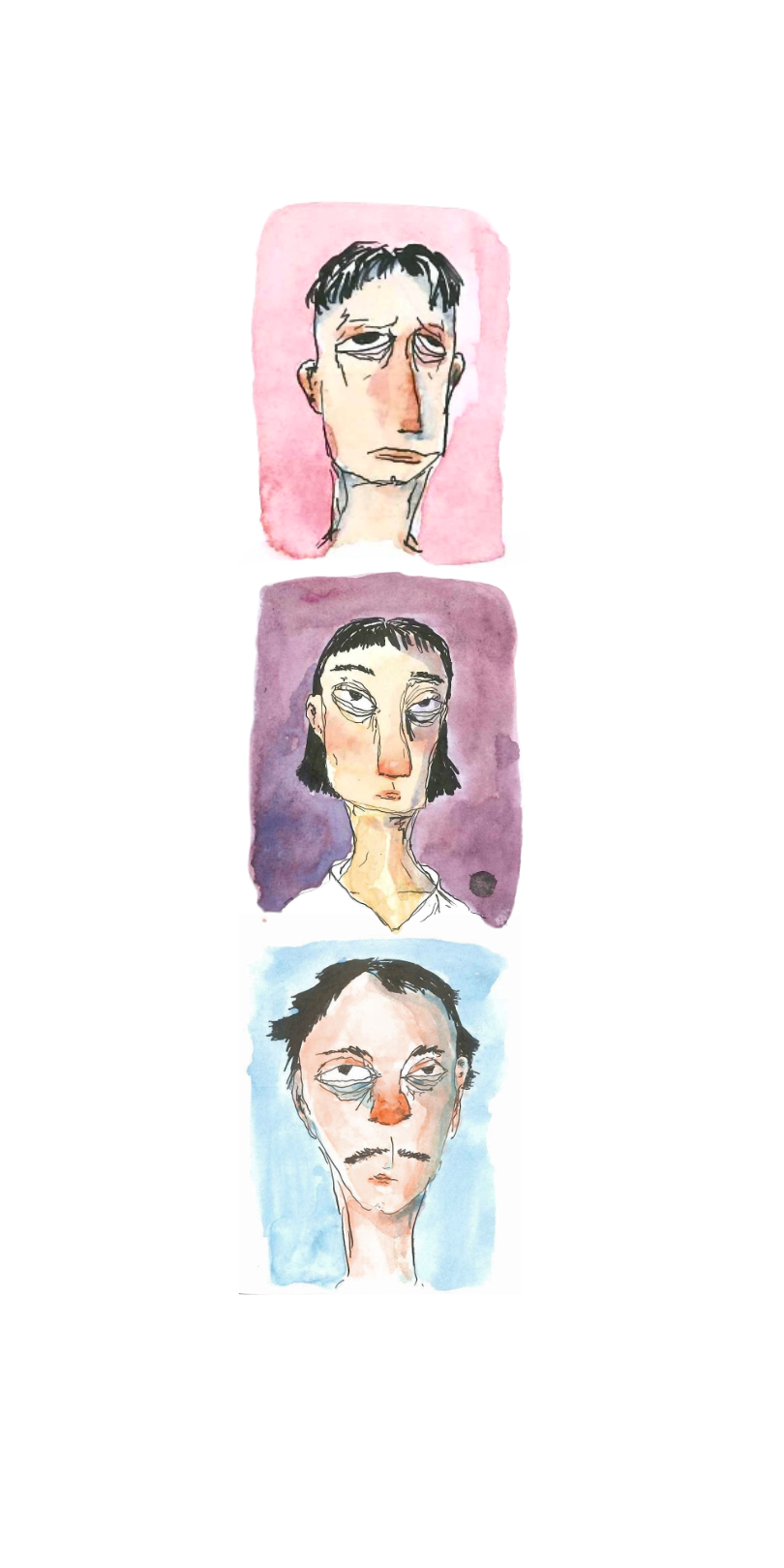
Words by Ayla Samson. Image by Lizzie Stevens.
You may also like

The Isis on coverjunkie
The Isis is featured on coverjunkie, a website dedicated to the best magazine covers
Ode to Joy
When I first began to touch myself it wasn’t “masturbation”—it was nothing but an expressive

Artist of the Week: Joni Brown
Joni Brown is a visual artist. Tell us a bit about yourself. I’m a first-year student at LMH,