

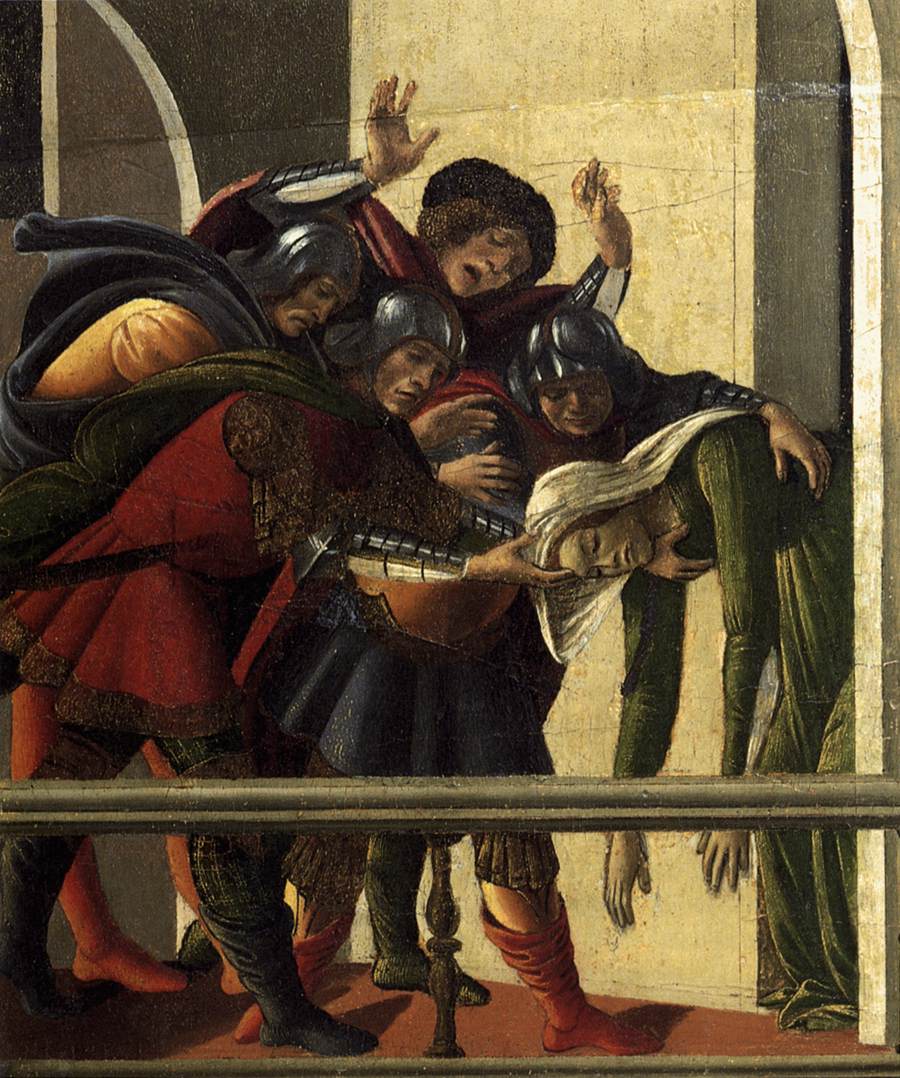
The difficulties of staging an opera about rape
The Rape of Lucretia is being performed at St Peter’s College in seventh week of Hilary Term. Yet many voices have emerged to challenge the production. The controversy and struggle endured by the production team even to get the opera staged is far beyond what most experience when putting together a student performance. The team withdrew the chamber opera from its original venue, the University Church of St Mary the Virgin, because of the church’s suggestion that they might require some of the libretto’s more explicit content to be censored. Back in second week, I met the director, Peter Thickett, and Johanna Harrison, who is playing Lurectia, to discuss the problems they have faced in staging their production.
Thickett, a second year Music student at Merton College, tells me of the problems he has had to just to find a place to stage the production. “Later, we received contact from the Archdeacon of Oxford. It was a conflict within the clergy, and it concerned staging an opera about rape”. Worried there would be no place to put on their opera, the production team finally were told they could stage the performance in St Peter’s Chapel. Yet this offer came with some terms and conditions. All advertising posters, Facebook events and tickets had to describe the event as taking place in St Peter’s College. To associate the title of the opera, the ‘rape’, with a church and chapel was offensive.
The struggles of the Rape of Lucretia team illustrate the difficulties and controversies of staging a performance about rape—an issue that is so often silenced as something we are aware of, and yet are too frightened to talk about. To take away rape from the title, an idea suggested to Thickett to ease his situation and find a place to stage the production, would be to meddle with Britten’s masterpiece directly. If he followed this advice Thickett would himself be denying and concealing the issue we need to face. Yet rape can be exposed through art in a way that doesn’t need to be explicit. We don’t need to be presented with the rape literally to be aware of its impact and violence. It is the power of the voice in drama to articulate disturbing and distressing experiences. Thickett tells me that, in an early version of the libretto, the rape of Lucretia is acted out as “the male chorus sing ‘He takes her hand / And places it upon his unsheathed sword’, followed by the Female Chorus singing ‘Thus wounding her with an equal lust / A wound only his sword can heal.’” The actual rape of Lucretia is not enacted overtly and explicitly, but with nuance and subtlety.
The irony, Harrison points out, is that the Bishop’s refusal to let the performance to take place in a church denies The Rape of Lucretia its Christian context. It is a piece about redemption, she says, and exposes both rape and death within a heavily Christian landscape: at the beginning of the play the male and female choruses profess themselves Christian interpeters of the Roman story. Harrison argues that, along with denying the profound religious context of The Rape of Lucretia, to read the performance as simply a ‘rape’ is to deny the complexity that the opera evokes. It was first performed in 1946, shortly after Britten had visited concentration camps across Europe. The rape of Lucretia as an individual is symbolic to some extent of the rape of a country, the destruction of civilisation.
Beyond this, the production itself explores the difficulties of talking about rape in a society where sexual violence is all too common. Thickett emphasises the prominence of the patriarchal and misogynist environment of Britten’s opera, suggesting that the opera has “Mad Woman in the Attic and Yellow Wallpaper tropes”. “It is the sexist institution of marriage that perpetuates the guilt that prompts Lucretia’s suicide. Her descent into madness is thus seen as an inevitable result of her marital situation,” Thickett says. The opera also emerges as a critique of ideas of female chastity: “Give him this orchid. Tell him I find its purity apt; and that its petals contain Woman’s pleasure and Woman’s pain, and all of Lucretia’s shame”. The unobtainable ideal of chastity is presented as fundamentally restrictive. The character of the rapist, Tarquinius, also reveals the patriarchal structure of the society Britten creates. Thickett describes him as “A very problematic character. He should not be represented as the all-purpose villain in the dialectical fable narrative. He is influenced by factors outside of his control: namely, societal conceptions of masculinity and respectability”. He asserts the need not to discredit the rapist as inhuman, but to expose a character with a complex background influenced by the world around him—the patriarchal society he exists within.
These controversies expose the inherent struggles and difficulties of staging an artistic production about rape. The word ‘rape’ in the title of a production is deemed off-putting, offensive and disturbing. Yet what this highlights is the need to stop glossing over rape in society and stifling issues we are so likely to deny.
The Rape of Lucretia is being performed at St Peter’s College between the third and the fifth of March in Seventh Week of Hilary Term.
You may also like

The Isis Podcasts: In conversation with Steven Sater
Join us in conversation with Steven Sater, a Tony, Grammy and Laurence Olivier award winning poet, p
The Meaning of Arts Cuts
I am waiting to go onstage during my secondary school’s adaptation of The Canterbury Tales, wearin