

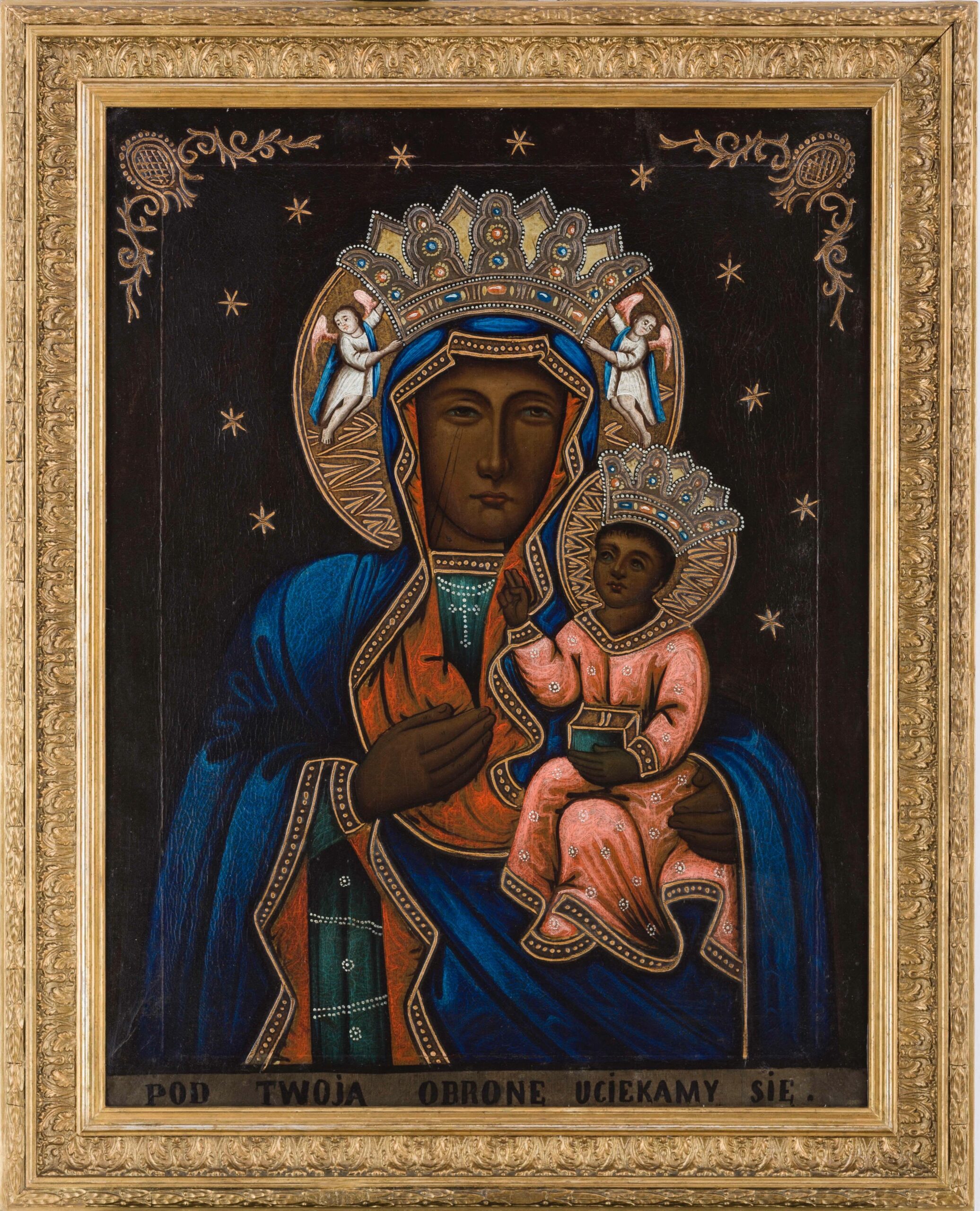
Women? The Convent?
Since British Vogue declared boyfriends uncool, I’ve been unable to stop thinking.
Thinking, perhaps too simply, about the volumes of criteria we’ve invented and refined to categorize women: hot, lame; cool-girl, weird-girl, boyfriend-girl; mob-wife, homemaker. Thinking, perhaps too abstractly, about the amorphous mess of aesthetic signifiers that have made it impossible to nail down the subtext of anything on our God-forsaken internet.
What more is the widely published uncoolness of a boyfriend than the cultural gavel, judging what it takes to make a woman cool? The take is arguably liberating, if nothing more than for its levitous “boyfriend lame” stance. Yet it maintains the centrality of men in relation to women, even in their negation. We are back to where we started.
More often than not, I have found myself angry, likely with the vestiges of a third-wave choice feminism, at the impossibility of existence. Existence as a woman, that is.
For all the discourse and criticism, analysis and bullshit, I get this sinking feeling that we are missing the point. Is the modern woman definable? Is she a polka-dotted jumper and Puma Speedcat with a penchant for Eve Babitz? Is she a Y2K paisley, Zoe Kravitz braided, aspiring DJ? Is she moving to rural Connecticut to start a homestead of sourdough and alt-right dogwhistles, or is she moving to Miami to learn everything about stocks and finances? The number of archetypes I can conceptualise nauseates me, how dissectible each flickering face on my late-night feed becomes, how that dissection has bled into the faces of women I pass on the street.
Is the modern woman trapped?
It’s not that I am devoid of nuance. I recognize in myself the consequences of what they call ‘brainrot’. By consuming mounds of senseless media, served in quick, delicious morsels of content, I’ve invariably been rendered one among the sheeple. This is the content which prioritizes beauty, consistency and an identifiable narrative. Distillation, then, seems too singular a word to capture what we have done to the modern woman. Rather, she is subject to an aggressive multiplicity, stifling genres and sub-genres that deplete the self in return for a recognizable configuration of interests, clothes, and mannerisms. How is she to thrash against these steely bars? How might she break free?
When I first heard the music of Emahoy Tsegué-Maryam Guèbrou it was winter, and it had been the hardest winter of my life. In the secluded back alcove of a dining hall, I made the rare choice to listen to my Discover Weekly on Spotify. Upon shuffling, the first song to play was Clouds Moving on the Sky.
ሰማይ ተጠግቶ ይሄዳል ዳመና
The sky is getting closer to the clouds
I do not yet speak Amharic, the language of the song, the language native to its Ethiopian composer, but there was something so conciliatory about Guèbrou’s full voice, something so heartbreaking, that I found myself crying over my bagel. For the next ten minutes I let the song play over and again, allowing discreet tears to well and subside, well and fall. Indulgent? Perhaps. But I was so moved that to do anything but sit and listen felt like sin.
Emahoy Tsegué-Maryan Guèbrou was born Yewubdar Gebru in Addis Ababa, 1923. After 25 privileged and persecuted years of life, Guèbrou renounced her loving family and life of relative wealth for that of Ethiopian Orthodoxy. As a sister she would reside in a barren convent atop the Amba Gishen mountain. A piece of Jesus’ crucifix is thought to be kept there, the mountain itself rising into that same auspices shape.
Guèbrou did not remain in the convent for long, and often returned home to Addis Ababa in intermittent bouts. Her music is largely about her love of family, of Ethiopia, the sea, and the marvels of life, the minority composed in reverence of God and her vocation. Yet when I listen to her I only see the convent, its imagery too romantic to resist. The mountain sits so close to the sky, the very base of heaven we may reach towards in this life. Ascetic solitude soothes the imagination, contemplation in thin air, sky and silence bringing one closer still to the divine.
When I contemplate the inexhaustible definitions that plague female identity, the impossibility of being one’s whole self, naked, in the metaphysical sense, I return to the convent. Absolute renunciation of the world seems an easy fix to existential claustrophobia. The habit a rough shod cloak resisting all externalities, the uninterrupted longing for God, His love, preoccupying the mind.
ሆዴ መናፈቁን አልተወም ገና
My stomach has not stopped longing yet
What I feel to be a spiral downwards into tighter margins of character is complicated by the search for love. At the risk of sounding trite, a period of relative solitude has taught me Plato was never more correct than when he asserted the singular person to be the begotten half of a missing one. But when this search for completion is transposed into our current culture, it becomes something mechanical.
The matching is not just of interests and values, but of aesthetics. Class. Race. Oxford, more than anywhere else I have lived, embodies this phenomenon. When I pass a contented couple on the street I cannot help but marvel at their easy compatibility, that they look good together. One must accept, without malice, that the search for love is a humiliating one. It necessitates a divulgence of your most private self and a conformity to desire that is wholly derivative. There exist countless videos professing which hairstyles attract which men—locs for hoteps, poorly laid wigs for wealthy white men—and this derision is maddening. Existing within culture projects onto the woman the things she ought to groom and buy and be to become digestible—the renounced life offers the promise of negation. If God be singular and all-loving, then the kind-hearted declaration of a local church flying a pride flag “Come as you are,” is both universal and distinctly personal.
Religious sentiment is rising in the youth. Statistics quantitatively affirm this belief, but one need only to open Instagram to see the influence. In equal force I have seen born-again baptisms performed in hallowed strip malls and captivating edits of Catholic processions, set to Brazilian phonk. Most striking, in my opinion, is the content catered towards women. Posts that ask which, of the visions of Joan of Arc or the weeping stigmata, call to the viewer more. Collections of images—nuns in a bare room, nuns feeding deer, nuns kneeling at an altar—that I send to a friend, my message (need that) echoed in the comments. This religiosity is of a unique form. It would be ridiculous to presume everyone engaging is actively considering vocation, or even religious, however its allure persists.
What was constructed as a religious message is more likely received as a spiritual one; the call to devoted life, taken in our predominantly secular age, is a call to a life defined by spiritual pursuits and a promise of unconditional love. I think the modern woman longs for the convent, if only as a means of escape, if only as a way to answer the question she must face every morning: what do I even do? Its silence and singularity are the antithesis to the ceaseless noise that seeks to confine and categorize. In renunciation, the self can be found.
ሰው በሰው ነገር ምነው መኮነኑ፣ ምነው መኮነኑ
Man should be condemned by man’s things
A good friend once told me she wished that she could be perceived as a glowing orb of light. Though at the time I didn’t understand the urge, I have slowly come to see the appeal. Try as one might to resist definition, it is not a personal choice to make. A big red pin of relation rests above your head, “You are here,” it reads.
I cannot run away to the convent. There is an essay due tomorrow, jobs to apply for, and I have plans this weekend. Still, I keep it close to my heart. I imagine its dirt floor beneath me. I do not decorate my walls, and I can breathe a little better. In the center of the maelstrom of culture and the quagmires of love resides the self. If it may ever escape the dense gravity which warps it as it attempts expression, recognition, remains unclear. But at that center, in your own convent, the self remains total. And when you look inwards, and feel your heart beating on, you might rest easier knowing it’s warmed by fluid, infinite, ever-graceful Love.
Citations:
Tianling Feng, Thomas. “The Life and Music of Emahoy Tsege-Meriam Gebru.” May 2025.
https://www.vogue.co.uk/article/is-having-a-boyfriend-embarrassing-now
Words by Kalie Minor. Black Madonna of Częstochowa via W muzeach.
You may also like
From the archives: Dinner with Lucien Freud, 1983
Once Lucian Freud was asked to paint the portrait of a former Principal of Jesus College. “A charm
What We Talk About When We Talk About Oxford
When critiquing the Blue Guide — the iconic series of travel guides published from 1918 — Roland

The secret history of silly animals
It’s not often that a real, substantial revolution happens, one that really changes the wor