

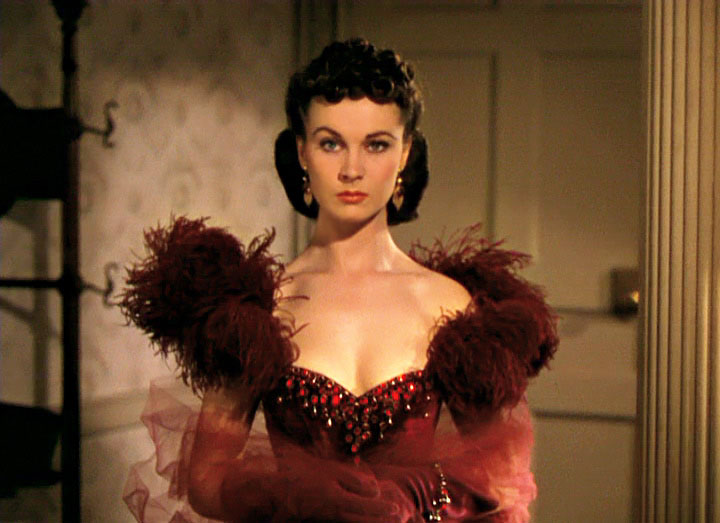
Un-innocence: Wuthering Heights (2026) reviewed
Contains spoilers for Wuthering Heights (2026)
Emerald Fennell’s Wuthering Heights (2026) is a very safe film. For a cinematic adaptation of a single novel, it is polygenic in its presentation. From the bodice-ripper poster, to the postmodern attempts at technicolour, it is not hard to see Fennell was trying to remake, to a degree, our generation’s Gone with the Wind (1940). And like Gone with the Wind, there is a racial discourse attached to the film. But unlike Gone with the Wind, which was produced and released straight with no hint of irony or perversion in the pre-post-ironic year of 1940, it feels safer, less perverted, to watch Fennell’s perverse rendition of Wuthering Heights than the ten-Oscar-winning Gone with the Wind in the year 2026.
One line of reasoning would deduce that despite its controversial casting of Elordi as the ‘dark-skinned gipsy’ Heathcliff, Fennell’s Wuthering Heights is basically devoid of racial politics in its content, unlike in Gone with the Wind. In fact, the casting of Hong Chau and Shazad Latif as Nelly and Edgar, respectively, essentially makes it a colourblind film, without even a Bridgerton attempt at a liberal wishful-thinking world-building.
Gone with the Wind, on the other hand, is serious in its racial politics and its world, within the constraints of a ‘Lost Cause’ antebellum fairytale. At least it is more serious than Wuthering Heights. Its mise-en-scène is believable and beautiful. Unlike Wuthering Heights, where it is unbelievable and ugly. It has morals it believes in and preaches them, with some being genuinely timeless and universal. Unlike Wuthering Heights, which does not say anything at all. (Which is actually untypical of me, as I have long been critical of the didacticism of ‘saying’ in our age. Arguably, the weakest episodes in the canon of our time are the direct ‘sayings’. Think the Uber-Eats’d-in-Marxism in Sally Rooney.)
I might not like what a film is saying. But I like the fact it is saying something and the way it says it. Sincerity is attractive.
But somehow for today’s audience, it feels more perverse to consume the deeply moralising Gone with the Wind than Fennell’s purposely anti-moral parody of Wuthering Heights, in 2026.
Perhaps it is because despite our commitment to certain visions of bettering the world, we are actually losing sight of any morals in any non-prescriptive sense. People know not to say slurs. But they don’t know what to say, besides kind-hearted platitudes, or more importantly, to do.
Gone with the Wind is a film which preaches what Joan Didion calls ‘wagon-train morality’. It is about a woman inventing her own morals in a time of tumultuous changes, as do the characters in Wuthering Heights, the book. We feel more comfortable seeing morals transgressed (especially in the vacuum of a film so detached from any reality) or taking in morals we already know. What is truly triggering is watching characters struggling to create their own morals, or preaching morals alien to us.
Wuthering Heights, for all its showy sadomasochism and oozing of liquids, feels like what right wing conspiracy-theorists call ‘controlled opposition’, or what Marxist scholars would call a simulacrum of a revolution (or if you are Benjamin or Adorno, fascism). Everything is transgressive and nothing is transformative. It is reminiscent of Sartre’s ontology of masturbation—an act which has to be repeated again and again, until death. Like the lack of racial politics, there is no real conflict in the film. No racial conflict. And not even really romantic rivalry (Edgar and Isabella just allow it). Nelly and Cathy reconcile at the end. Edgar allows Jacob to see the dead Margot Robbie.
It is one of those films where you feel more naming the characters as actors than as characters.
The film ends when Margot dies. There is no Little Cathy, no offspring, no nothing.
The film resolves itself, like masturbation, a simulacrum of reproduction. One sequence which particularly exemplifies such homeostasis is when Isabella, after a scene suggesting her rape by Heathcliff on a dirty dining table at Wuthering Heights, is portrayed to be equally perverted and possessive as her aggressor, in a choice feminist/girlboss feminist fashion.
The film is essentially an act of self-gratification for the director. It is based on, as Fennell has said, her imaginations based on the book from when she was 14. And one could say that Fennell is simply doing what male directors have done for decades, producing a self-inserted sexual fantasy, and facing all the scrutiny simply because she is a woman.
But there is a reason why masturbation has been historically stigmatised across cultures and genders. Kant says masturbation renders the body an object of enjoyment, and self-objectification is morally worse than suicide—the ‘highest degree’ violation of one’s duty to oneself. Masturbation is perhaps not as ridiculous as ‘worse than suicide’, but it does entail death. A person masturbating is a person not reproducing, creating. The stigma stems from a civilisational fear of extinction. It is very fitting for Fennell’s film to end with death, in contrast to Brontë’s ending with the new generation falling in love. It is also very fitting for it to start with death—the hanged man having a solitary orgasm at the moment of his death, perhaps the platonic form or metaphor for the self-destruction of masturbation.
The opening masturbation is the film’s proto-lapsus from the spirit of its source material. The more obvious lapsus is when Cathy, played by Margot Robbie, discovers masturbating. Because Wuthering Heights the book, unlike the 14 year old Fennell, is not about discovering sexuality, but precisely about two people stuck in a permanent childhood. As scholar Marianne Thormählen writes, the romantic conception of the relationship between Cathy and Heathcliff is that of the adolescent, a concept which to the adult reader is ‘soon undermined by a growing sense of wrongness.’
But the film does not even really feel rooted in the imagination of a 14 year old. It is an adult attempt to make something like the imagination of a 14 year old. Georges Batailles’ 1957 essay collection Literature and Evil opens with an analysis of Emily Brontë’s Wuthering Heights.
(I am leaving it here because this article has to feel as half-baked as the film and missing its third part, the occasional breaking off into single sentences mimics the rhythm of the film and the occasional gratuitous ASMR scenes, and I am telling you all of this because I am as on the nose and repetitive about everything as everything that is in this film.)
Words by Zac Yang. Image via Wikimedia Commons.
You may also like
In Conversation With: Bob Boilen, Founder of Tiny Desk Concerts
“It is very difficult indeed to go anywhere in the world … where people haven’t heard a
How to hold: Pina Bausch’s ‘Nelken’
Poster for Nelken, 1982 They bloomed before you, these 8000 carnations. You are outnumbered b
Switching Off: The Pleasures of Idleness
Boredom today is the absence of a good 3G signal. I think that it’s worth asking whether or not th