So you’ve caught feelings…
It’s a fact of statistics that (for most of us) the body counts of our sexual partners will be higher than our own; someone who sleeps with a lot of people is more likely to have slept with you. Those same sweet nothings, which may have seemed so touching and honest at the time, have probably graced others before. That’s no wonder—it’s hard to be original on the spot.
This is all to say that you’re not special. To you, they were the biggest thing that happened in your year. To them, you were Tuesday. But go on, double text.
It’s a truism to observe that love is always a gamble, a surrendering of the self to someone who is (sadly) unknowable. Perhaps this is so. Yet St Paul (in his first letter to the church at Corinth) says that love
πάντα στέγει, πάντα πιστεύει, πάντα ἐλπίζει, πάντα ὑπομένει
Bears all, trusts all, hopes for all, endures all.
At its purest, the steadfast love that God has for humankind, His חסד (hesed) His ἀγάπη (agape), is perfect and reliable. My simplest hope is that something like this might exist on earth. Maybe swept up in the corners of the homes of old married couples or prevailing for a time whilst new love waxes full. There, the tide of feeling climbs to what we might only later see is the high watermark before its ‘melancholy long withdrawing roar’. I see the paradox, of course, that a permanent love might exist in finite terrestrial time. What I hope, though, is that for a time we can at least feel it to be so, living contra mundum with the grace and self-assurance of immortal beings.
So much for love’s earthly heights. We all know that, even if such a climb were possible, it isn’t common. Nowhere do we feel this more acutely than in situations of uncertain affections. In Simone Weil’s brilliant essay ‘L’Iliade ou le poème de la force’, she explains how when we act beyond the certain limits of our ability, we are ‘livrés sans recours au hasard… Quelquefois le hasard [nous] sert; d’autres fois il [nous] nuit’ (delivered helplessly to chance… sometimes chance serves us, at others it harms us). Here lies risk. The night is dark, it’s raining, the faster you go the more likely the wheels will start to slide. Whatever happens next is outside of your control. Be careful.
Where there’s a more certain course, (certain because of its grim if much denied inevitability) are in those clearly asymmetric scenarios where one half has staked far more of themselves than has the other. This is invariably a position of self-abasement and humiliation. Weil says that it is in the nature of force to turn human beings into things: ‘Il y avait quelqu’un, et, un instant plus tard, il n’y a personne.’ (There was someone, and, a moment later, there is no one). When Priam grovels at Achilles’ feet for the return of Hector’s body, he becomes something less than a human being, an object which might be discarded at any moment. When someone is in love with you, you have power over them, a sort of emotional force enacted through acceptance or denial of the other’s supplications. Such supplications are so enticing and there’s a kind of luxury in feeling yourself unfairly spurned.
Priam’s behaviour is far more sensible than a desperate lover’s. For one, his goal is actually achievable. What Priam needs is a moment’s sympathy from Achilles, and he can leave with the body and hold a proper funeral for his son. But you can’t make someone love you, not for long anyway. (Even Aladdin’s genie excludes this as beyond his powers.) No number of entreaties will effect a lasting change in someone’s emotions. In fact, it may well do the opposite. What’s more, your situationship is not Achilles. They have not killed your son. They don’t (inherently) owe you a thing.
In the presence of real dishonesty or wrongdoing the calculus here changes, but in the simple unrequited case, any bitterness you have for the object of your weakly reciprocated affections is the only thing that needs remedying.
You can’t make the feelings go away, but they make you human, they remind you you’re alive. I think of lines from Ted Hughes’s disturbing and ambiguous poem The Scream
‘The inane weights of iron
That come suddenly crashing into people, out of nowhere,
Only made me feel brave and creaturely.’
Before our return to Paradise (should there be such a place), this is the only way to carry on. You can’t have everything you want, and you can’t have everything fixed. If you feel these heights of emotions, let them roll around inside you a while. It’s better than the nothing that the dead feel. Besides, it’ll pass. Probably.
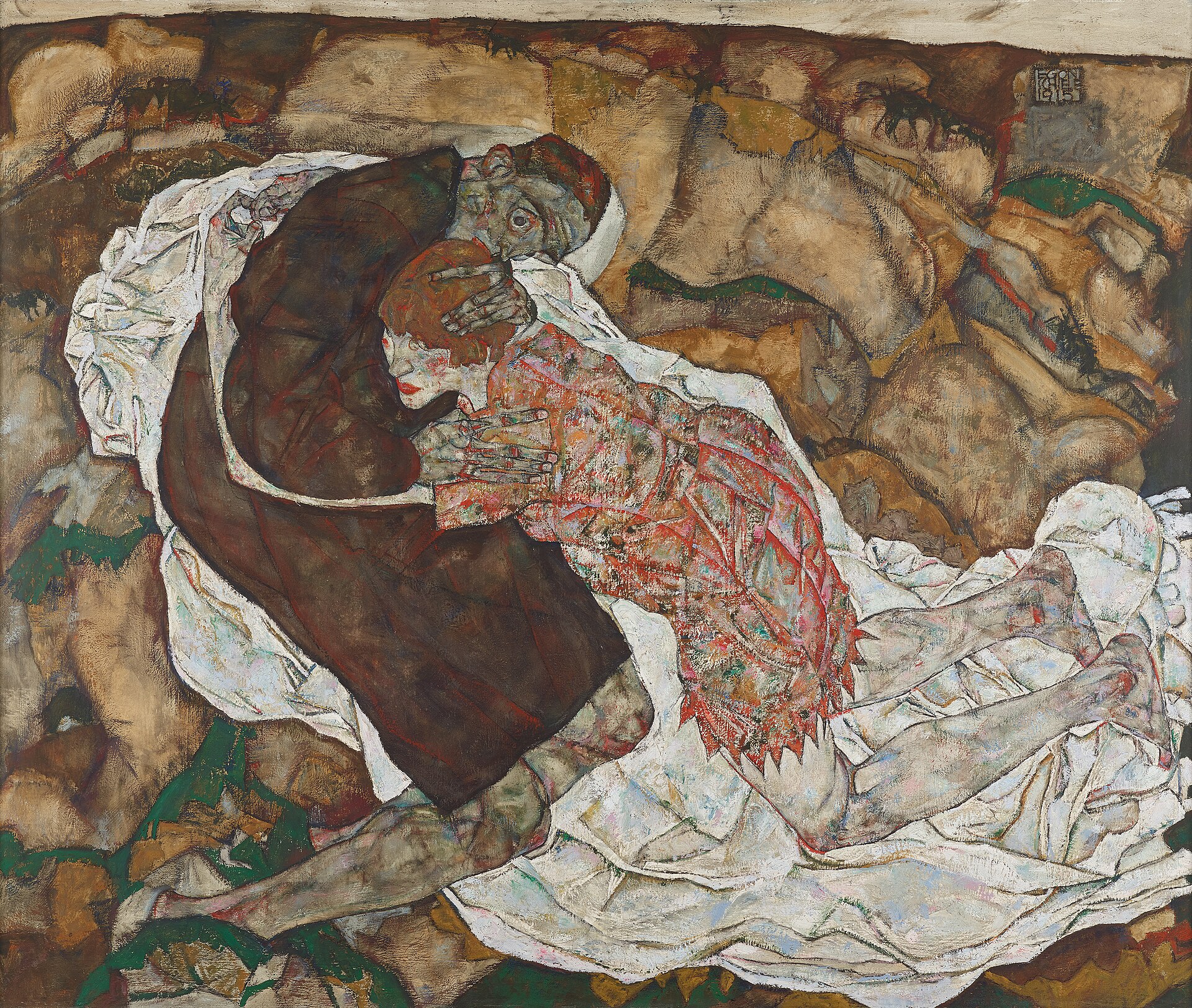
Words by Alex Lafferty. Egon Schiele – Tod und Mädchen – 3171 – Österreichische Galerie Belvedere via Wikimedia Commons.
You may also like
Constructing Transness
I’m scrolling through Reddit (strike one). I soon find myself fighting the urge to respond to ever
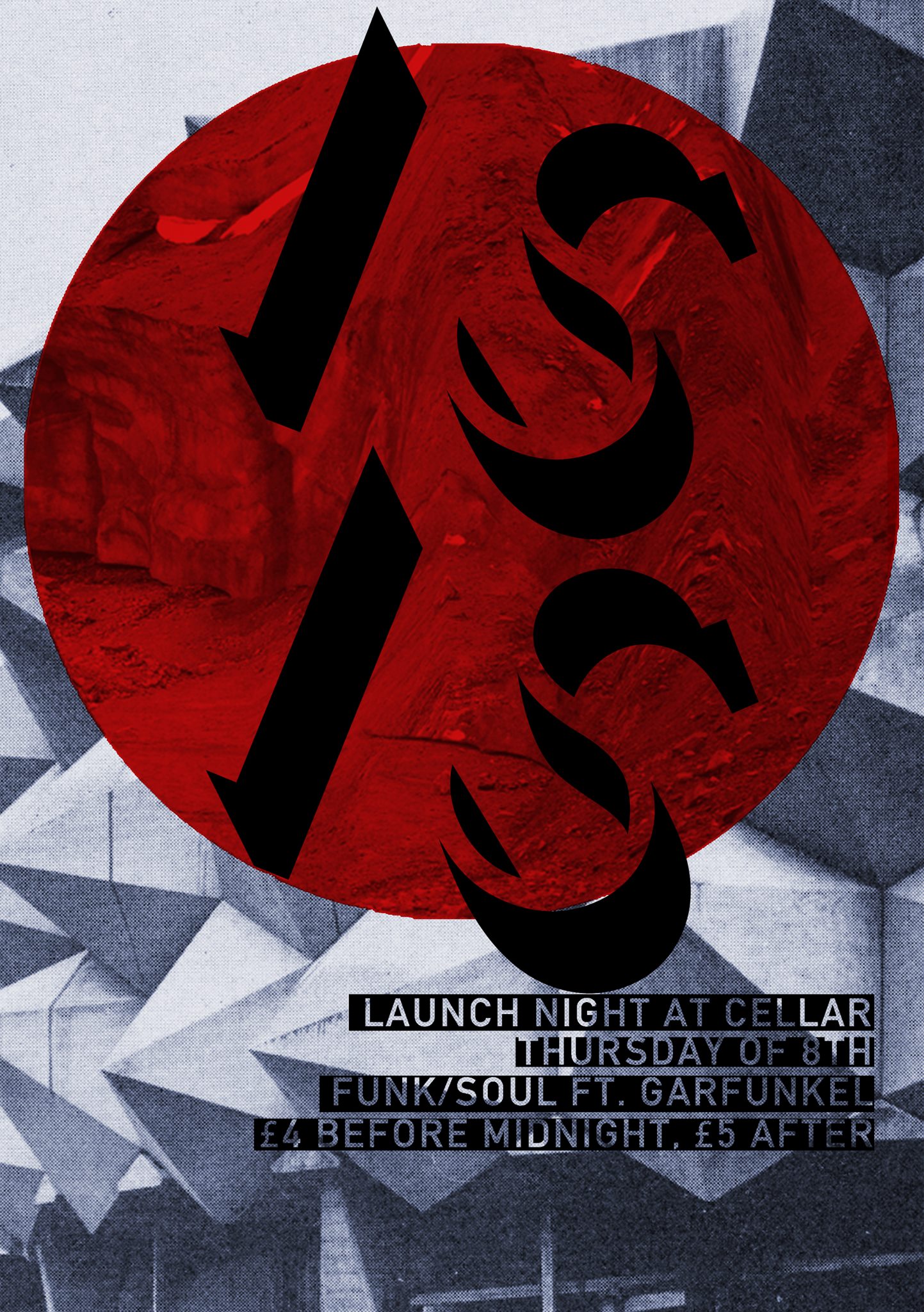
ISIS Funk & Soul PARTY
ISIS’ LAUNCH PARTY 60s//70s//80s// FUNK AND SOUL After the success of our 60s party – by

Icon of the Week: ‘Disgusted of Christ Church’
If you’ve ever been cornered by someone really Isis-pilled— an Editor-in-Chief, perhaps, or the