

Faux-Bohemianism is obscenely boring.
If you want to break the mould, resist the system, do so. But vice-signalling and aesthetic rebellion won’t shatter the fundamental inequalities that faux-bohemians fail to confront.
Universities and cities around the world are beset by a litany of issues, from affordability to student debt, to university administrations with a penchant for stifling genuine discourse in favour of stage-managed ‘polite debate’. Yet a sin of almost equivalent evil lurks beyond the lecture hall or administrator’s office. You may find it sat in a pub or bar, hunched over a desk in a library, or strolling around a garden in finer weather.
This scourge is performative Bohemianism. The aestheticisation of want and a supposed rejection of convention through eccentric fashions, detachment from contemporary society and politics, and a quasi-irreverence towards everything ‘modern’. Each era has a time it looks back on with nostalgia–the 1970s for the 1950s, the 80s for the 60s, so on and so forth. Yet there seems to be something particularly pernicious about this current trend, promulgated by word of mouth and the relentless propaganda of social media algorithms.
Such glamourised rejection of the current norm does not achieve anything. Whether it be through the use of outdated analog media like vinyl, or through the curation of excessively upper-middle-class fashions like wine-tasting and shooting trips, the end result is empty posturing. It signals to those around you a discomfort with the current state of the world, and a yearning for something more soulful and meaningful, without any attempt to actually bring back those values or conditions.
Contenting themselves with the inoculation of mild, yet alternative opinions, to stand out, young people across the world deny themselves agency and ability–and do nothing. It is the peak of selfish individualism; why attempt to challenge the existing structures of power and inequality when you can look back to prior attempts, like the counterculture movements of the 1960s, and merely lift their style, and credibility, onto yourself without any of the strife, heartache and struggle that defined them?
The countercultural movement lacks the strength it once had, substituted now with copious references, both implicit and explicit, to past victories. South African anti-apartheid protestors, including at this university, faced police harassment for their transgressions against the norm. Gay rights protestors, such as Peter Tatchell, faced horrific mistreatment from a government and society who denied them justice, yet they persisted in their campaigning. Today, there are few such figures for the rights and equality of the trans community, against atrocities in the Middle East and Asia, or against the policies and quiet conservatism of the British government. Rather than genuinely standing for change, it is far easier for the university left, once the bedrock and heart of the counterculture movement, to do nothing.
Reposting reels mocking governmental inadequacy or PR guffaws, waving away the threat of Reform by accusing them of hypocrisy due to their own wealth, shrouding themselves all the while in the aesthetics of a movement that once stood on the ramparts for progressive change–this is, for them, the best of both worlds. It allows for clearly-signalled disagreement with the trajectory of society, but also for those same individuals to seamlessly flow into that society upon graduation, to be the nodding dogs of the economic and legal apparatus that upholds those same norms they condemned.
Vice-signalling is one of the tell-tale signs of this blight, the same way the growth of mould on stale grain marks its best-by date. Whether it be excessive smoking, drinking or the imbibing of alternative substances, the effect is the same; the dulling of the senses, the slowing of the mind, and the numbing of unbounded potential or creativity into senselessness is possibly the greatest flaw of this notion of Bohemianism, microwaved back into modern tastes with an impression of anti-establishment sentiment. Over thirty years of prolonged efforts to slay the corporate behemoths of tobacco, in particular, have been undone by the slow spread of smoking as ‘cool’ again. The clogging tar and addictive nicotine that billions of pounds and lifetimes of effort were dedicated to defeating have reemerged, rebranded and reshaped, and the battle must start all over again.
There is nothing chic about being apolitical or ideologically vacant, nothing avant-garde about a disregard for the lived experiences of those betrayed by the existing system, nor for the victims of its injustices and inequities. The original Bohemians–consider Percy Shelley–were overwhelmingly the children or heirs of wealth and privilege, for whom labour was not a necessary, nor toil an element of life which they were forcibly made cognisant of by the injustices of their period. There is nothing inherently wrong with the individual existence of such people.
There is something wrong if they, and society at large, do not make the efforts to rectify the structural flaws which produced this situation. Desensitisation to politics, discourse and self-care is capitulation to the faults of the system–not rebellion against it.
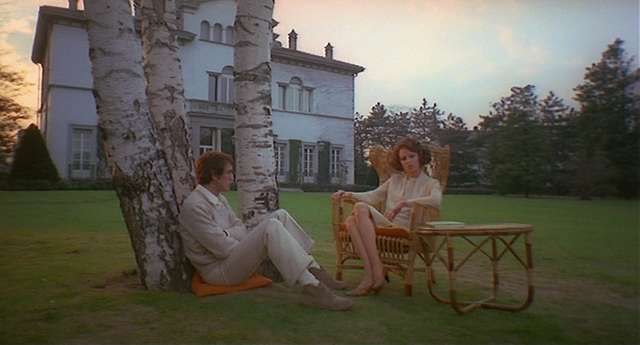
Words by Arun Lewis. Screenshot of the film Teorema directed by Pier Paolo Pasolini (1968) via Picryl.
You may also like

PRESSURE POINT: So we’re all just giving up on the environment then?
Rachel Reeves at Davos was never going to be Jeremy Corbyn at Glastonbury, nor did anyone exp
Icon of the Week: Crepe O Mania
On many a cold frigid day in Michaelmas, or hollow awful afternoon of Hilary, or boozy and fl
@grok, why doesn’t he love me?
I love reading people’s texts whenever they happen to be seated close to me. You can judge