

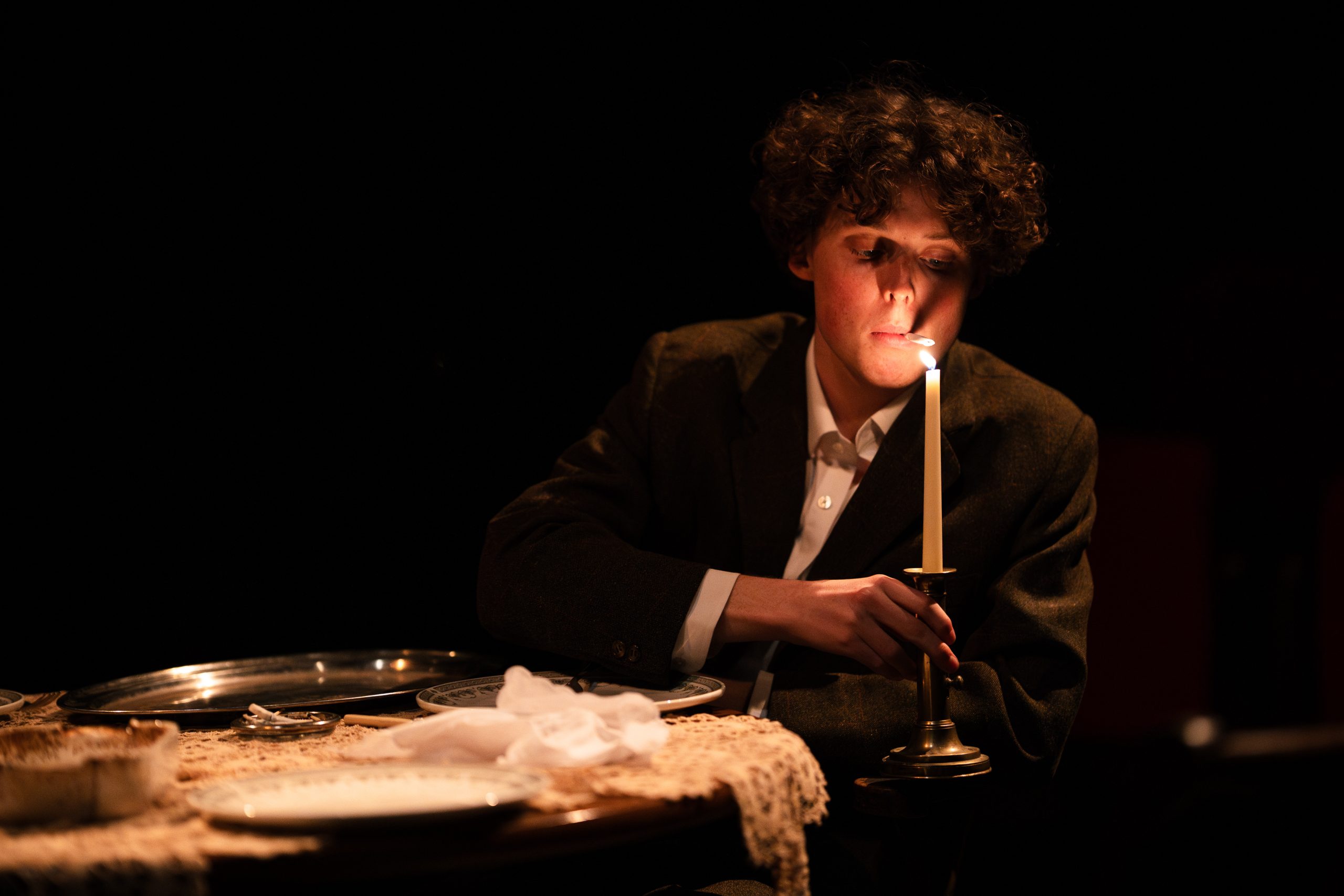
A play to remember? The Glass Menagerie: Pre-Show Interview
The Glass Menagerie, Crazy Child Productions, Keble O’Reilly, 4th-8th February
Pre-show interview
We meet in an out of the way room in Keble College where, tables swiftly shifted to the side, one part of the ‘vast, hive-like conglomerations of cellular living-units’ (so Tennessee Williams described his play’s setting) spawns itself. The bedraggled and dog-eared Penguin editions of the play carried by the directors and the cast (a testament to the fact that this production has been long in the making) are an incidental but fitting accompaniment. The precarious world of St Louis’s Wingfield family is upon us.
I speak with Crazy Child Production’s about their foray into Williams’s world. Co-directed by Magdalena Lacey-Hughes and George Robson, they’re conscious of the unique possibilities of The Glass Menagerie as a ‘memory play’. From Tom Wingfield (Oliver Spooner), who is both narrator and key player of the narrative, the audience is primed not to expect a highly naturalistic renditioning of facts but ‘truth disguised as an illusion’. This opens up the interpretive agency of the audience. George, citing Leonard Bernstein on the power of ambiguity and contradiction in art, says he does not wish to overdetermine the response of the audience, or force them to any one conclusion. Magdalena says her priority is less for the audience to come away believing any set of facts or holding some set of opinions but rather for them to feel ‘not quite as if they’ve been in a dream, but that it all happened so quickly’. This is a production that is meant to linger on in our minds, not to be sealed up and discarded once we’ve worked it out. It turns the viewer into a type of Tom Wingfield; we might have left the auditorium, but its resonances are to live and echo on.
Lyndsey Mugford’s Amanda exemplified this for me. It’s easy for this role to slip into a caricature, but even in rehearsal she brings complexity, we see warmth or sharp insight as well as the haughty indignation Mrs Wingfield is known for. The setting, conspicuously different from our own, could lead attention away from the timeless conflicts of love, poverty, and agency to simple historical spectatorship were it not for the care of the direction and the performers. So, to a 21st century audience, The Glass Menagerie is both near and far. Its depression-era world is a faded memory, re-enacted on stage in period costume. The disturbing rhymes with our own time, though, are a testament to Williams’s access to fundamental human concerns that can engage any viewer.
The staging decisions are hoped to contribute to this effect. Worrying that the raked seating might alienate the audience from the drama, the directors will configure the seating in the Keble O’Reilly in the round. Such a stage no doubt complicates the blocking of scenes, but in what I saw rehearsed, the actors managed masterfully to avoid ignoring any sector of the audience. Spooner’s expressive and fluid movements, which some may remember from his narrator in last year’s production of Into the Woods, have a more manic energy here, but also serves the practical purpose of letting him address all 360 degrees of the performance space.
Here I also saw the smooth interfacing of directors and actors. The back and forth felt collaborative, and this was just as true as the directorial duo. Spooner, from his perspective as a performer, says that ‘there are never conflicting ideas that are confused’. Whilst the directors might disagree about how a scene ought to be played, they have the same stylistic vision in mind. The actors themselves participate in this vision and have clear ideas about what they’re trying to achieve. George quips that ‘there should be six directing credits’. This explorative form of dramaturgy might clash with Mrs Wingfield’s attempted curation of her children’s lives, but it should result in fully realised, breathing characters who were formed in the Tennessee Williams’ mind and in the mind of the performers as, indeed, within the text of the play they are formed in the mind of Tom.
Crazy Child Productions have not forgotten that ‘the future becomes the present, the present the past, and the past turns into everlasting regret if you don’t plan for it!’. They are full of ideas for future projects, and, if this rehearsal was anything to go by they’ll be something to look forward to.
Words by Alex Lafferty. Image by Freddie Houlahan.
You may also like

PRESSURE POINT: So we’re all just giving up on the environment then?
Rachel Reeves at Davos was never going to be Jeremy Corbyn at Glastonbury, nor did anyone exp
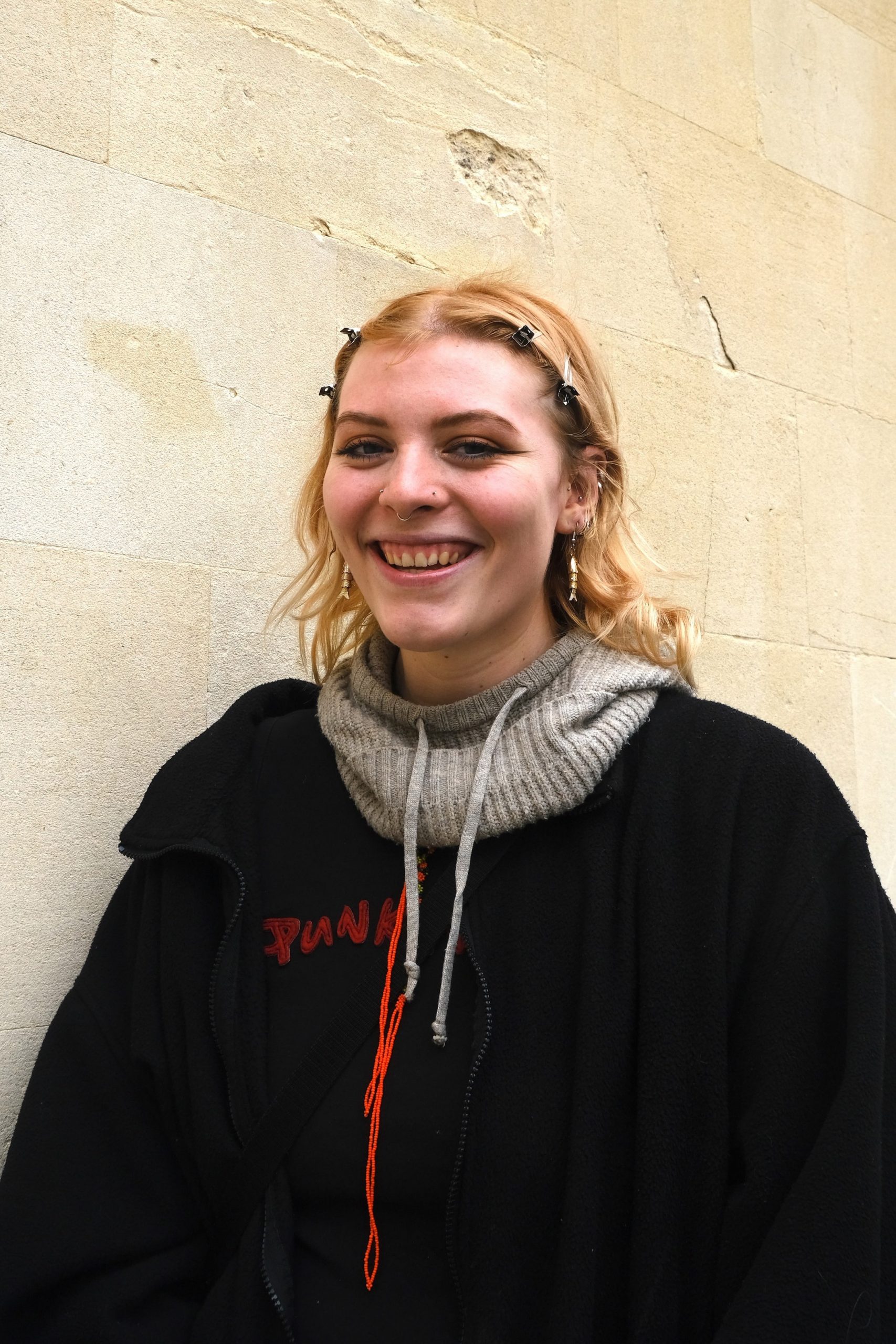
Artist of the Week: Izzy Kori
Izzy Kori is a second-year student at Exeter College, studying Fine Art at the Ruskin School. This w
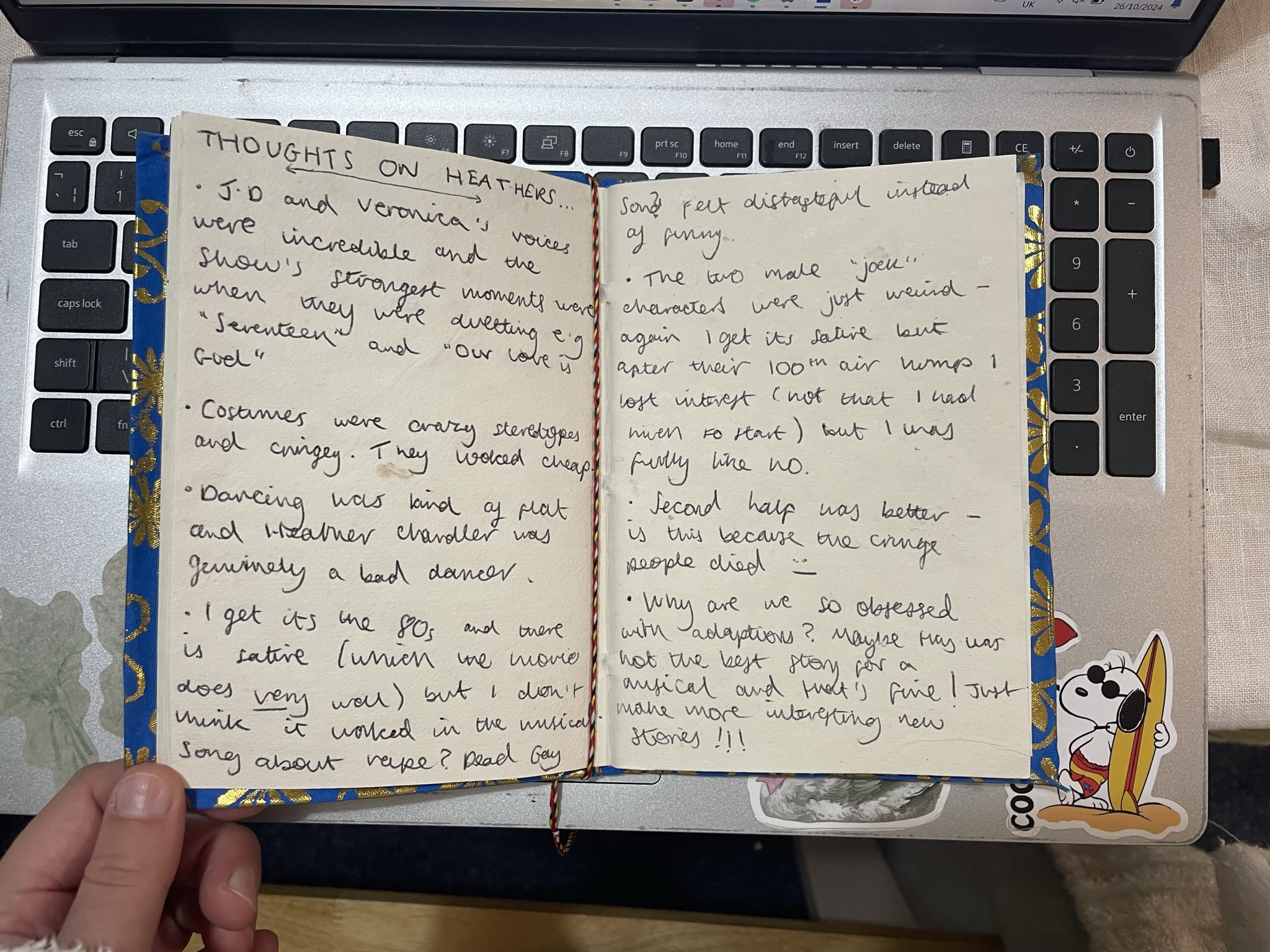
Heathers: partial notes from an impartial observer
There are two types of people when it comes to musical theatre: those who grew up going to st