

Lemons Lemons Lemons Lemons Lemons: Pre-Show Interview
We sit on yoga mats in Wadham’s Moser Theatre on a rainy Tuesday of Week 0 as I speak to Lighthouse Productions about their debut show, Lemons Lemons Lemons Lemons Lemons. The play imagines a world in which speech is regulated by law, but it quickly becomes clear that its real concerns are subtler: the ways power rearranges intimacy, and how tenderness shifts when words no longer freely given. The company speaks urgently about the play’s political resonance, already charged with an emotional and linguistic uncertainty that mirrors the careful testing of language that sits at the heart of Sam Steiner’s script.
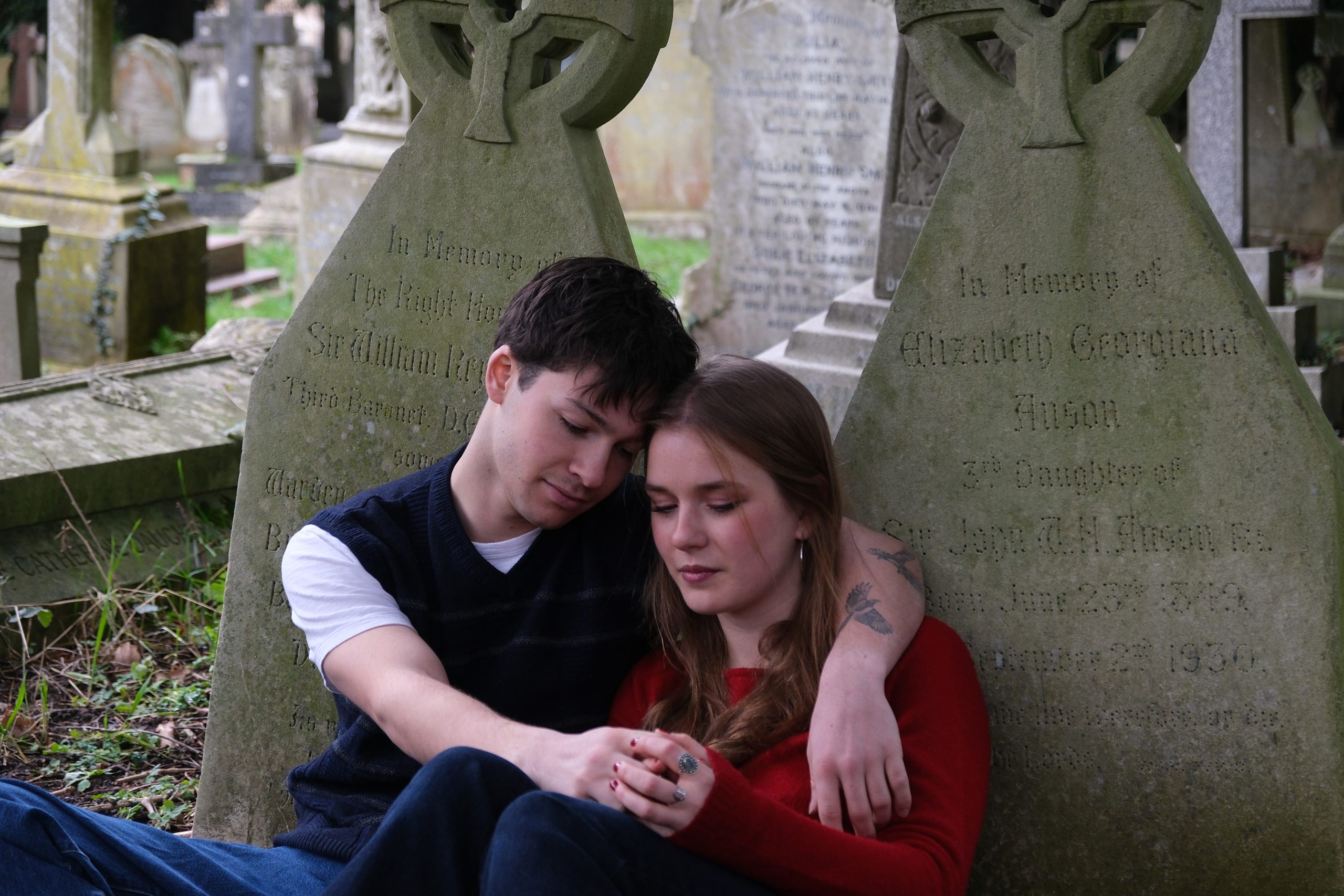
This is Lighthouse Productions’ debut. Co-directed by Alys Young and Ivana Clapperton, it is modest in scale but quietly ambitious in intent. Lemons Lemons Lemons Lemons Lemons is set in a near future in which citizens are limited to a daily word count, their speech legislated and rationed by the state. At its centre is a couple, Oliver and Bernadette, played by Kit Rush and Caeli Colgan, whose relationship unfolds under the pressure of enforced linguistic scarcity. Structured non-linearly, the play moves through what Colgan describes as ‘a series of vignettes of their relationship,’ moments out of sequence that slide between first meetings, domestic intimacy, conflict, and its aftermath. What emerges is not a dystopia of spectacle, but a love story observed at close range, one that understands politics not as abstraction but as something that settles into body, into voice, and between the smallest negotiations between two people.
Steiner’s play resists grand world building. The rules of the language limit are never fully explained, nor are they enforced onstage by visible authority. Instead, power manifests indirectly through self- regulation, hesitation, and fear of excess. Clapperton describes the play as ‘a space of collapse,’ a place where public policy erodes the private realm, not through violence but through compliance. The couple become, as Colgan puts it, ‘an island in their own relationship,’ a sealed unit trying to preserve intimacy as the outside world narrows their means of expression. It is this inward pressure, rather than any external threat, that proves most destabilising.
What gives the play its contemporary urgency is how little distance there is between Steiner’s imagined future and the present. The restriction of language certainly gestures towards censorship, but more striking are the subtler forms of constraint it evokes. As the company notes, the play resists spectacle in favour of accumulation. Its force lies not in shock but in attrition—the slow realisation that something essential has been eroded long before it is named. Power doesn’t announce itself here, instead, it settles quietly into habit.
That gradual erosion shapes the production’s approach to performance, with speech rationed, meaning is disciplined rather than diminished. Silence becomes an active softener, pauses acquire weight, and the body begins to operate as a parallel linguistic system. As Colgan reflects, the loss of tonal indicators—the qualifiers and softeners that ordinarily cushion difficult speech—produces a brutal clarity. As Clapperton states, ‘they have to use their words to deliver total honesty.’ Without the ability to hedge or gesture linguistically, honesty becomes compulsory rather than chosen, and tension builds accordingly. What emerges is not a romanticisation of wordlessness, but an exposure of how language structures intimacy, when words are scarce, every utterance carries consequence, and the smallest exchanges become charged with power.
Rush echoes this, reflecting on how the restriction reshapes Oliver’s emotional processing. With speech curtailed, feeling is deferred rather than discharged. ‘It becomes a metaphor for not being able to deal with emotion at the time,’ he explains — with emotion postponed, compressed, and stored until it resurfaces in distorted or intensified form. The play suggests that silence does not neutralise feeling but instead concentrates it. What cannot be articulated immediately does not disappear, but accumulates pressure, altering the emotional economy of the relationship.
The political implications of this are difficult to ignore. In a moment where public discourse is increasingly compressed, shaped by speed, optimisation and oversimplification—Lemons Lemons Lemons Lemons Lemons asks what it would mean to speak less, but mean more. It also poses a more unsettling question: Who exactly is afforded the capacity to do so? Control over language becomes control over thought, over relational power, over the conditions under which intimacy can be sustained.
Alys Young and Ivana Clapperton’s direction leans into this tension. Rather than foregrounding the mechanics of the language limit, they remain attentive to its effects. The rehearsal process has been deliberately exploratory, with much of the physical language developed collaboratively, mirroring the play’s own conditions of constraint and negotiation. Blocking emerged through shared experimentation rather than prescription, allowing the actors to build a vocabulary of gesture, proximity, and pause that operates alongside speech. In this sense, the rehearsal space becomes an extension of the dramaturgy itself, as communication is negotiated and meaning is discovered by the testing of limits. Trust becomes structural rather than incidental: trust between performers, and trust in the capacity of silence to carry meaning. As Colgan puts it, ‘we trust each other enough to play,’ and, crucially, to sit with what remains unresolved.
This collaborative ethos extends to the design. Staged at the Burton Taylor Studio, (which Clapperton notes as a rite of passage for their debut) the show embraces intimacy over scale whilst also challenging the space’s conventional use. Rather than relying on the BT’s familiar end-on arrangement, this production will adopt a thrust configuration, reorienting the room to draw the audience into closer proximity with the action. The effect positions the audience as witnesses rather than confidants, intruding upon moments that are not offered for explanation or reassurance. The visual language is similarly restrained. A largely monochromatic environment resists excess, allowing the performers to introduce colour—emotional and literal—through their presence. Props are minimal, often implied rather than realised, creating material absences that echo the play’s linguistic gaps. What is missing is as legible as what is present. Crucially, the production also incorporates multimedia elements such as music, sound, projection and original composition as alternative modes of communication. These layers extend the play’s exploration of expression beyond speech alone, reminding the audience that the private sphere is never fully insulated from political and cultural noise.
And yet, the production does not despair. For all its constraint, it remains tender. It insists on the persistence of connection even as articulation falters. Love, here, between Oliver and Bernadette is not declaration but labour—sustained attention, adaptation, the willingness to remain present without the guarantee of clarity. Young speaks of the play as a reminder to ensure that people know they are loved. In this performance, that sentiment resists sentimentality, as affection is expressed through effort as opposed to excess.
For Lighthouse Productions, beginning with this play feels deliberate. Young and Clapperton both speak about wanting to avoid being boxed into a single form or mode of communication. Their future work, Clapperton suggests, will continue to explore how meaning is made beyond conventional dialogue. Upon watching this rehearsal, it is clear this urgency is no act. It is embedded in the company’s attention to detail, in their willingness to sit with discomfort, and to let silence stretch rather than rush to fill it. On those yoga mats, language is not taken for granted. It is instead tested, rationed, and reclaimed.
As the interview winds down, attention shifts to the practicalities of the coming weeks. The show is close now, nearly ready to meet its audience.
Outside, the rain continues. Inside, the words have been carefully spent.
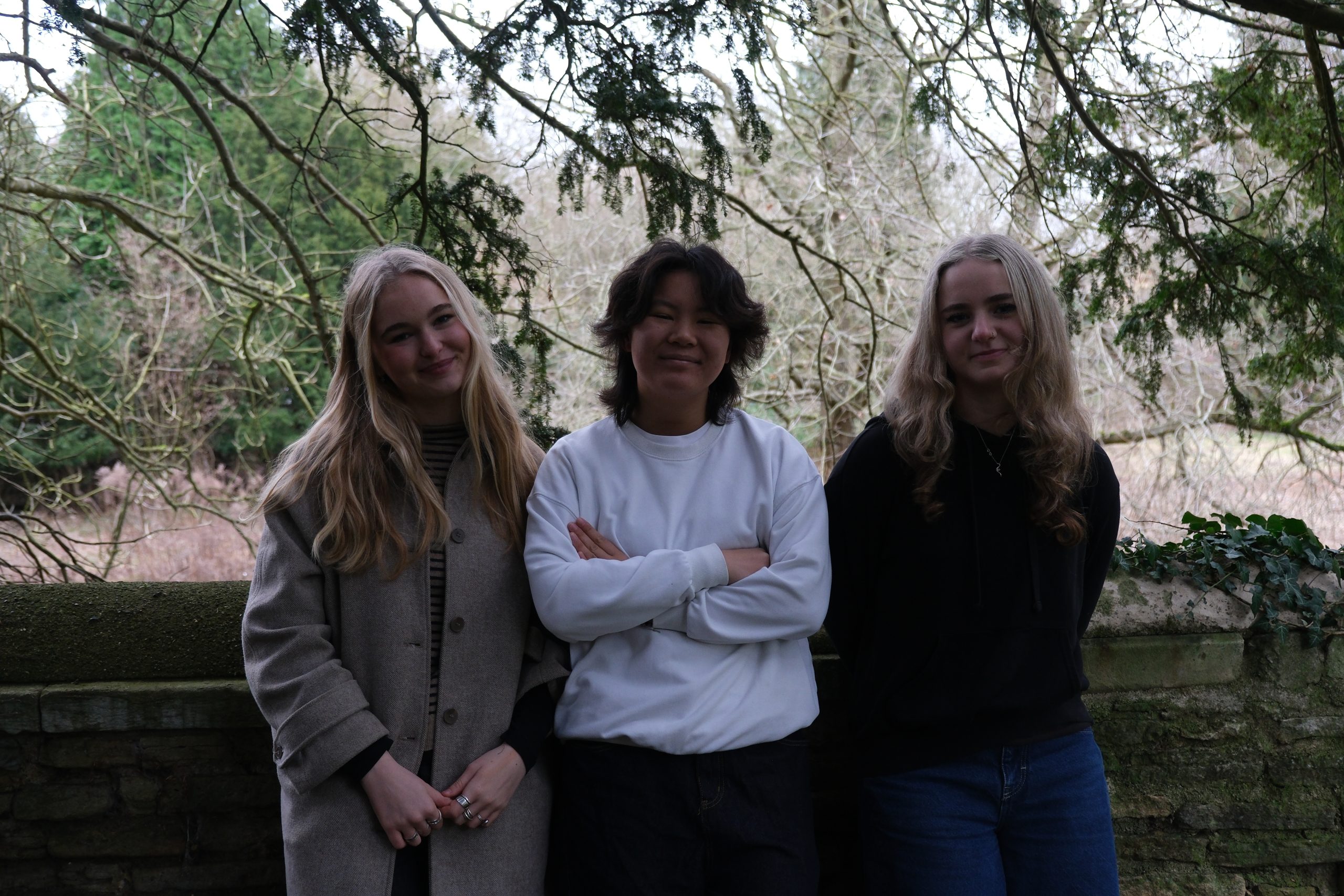
Words by Gabriella Ofo. Images by Grace Yu and Caeli Colgan.
You may also like

Living in the Third Reich: An interview with Ron Gray
Dr Ronald Gray is a Life Fellow of Emmanuel College, Cambridge. He has been there since joining as a
The Pitt Rivers and I
I think a lot about the British empire, do you? When I first moved to the UK for university,

Secularism isn’t ready for He Jiankui
In November 2018, He Jiankui broke the mould. Two days before he was scheduled to speak at th