

Why Oxford’s shitty phone service is more than annoying, it’s dangerous
Oxford’s shitty service is such a boring topic it doesn’t even merit pub chat.
And yet we’re all constantly trying to decipher the robotic voices on the end of our phone calls; or waiting, white-knuckled, for the blue line to make it across the screen on Safari.
When I first moved to Oxford, I felt there was something endearing about being unreachable. The poor service felt like a natural extension of Oxford’s quaint, stuck-in-a-different-century feel: we walk up spiral staircases in big puffy gowns and sit down at long wooden tables, so it would feel out of place to be able to check Instagram. It makes perfect sense in many ways. We all have our noses in old dusty books: who needs a mobile phone if they’ve got a degree from Oxford, darling?
But this patchy service also clashes with everything Oxford promises: an institution which promotes and pushes for innovation and boasts such intellectual superiority to the rest of the country and the world should have the infrastructure set up that allows us to call our mums on the way home. Why is a university ranked number one across the world unable to solve a problem as seemingly simple as this?
A quick Google search leads me straight to a Reddit page asking if there’s a reason behind the ‘rubbish mobile phone coverage in Oxford’. One user (with the catchy name ‘1182990’) asks: ‘Is it that so much of the university is covered by their own WiFi, so they don’t care about mobile phone reception for anyone else?’. Maybe, but that leaves us Wifi calling, and still without service, if you get the gist.
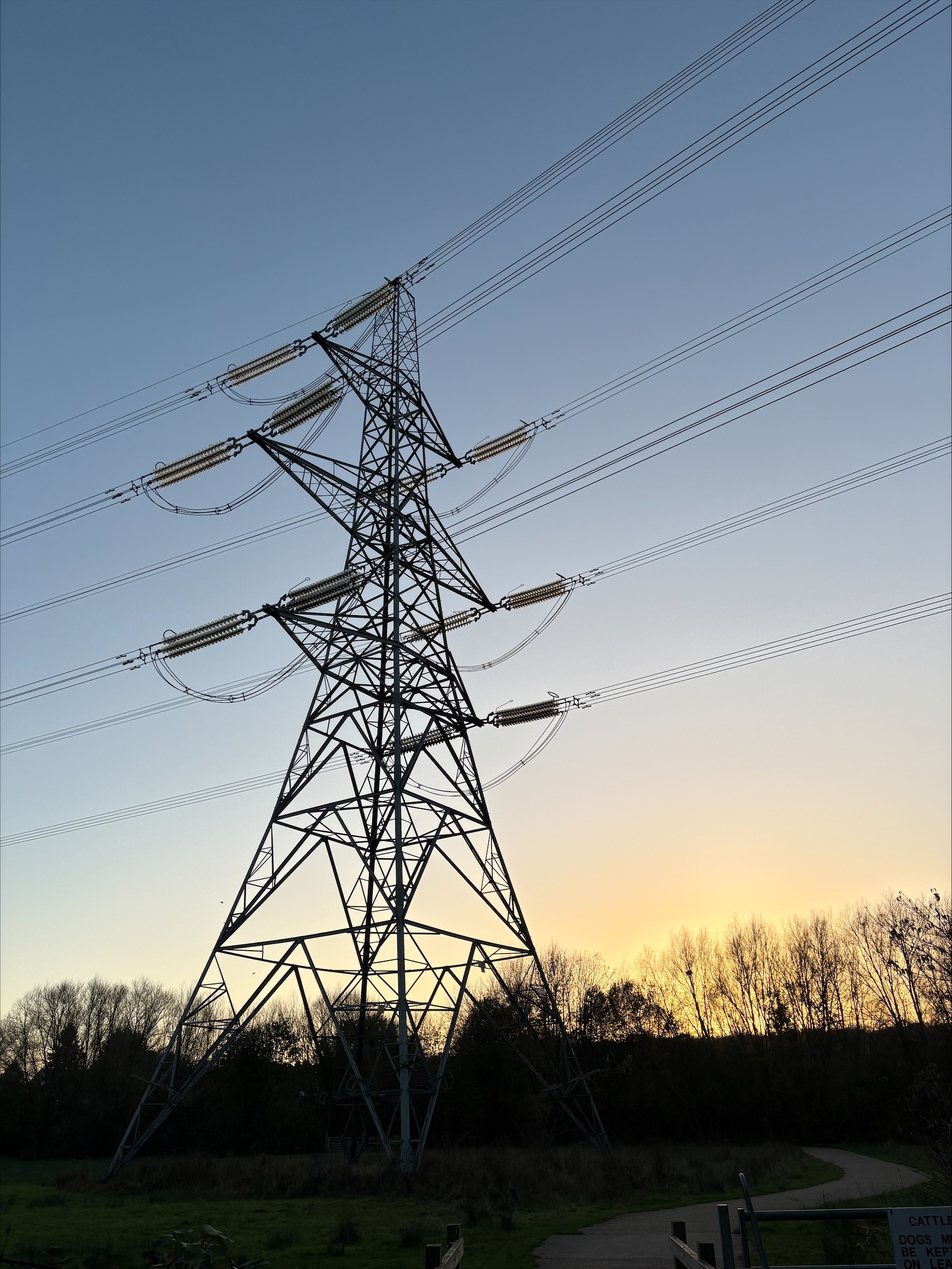
Some responses are fruitful: one user notes that Oxford is in the Thames Valley, so connectivity is poorer; another recognises that the sudden influx of students at the start of each term puts pressure on the old infrastructure as the city centre gets filled with a high concentration of people. But what catches my eye is a comment revealing that the mast (a tall tower that supports antennas for phone service signal) on the Clarendon Centre was decommissioned in early 2024, and has still not been replaced.
In an article in the Oxford Clarion, March 2024, I learned that the mast was removed to be redeveloped as ‘a mix of retail, student accommodation, and research space’, which shocked EE into looking hard for a new location. In July 2025, a post on the EE Community Support Team board declared: ‘Our engineers have started legal steps with the council to legally acquire the land and agree planning permission. Pending a positive outcome from the legal negotiations, we can start building the equipment needed for the new mast and confirm an approximate on-air date.’
There has since been no further update.
If it’s as simple as commissioning a new mast, what’s stopping them?
Oxford appears in the media to be innovative and forward-thinking: an announcement made in April 2025 on the Digital Infrastructure website—who boast the bold strapline ‘Better connectivity for Oxfordshire’— revealed that Oxford has been selected as the ‘first UK city to benefit from Cornerstone’s Small Cells’.
To tackle the shitty service issue without destroying the skylines of Oxford’s dreaming spires, Oxford is due to be the first UK city to use existing street lighting to rollout ‘small-cell’ infrastructure. This means new masts don’t need to be built, as pre-existing infrastructure can be re-purposed. The company behind it, Cornerstone, put out a statement on which reads: ‘By integrating connectivity with street lighting, we are reshaping the way cities approach digital infrastructure.’ The plan is admittedly chic and simple.
The funding for this plan comes from Rachel Reeves’s claim that Oxford-Cambridge should be the ‘Silicon Valley of Europe’, which, let’s face it, might prove quite tricky if we can’t even shoot a WhatsApp to our friends.
Similar to EE’s promise of a new mast, when I look for substantial evidence that Cornerstone are going ahead with this new infrastructure, I can’t find anything: no planning permissions or anything to prove that the ball is rolling on this.
Senior communications manager at Cornerstone, Vidhu Mayer, told me: ‘No neighbourhoods or postcodes have yet been identified for initial deployment. No applications have yet been submitted or approved for Oxford’.
Promisingly, though, ‘detailed planning and engagement is expected to progress in 2026,’ and infrastructure they deploy will be, they assure me, ‘multi-operator capable, designed to support all major UK mobile network operators’. Sounds good, but when? Why can’t I pin down a date? Vidhu tells me to get back in touch in ‘December/January’. But the plan was announced back in April…
Overall, Oxfordshire is ‘ranked the 53rd best area for mobile coverage in the UK out of 96 areas’. Compared to the Times Higher Education World University Rankings, which puts Oxford first globally, this feels a bit ridiculous.
EE is out of action in the city centre due to mast drama, but when you look at ‘Signalchecker.co.uk’, they’re actually not the worst compared to other networks: if you’re with Three, you’ll only get 30.6% coverage for outdoor 5G. If you’re with Vodafone, then, well, you’re fucked, to put it nicely—13.1% 5G coverage indoors and out.
With O2 and EE you’re a bit luckier, supposedly—O2 promises 100% guaranteed 4G coverage outdoors and in, whilst EEprovides much the same.
(Signalchecker allows you to check coverage by postcode, should you want to trawl this chart of joys.)
But what I don’t understand is why EE, who are still relocating in the city centre, are seen to have good coverage. Same with Three: according to their website’s network coverage checker they meet the Ofcom ‘standard for 5G coverage’, but they only have 5G available, rather than at high performance level.
Oxfordshire County Council must be aware that poor phone service is an issue if they’re trialing so many new projects. A BBC article from September this year announced the investment of half a million pounds into a ‘digital twin’, a software replica of the existing mast and service system, which will allow clever people to press buttons on their screens and troubleshoot the issue. For example—as Craig Bower, Oxfordshire County Council’s digital connectivity programme director told the BBC—‘What happens if you were to orientate the antennas to a slightly different direction, increase the gain on that antennae or install one or two small cells to increase that coverage—what impact might that have?’.
We’re still waiting for the results of this ‘digital twin’.
I do wonder if the £500,000 could have been channelled towards a new mast on the Clarendon Centre, but clearly that would be far too simple. God knows how much cash has been funnelled into the small cell Cornerstone trial. Clearly, it’s more important that we have nice views out our bedroom windows than the ability to make a phone call.
A couple of weeks ago, I found myself trying to buy a silver mask at Ballroom Emporium. Trying because the card machine wouldn’t connect and the woman behind the till started holding the machine up to the sky as if to say maybe there will be more service if I just hold it at arms-length. I smiled weakly at her, awkwardly chuckled, and made a joke about the shitty service in Oxford. ‘It’s not a laughing matter, you know’, she said. ‘It’s dangerous.’
And she was right.
I conducted a survey on your poor-service-induced horror stories. One of you replied with: ‘The doctors called telling me I needed to go to the urgent care centre, when I thought I only had a cold, only for the line to be cut out before they could tell me it was for a GP appointment. As a peak hypochondriac, I felt close to death. It took four more phone calls and about thirty ‘hello, can you hear me?’s to find out I had a few good years of life left in me.’
I got one from a disgruntled parent: ‘I try to speak to my daughter every day of her degree and I’m only able to hear 1 word in 8 she says.’
There’s something funny and oddly eccentric about Oxford’s patch of no connectivity. But it’s a risk to our safety, too.
I’m most worried about the pastoral and safety side of things. What about those of us—particularly young women—walking home late at night through a patchy area? What if we need to make a phone call to feel safe, to call a friend to know there’s someone on the end of the phone keeping tabs on you? Walking back late at night in poorly lit streets without a functioning phone very quickly becomes scary. We may prance around in our puffy gowns, but we are not immune to mugging, assault, and harassment.
The only good thing about Oxford’s shitty service is that you can easily get out of any conversation you don’t want to be in. I’d much rather pretend to be fighting poor connection (‘What do you mean I didn’t sleep in my own bed last night? I can’t hear you, babes, I’ll call you back later’) than run the risk of being unreachable.
And I do believe that an institution which claims to be the pinnacle of innovation and forward-thinking ought to take a moment to channel some money and time into ensuring the basic safety of their pupils and residents. It’s not rocket science.
Words by Bella Gerber-Johnstone. Image by Bella Gerber-Johnstone.
You may also like
Maybe I’m an anti-intellectual
A year ago, a friend from home visiting Oxford took a deep breath after my new friends left t
“Parents would rather have a tomboy than a sissy”: An Interview with Grayson Perry (2004)
Grayson Perry has been in the news a lot recently, not just for winning Britain’s most prestigious

Invisible Illnesses
I have been stuck outside many doors in my life. I do not mean figurative doors, though I could prob