

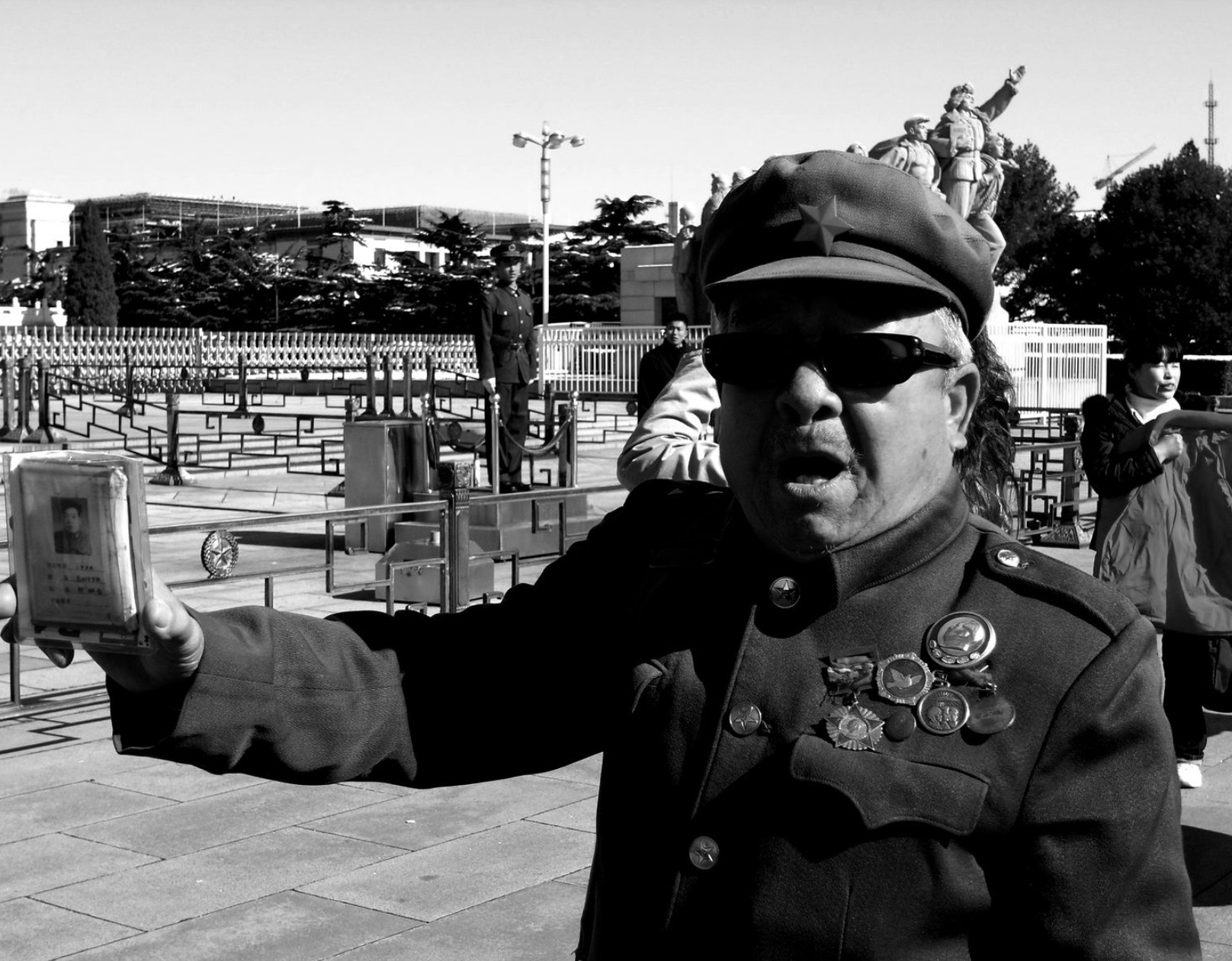
Is Marxism over?
Conventional leftist wisdom has it to mock the so-called ‘End of History’. But what if all this is just a massive cope?
Sure. Liberal democracy did not continue to triumph in the decades after 1989, but neither did socialism, so it was a lose-lose.
Today, Marxism has more rallying power on a university campus than it does in an Amazon warehouse—can robots unionise? It wins more battles in arts papers than it does on the barricades. Moreover, people are delusional about it.
‘Why do so many leftists talk like the 20th century didn’t happen?’ asked Natalie Wynn, aka ContraPoints, in one of her The Isis-coded Patreon tangents: ‘We know a full blown communist revolution could happen, only for capitalism to make a re-appearance 80 years later.’
A portion of The Isis readership would perhaps find this depressing (I don’t know, maybe we should conduct a political survey—the result would probably be 6% dark woke, 7% centrist accelerationist, and 87% non-committal/‘not political’ on Hinge.) But I think it is time for a reality check. In the wake of Mamdani’s electoral victory in New York, it might seem like a new chapter for socialism in America. But is it a new chapter? Or just an ad break from our descendent to fascist corporatocracy?
Leftists in the anglophone world have always given me the impression of being unorganised and unmotivated. Perhaps because I come from a part of the world in which history is still very much happening, in which people collectively think more in the terms of history, than they do in psychology.
When I listen to political discussions, particularly in this country, England, it seems that people have more class feelings than they do class consciousness. Perhaps because history has stopped happening here, possibly long before the fall of the Berlin Wall.
People complain, more than they critique. It is clear what they don’t want. It is unclear what they do.
People make up excuses. People make up lies: Marxism is not dead because people still learn about it, somewhat. People still use those terms: ‘revolution’, ‘bourgeois’. But in no more sincere ways than middle school boys using ‘gay’ and girls using the r-word. Communism is no longer a spectre. It is a zombie. Its parts still function—it has no revolutionary will.
In the anglophone West, progress is linked to intellectualism, and intellectualism is linked to introspection and inwardness. There is something fundamentally undemocratic, counterrevolutionary, about a culture which reveres a solitary mind. Susan Sontag put it best in her diaries, in the collection As Consciousness is Harnessed to Flesh:
‘It’s not “natural” to speak well, eloquently, in an interesting, articulate way. People living in groups, families, communes say little—have few verbal means. Eloquence—thinking in words—is a byproduct of solitude, deracination, a heightened painful individuality.’
Communism, as a revolutionary politics developed by a German Jew living in exile in Victorian London, did not triumph in the individualist industrial country in which it was born. Rather, it materialised in those cultures where it was least expected to materialise: the clan-based agrarian societies of the Steppe and the Far East.
The most recent piece of communist media I consumed was a 360 degree theatre show I saw in China this summer, in the city of Chongqing—which might have recently popped off on your FYP with its drone night shows, spicy hot pot, and cyberpunk skyline. It is roughly the size of Austria, and home to 32 million people, similar to the population of Australia. For most of its history since the founding of the People’s Republic, the city was renowned for its red history.
It was here in 1949, near the end of the Chinese Civil War, where some 300 Communist prisoners were massacred by the fleeting Nationalist government in concentration camps run by the reactionary regime, and, to an extent, American imperialists.
These fallen revolutionaries were the martyrs of New China. In 1961, a little more than a decade after the revolution, a novel written by one of the survivors, Red Crag, was published as a reminder of the bitterness of class struggle for the next generation of young proletariats. It was subsequently turned into a film, opera, and a series of merchandise, becoming the hottest intellectual property in China for the next 60 years, which leads us to Chongqing 1949. It is a show performed in a purpose-built theatre with rotating seats and sets, and something virtually incomparable with anything one can find in the West at the moment, perhaps except the extravaganzas of Texan mega churches. But even that is a flawed analogy.
The show was not preaching. It did not really have a voice. It had characters, but none whose names you would remember afterwards. They are types, incarnates of ideas of political struggles that are completely impersonal and, in a sense, amoral. The plot is supposedly centred around three brothers who are torn apart in the Civil War: the eldest is a commander in the crumbling Nationalist regime, and the two younger brothers are a martyred underground Party agent and a People’s Liberation Army soldier respectively. But unlike in Western media, or the Civil War segment in a Walt Disney World animatronic history show, there is little sentimentality regarding the breakup of the brothers. There is a great sense of inevitability to the tragedy of it all. Beyond ‘propaganda’, one experiences a sublime sense of neutrality. It was ‘history’ rather than ‘politics’ that was taking place: the epic downfall of a declining regime, the subversion of its ruling class replaced by an underclass, in a thousand Eisenstein-esque montages animated by human actors.
Perhaps because I was seeing actors from afar on a very big stage, I acquired a certain perspective—a historicist perspective: since really, as given in the title, it is the city, and by extension the country, rather than any human characters, which acts as the story’s protagonist.
The show’s aesthetic quality might be easily dismissed as ‘flat’ and ‘propagandistic’. But I want to question whether ‘depth’, in the way it is understood here in terms of psychological interiority and moral complexity, is really the ultimate point of judgement for a work of art, or a form of politics, or a kind of life.
In my Guillotine piece, ‘Modernity is inherently pornographic’, I argued for an alternative to the kind of humanism prevalent in Western art and thought. A kind of humanism, with all its best intentions, which creates a version of humanity that is limiting without realising it. A kind of humanity which Marxists would have called bourgeois: a conservative regime which sees interiority, intelligence, and intellectualism as the cornerstones of a society, rather than a fleeing phase of its progress—is such a society not designed to be stagnant?
In China—as elsewhere outside the anglophone world where great changes did happen—progress was not brought about by intellectuals in the cities, nor by a sudden appreciation of humanity or humanism, but rather a certain rejection of humanity and humanism. Not just violence in the physical and psychological sense, but a violent transformation of humanity itself into something beyond it: a political being.
Partisanship, not humanism, led to the Communist triumph in the Civil War. The sort of commitment to a certain ideal which transcends one beyond their ordinary ways of being, beyond what is normally seen as humanly possible, for better and worse. A style of discipline which was first implemented into the Communist Party and the Workers’ and Peasants’ Red Army, and after the revolution, the entire population of the People’s Republic of China.
There is a strange kind of regression in our era. After a tumultuous century of social experiments and avant-garde art, we have suddenly reverted to a conservative culture in which anything beyond ‘the human’ is dogmatically ruled out of existence. Today, we no longer speak in terms of ‘power’ and ‘solidarity’, but rather ‘rights’ and ‘empathy’. Rather than empirically examining the power structures in the world, we are more interested in demanding arbitrary rights from existing authorities. Instead of organising collective actions based on shared material needs, we rely on emotions, feelings, the kindness of strangers.
Politics, it seems, has been completely lost to its realpolitik aspects, and degenerated back into a simple moral discourse. If this piece has any takeaways, let it be this: Marxism is not a moral critique of capitalism, or modernity. It should not be a theoretical embellishment for any personal feelings. It is violent, not because it incites armed usurpations and rebellious emotions, which are actually less violent; but because it looks at human problems through an inhuman eye, that of materialist analysis. Once upon a time, Marxism was able to transcend other critics of the system, beyond their more humanist, moralist, religious points-of-view, and envision a new humanity which was able to transform the world.
Maybe I am nostalgic for a certain 20th century partisanship. Maybe I am D.H. Lawrence in his letter to Edward Garnett, in which he said he was not interested in egos, personalities, nor in what his characters are in an everyday way, but rather the it in his characters.
The Marxism of today would be in Nietzsche’s words: human, all too human. The ‘Marxist’ sentiments in our society are really a new guise for the old conservative culture-criticism, posed against industrial, overcomplex, devitalised, alienating modern urban society—choking on affluence the idea of a simple people living the simple life in a decentralised, uncoercive, passionate society with modest material means. How many Marxists of today would choose to run an industrialised Dictatorship of the Proletariat over a commune in the woods? Perhaps we shall revisit the history of Actually Existing Socialism in the 20th century, and relearn how much of the socialism of the past century was particularly targeted at destroying that kind of simple society.
I wonder if the emphasis put on the alienation of labour, an early Marxian concept prominent in Economic and Philosophic Manuscripts of 1844 (posthumously published by the Soviet Union in 1932, by the way), in online discourse and attempted TikTok agitprop signifies the ultimate neoliberalisation of Marxism, the complete privatisation of all Marxist politics into a personal complaint against ‘work’.
The crazed alt-right accelerationist and Englishman, Nick Land, now residing in Shanghai, might have understood Marx better than most of the online left today, in that capitalism is truly a progressive force, particularly given its fusion with Marxist politics, as in the Chinese case. The Communists in China have done what the capitalists did in Europe, albeit in 50 years rather than 150. As much as we loathe the old drugs that are progress and history, maybe our doomer time deserves a hard dose—not a historicism of inevitability, necessarily, not a blind belief of ‘Communism in 20 years’; but instead one of becoming.
Irony is the opium of our time. Truth today is rarely taken without a pinch of irony, a consequence not so much of neoliberalism as the long Western philosophical tradition of scepticism. And I sense by being sceptics we are denying ourselves a certain power: the power of becoming; the becoming-truth. Evidently, those who are winning today are those who have a prescriptive rather than descriptive definition of truth—those who are typically not found in the West; and if in the West, not on the Left.
A temporary fatigue with modernity does not make a revolution. The morning after the orgy of a revolution matters much more than the night. A post-capitalist society would very likely still carry the memories and habits of capitalism, despite an active effort to repress them for as long as 80 years. There will still be situationships, brainrot, gooning, AI (those complaining about capitalism failing dating have not watched Moscow Does Not Believe in Tears)…
Words by Zac Yang. Image by Kudumomo via Flickr.
You may also like

Late August
Let me try again. It is cold. It is August. It is the last day for swimming so you run your h
Oxford: a place for lovers?
What makes a city feel romantic? Oxford, certainly, looks the part: honey-coloured stone, lamplit an
Brewing communities: inside Oxford’s café culture
At Jericho Coffee Traders, postcards from customers cover the wall behind the cash, an