

Guillotine: Bring back woke
What do you think of when the term woke is mentioned? Does it conjure up images of chronically online social justice warriors, frantically policing every word and phrase? Leftists fear being accused of empty ‘wokeness’, and for right-wingers, it may as well be a slur. In short, the term ‘woke’ has become inflammatory, used to evoke a reaction more than anything else. A far cry from the urgency the term should be used with.
The term woke originated with the African American community in the active struggle against racial prejudice of the pre-civil rights era. To be woke was to criticise the power structures that normalised and perpetuated oppression. Most importantly, it was a call to action, to question it all. It wasn’t an inherently leftist label, nor did the term ‘woke’ only refer to a set of ideologies as it is understood as today. Instead, ‘wokeness’ made activism accessible to the average person, urging them to re-evaluate their political apathy, and observe the structural oppression all around them.
Wokeness differs from resistance or systematic critique because it lies in the intersection between the personal and political. Malcolm X’s critique of the everyday accepted norms of perming and bleaching within the African American community was dismissed in a way that his direct criticisms of the police state with its social and economic exploitation were not. But engaging with the two issues on separate levels of personal vs political is to ignore the fact that cultural subjugation is the micro-level continuation of systemic oppression. It can be said that this erroneous degree of separation still exists in how we interact with the world today. Creator @ its.michele.ok’s skit of ‘That one friend that’s too woke’ highlights this issue in the modern world perfectly— there is a level of exasperation that society levies against the critique of personal issues, believing them to detract from the ‘bigger issues.’ What people miss, of course, is that the personal is always political.
But what’s even more worrying is that this exasperation grows alongside our increasing comfort. Liberal capitalism has extended just enough rights and protections to most people in the West that many of us feel broadly satisfied with the system, failing to recognise that in a world where everything from the device you’re reading this on to the overpriced coffee you buy most mornings has a global supply chain. We fail to recognise that the society we exist in does not end at the shores of the British Isles, but grows more interconnected and wider everyday. To recognise this is to leave that comfort and broad satisfaction behind, instead risking the opportunity, the mobility, and the safety that we enjoy. So of course genuine structural critique feels unsettling, and it becomes more socially acceptable to be vaguely critical and intentionally obtuse about our complicity in upholding the international systems of oppression.
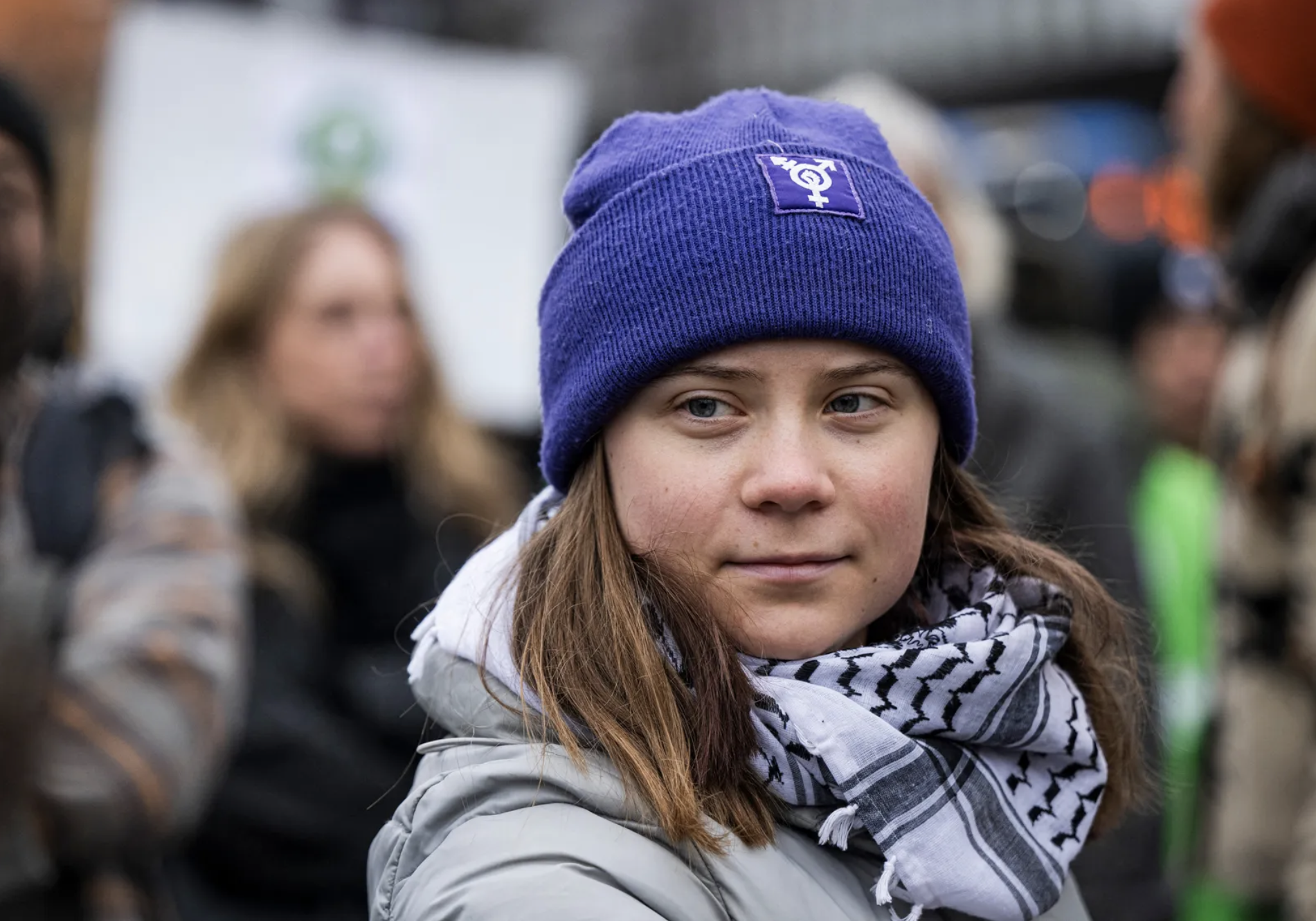
You would assume that freely displaying loud and unapologetic political views would give someone a lot of social credit. But consider Greta Thunberg — silenced by global media, despite the fact that her views find broad support. Worst of all, she has ultimately been socially flattened into a meme because of her intensity.
This is where our performance comes in. So long as you are able to give the right signals, through a mix of cultural and semantic cues, it is possible to convey your political stance with a sense of ambiguity that becomes easy to uphold. And not only is it possible, it is preferred. A certain degree of wokeness has become politically correct, but only to the extent that it is applicable to us in this Western societal framework that so deeply benefits off of oppression elsewhere.
We have to ask, then, whether any of our cultural critique has meaning if we are only willing to be woke until we gain something from it. When everyone appears just the right amount of woke for social credit, then wokeness has been well and truly co-opted by the Western capitalist system. And if being woke is just another social practice, it becomes part of the complicity that is entrenched in Western life — from the global networks of extraction and labour that sustain our comforts, to the fiscal and political structures that mean even the most socially conscious person is funding a genocide, somewhere.
Considering this, we must contend with the fact that we in the West can never be revolutionary in any pure sense. I may consider myself critical of the system I live in, but when my criticisms can exist comfortably within the system that is built on oppression, any notion of solidarity becomes painfully contradictory. And yet, the societal discourse we engage in doesn’t even try to reckon with this contradiction. We turn inward, pouring energy into the ambiguity and performance of sustaining our politically correct personalities.
Words by Naima Aden. Image by Jonathan Nackstrand via Getty Images.
You may also like
PRESSURE POINT – Cartoonishly evil: refugees and the new centre ground of British politics
On 11th October, Tory leadership contender Robert Jenrick thought he popped off. In a
GUILLOTINE: Modernity is inherently pornographic (Or, A Critique of ‘The Gooning Ideology’)
Foreword – A MODEST NOTE OF APPEAL Dear Citizen Lowenberg, Citizen
Icon of the Week: Pedr Charlesworth, The Man Behind Byke
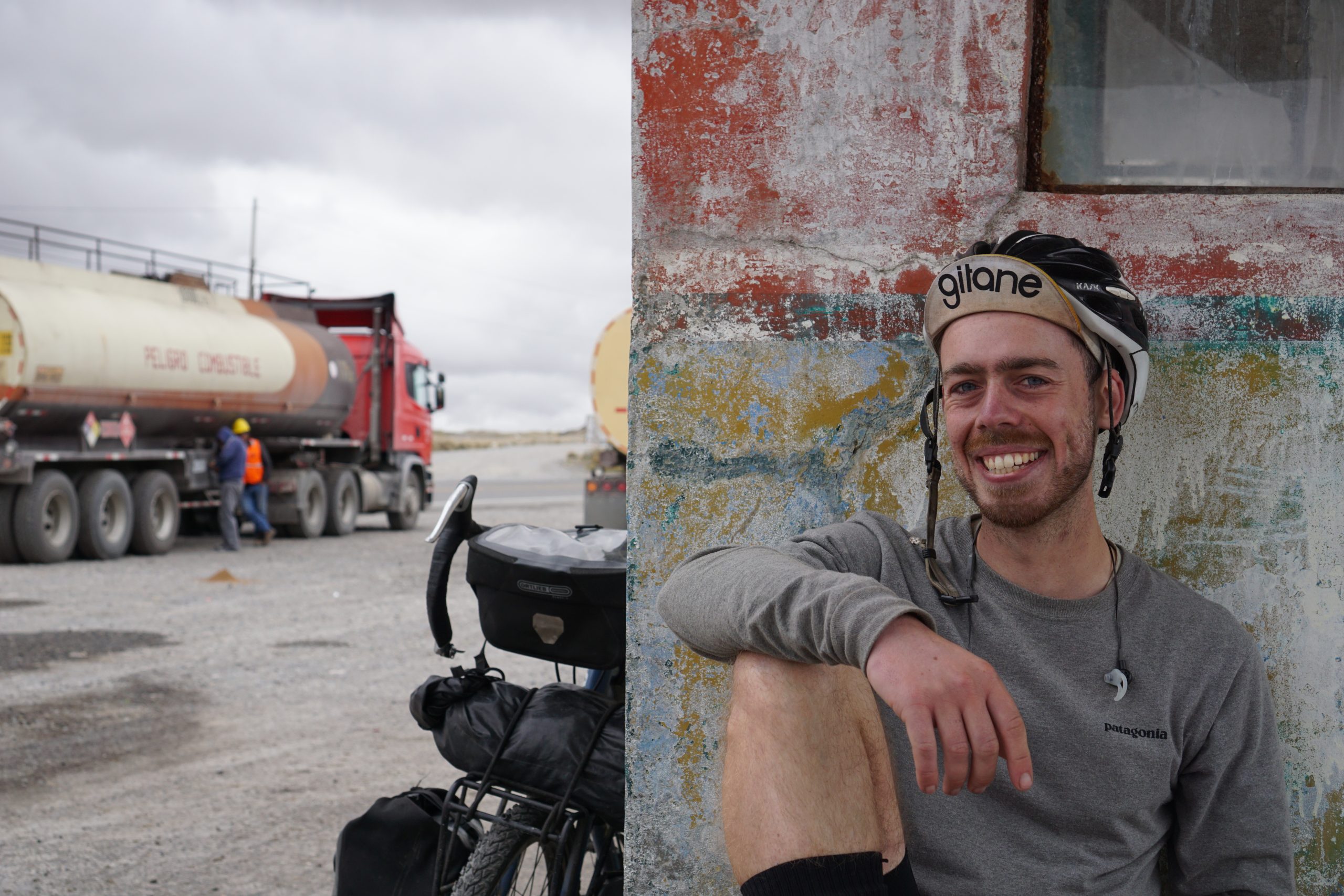
Pedr Charlesworth is the man behind Byke (formerly Oxbikes), the business re-vamping old bikes and g