
Bygone dreams: a review of Carl Sagan’s ‘Cosmos’
‘If inclinations toward slavery and racism, misogyny and violence are connected—as individual character and human history, as well as cross-cultural studies, suggest—then there is room for some optimism. We are surrounded by recent fundamental changes in society […]. Women, patronised for millennia, traditionally denied real political and economic power, are gradually becoming […] equal partners with men. For the first time in modern history, major wars of aggression were stopped partly because of the revulsion felt by the citizens of the aggressor nations. The old exhortations to nationalist fervour and jingoist pride have begun to lose their appeal […]. In only a few decades, sweeping global changes have begun to move in precisely the directions needed for human survival.’
Isn’t it heartbreaking? These hopeful lines are nearly 50 years old! They come from the late Carl Sagan’s Cosmos, which tells the story of the universe and our quest to understand it, drawing on a wide range of history and disciplines. This is one of the final paragraphs in a book that tempers mystic wonder and reverence with poignant examples of human short-termism. Sagan’s achievement is to allow the intuitive awe of the cosmos and human curiosity to shine, using the dark parts of our past to emphasise their brightness.
I imagine a reader in 1979 feeling pride and reassurance upon finishing this book. The existential anxiety of a generation awaiting nuclear annihilation is channelled into a modern creation myth that originates a moral imperative for sustainability and pacifism. For Sagan, our genealogy is of the stars and our forays into space journeys of self-discovery. You can’t read this book without feeling cosmos (the antonym of chaos); Sagan envisages an intergenerational, global humanityof which we are the inheritors. Pertinent parallels between modern and ancient thinkers—Ancient Greeks, Mesopotamians, Chinese; the Aztecs, Mayans, Egyptians; the Inuit, Indians, Icelanders—peppered throughout by diverse resonant epigraphs implicate us in a human music, a universal symphony, one cosmos. From this cosmic perspective, worldliness and materiality appear base and inhuman; the human is comprised of greater things.
Reading Cosmos today, I felt more shame and disappointmentthan wonder and hope; the shadows from Sagan’s time have grown. Major Western powers refuse to recognise the crimes perpetrated in Gaza; xenophobia, racism and nationalism surge globally; so too does misogyny that is re-repressing women’s rights; each year new warnings of climate catastrophe are ignored or met with governmental platitudes and empty words; living standards are falling; islands are sinking; governments are suppressing democracy; a new cold war is beginning. The list is long but the extent of injustice and short-sightedness is impossible to adumbrate here.
Now this all sounds very bleak. Earlier this year Peter Thiel—co-founder of Palantir, which develops AI platforms—couldn’t simply answer ‘yes’ when asked ‘would you prefer the human race to endure?’ Maybe it is bleak. Is it not humiliating to live in a society which has assigned enormous power to one who cares not to preserve it?
Unfortunately, there are many Peter Thiels in the world, and they tend to be rather well-endowed. It seems they do not particularly care for the rest of us. However, I do hope that you and I care for each other, for bigger things than wealth or influence. The Union Hacks might not, but perhaps the rest of us do.
Cosmos is quite possibly the most inappropriate word to describe the current climate. Indeed, chaos is somewhat more apt. The effects of poor and often criminal statesmanship today are infinitely compounded by a toxic mediascape. Social media exploited by the politico-economic machine has fractured and factionalised us to an unprecedent scale. Previously the reserve of parliaments, we too can now fruitlessly argue with avatars on Twitter whom we will never know for our own moral self-affirmation. Intercontinental Communicative Missiles bomb our democracy each and every day. Governments do not appear interested in building truth-bomb shelters. Meta and X both have erased any protections they did have against misinformation. The sonicactive fallout makes it hard to hear.
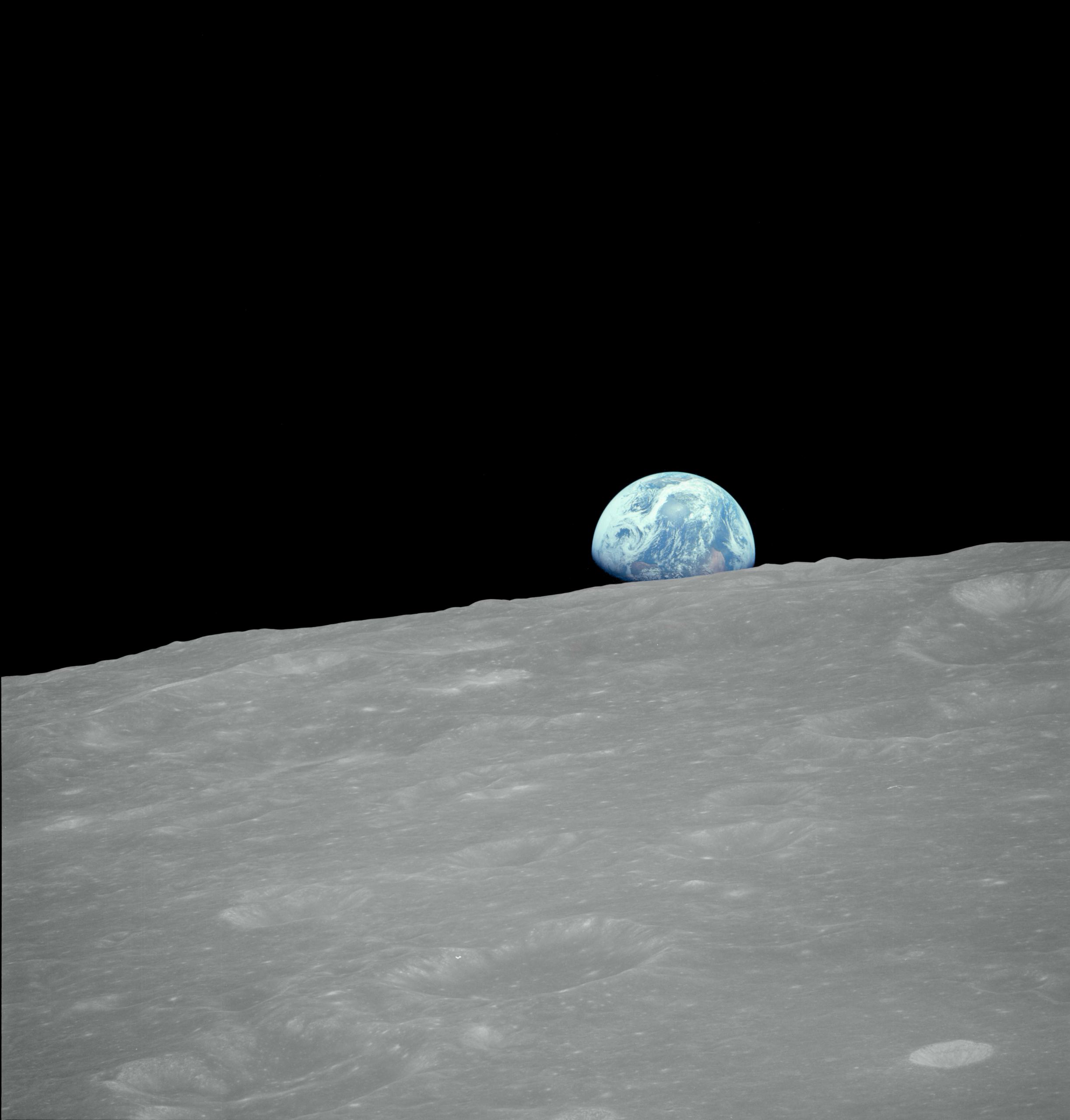
As it stands, we stick out like a chaotic sore-thumb in this cosmos; Sagan may have been disheartened. Cosmos suggests that there are stargazers and groundwatchers—and right now it’s tempting to look down. It’s hard to look up (they made a whole movie about it!), but when stargazing I find we float above our earthen strife.
There’s some truth in that meme: ‘flying cars,’ they said. It’s a strange experience reading old hopeful accounts of the future. I would urge you to do so. It reminds me that on our backs we carry the hopes of all humanity, alive and dead, or in the words of Shakespeare: ‘We are such stuff as dreams are made on.’
Words by Niccolo Albarosa. Image via Wikimedia Commons.
You may also like
Short Poems
Amongst the sprawling fragments of prose and poetry which make up William Carlos Williams’ Spring
PRESSURE POINT – Would Stevie Wonder make a better Chancellor than William Hague?
“What is the Chancellor? What do they even do?” Amid pressing global crises

Artist of the Week: Rachel Smyth
Tell us a bit about yourself. I’m Roo and I primarily write music. I’m a music student and I foc