
Greetings from Tibet
At the time of writing, the Tibet Autonomous Region remains inaccessible to independent travelers who do not hold P.R.C. passports. Foreign tourists are required to apply for the Tibet Travel Permit in advance of their trips, during which they stay in groups separated from Chinese nationals.
It is perhaps the last place on Earth where Orientalism is somewhat justified.
In 1938, a German expedition sent by the SS came here searching for the birthplace of the Aryan race. A decade earlier, the Soviets came looking for the paradise, Shambhala, and thought to combine Buddhist tantra and Marxism-Leninism to engineer the perfect Communist human being. In 1951, the Chinese People’s Liberation Army entered Lhasa, and red flags have flown over the palaces and temples since.
At almost 4000 metres above sea level, your consciousness begins to loosen a little. This is the land of the pagodas, where bodies are not buried but fed to vultures. You begin to understand how the people here came up with things like samsara, as each day feels like working your way up through purgatory.
Morning. You wake up and have your first breath of oxygen—from a bottle. Then, you walk down the street, slowly, so as not to lose your breath, just to get blinded by the sun—there is nowhere else on Earth closer to it.
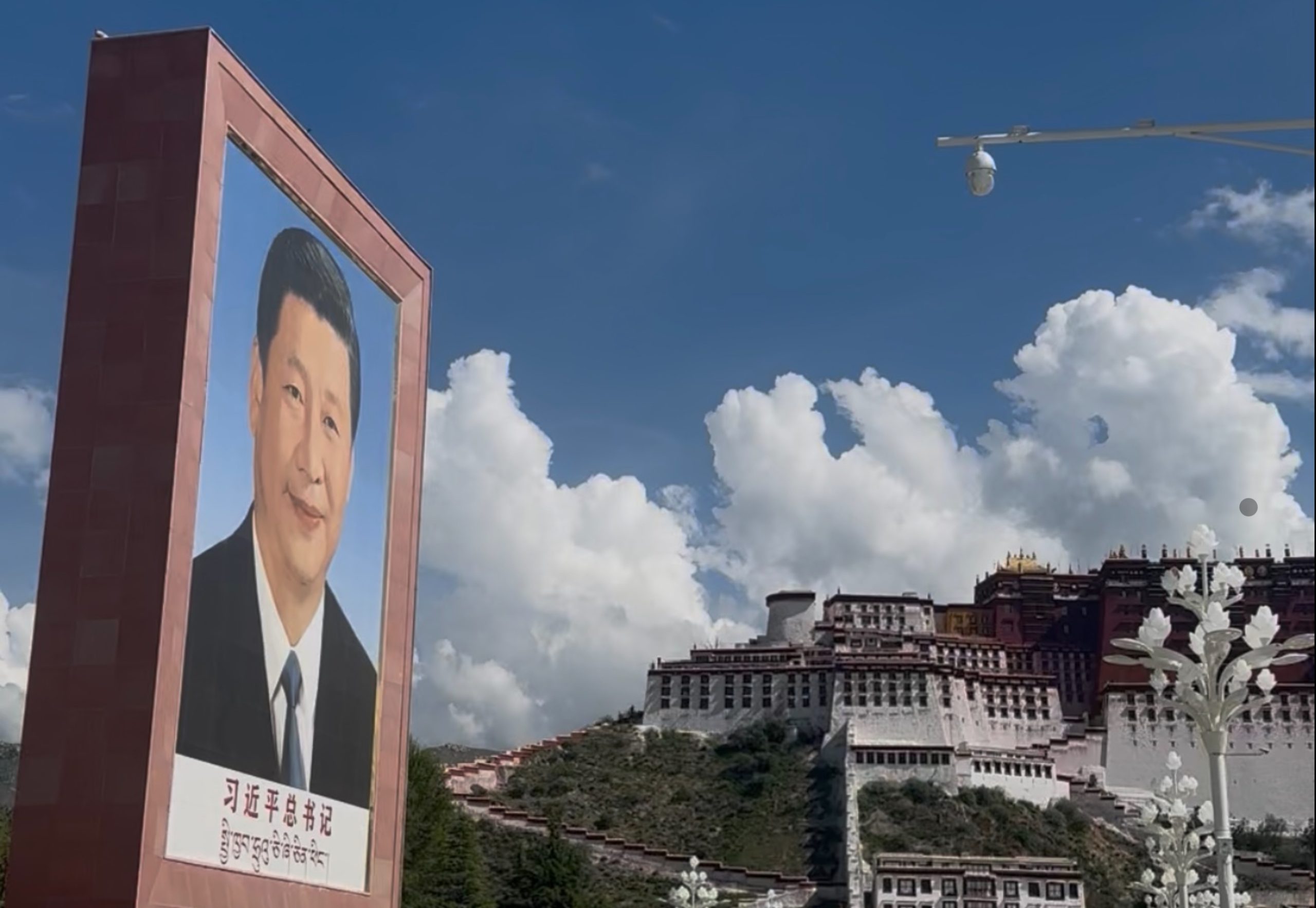
Then, a giant portrait of Xi.
Tibet today is quite disorienting. The Jakhang Temple is the most sacred site of Tibetan Buddhism. The city of Lhasa began here. In the year 640, Princess Wencheng of the Tang Dynasty came to Tibet in a diplomatic marriage to the founder of the Tibetan Empire, Songtsen Gampo. She brought with her a precious statue of the Buddha, created during his own lifetime, and now enshrined in the temple. Well versed in feng shui, she had the vision of Tibet as a lying demoness, whose heart was the lake on which the Jakhang Temple now stands today. Under his throne inside the temple, someone offered the Dalai Lama a pyramid of Ferrero Rochers.
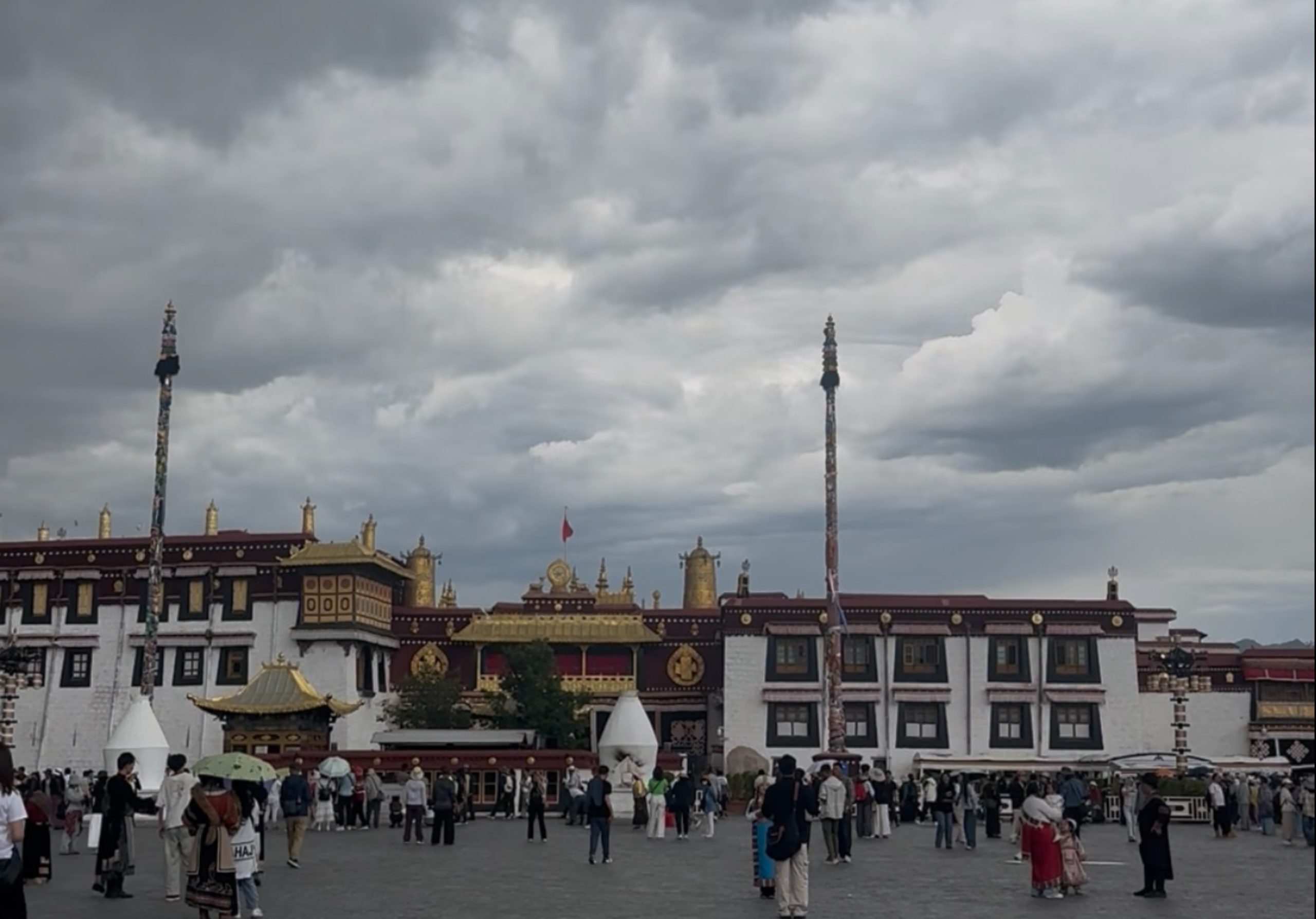
Tibet is a bit like the Aztec civilisation of Asia—temples and cities are built on lakes filled by clay carried by goats. The modern name Lhasa comes from Rasa, literally meaning ‘goat city’. There are still goats around. Little pets sleep like dogs in restaurants, fluff and horns.
For those driving to Tibet, one of the unforgettable sights are those of the pilgrims, coming to Jakhang on foot. They prostrate themselves every three steps on their way, with their whole body, lying face down, sometimes in -20°C. In China, there is the influential film by Zhang Yang, Paths of the Soul (2015), about 11 villagers’ pilgrimage to Lhasa. On the way, an old man dies, and a woman gives birth to a child.
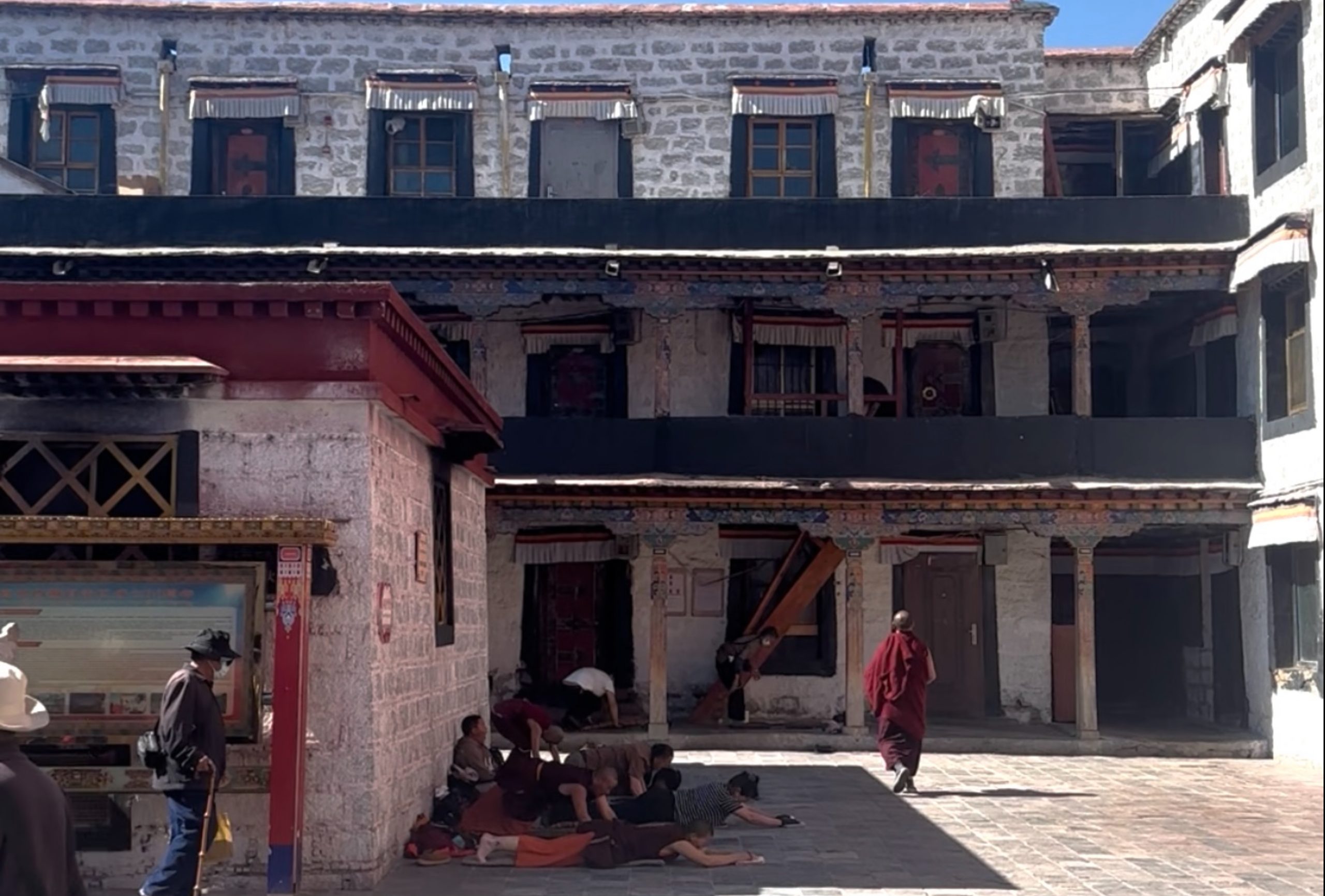
‘Chinese-style modernisation’ has undoubtedly taken place in Tibet. In many ways, it seems indistinguishable from many county-level cities in inland China. Lhasa is the capital of e-bikes, much like the little towns in Henan. Labubus can be bought on the street of the Jakhang Temple. Endless peasants still make pilgrimages on foot, yet they might now stop and ask you for a donation through QR code.
2025 marks the 60th anniversary of the Tibet Autonomous Region. 74 years after the People’s Liberation Army first entered Lhasa, today it bears little resemblance to the medieval town the Germans documented in 1938. Monks wear Rolexes under their robes. It was difficult to secure a ticket to a site like the Potala Palace. The General Secretary is coming next month for the celebration. The Discipline Commission of the Party has been cracking down on scalpers.
There was Mao’s Cultural Revolution between 1966 and 1976, during which temples were burned, razed. But capitalism proved to be the most revolutionary force in the end. Nothing is quite secularising as Alipaying a pilgrim good karma.
Words by Zac Yang. Images courtesy of Zac Yang.
You may also like
In Conversation with Charles Huettner, Co-Creator of MAX’s Scavengers Reign
I met with Charles Huettner, co-creator of the MAX twelve-episode series, Scavengers Reign which fol
The Comedy of Successes
I first encountered The Comedy of Errors on a Shakespeare reading list, the only play success
The True Cost of Porn: The Monopolisation of the Porn Industry
Open a private browsing tab. Turn on your VPN. Type ‘ethical porn’ into the search bar. Press en