

Greetings from a grown-up
It is summer, still. I can tell because it is warmer outside than it was last summer. I can tell because sudden hot rainfall is welcome: it makes people laugh and leaves behind an earthly dirt smell like it did in Khartoum, where I spent all my summers as a child. Now, with Khartoum desolate, the same dirt smell persists.
This summer, I spent a month interning in London and some weeks in Edinburgh. Soon I will be in London again and then maybe Paris. The internship was my first real claim on the city, the first time I belonged to its rhythm instead of merely visiting. This physical predicament has not impacted me. What has impacted me is the overwhelming feeling of growth, of adulthood, like I have reached a place that I have never known before, and I will never be able to return. I am growing, and I can tell because it is uncomfortable. Some days, it is physical, and I become acutely aware of how long my legs are (they always have been), and I think that it must be because I am growing. When I was a little younger than I am now, I hated the shape of my body. Summer reminded me of that, of course: swimming costumes at the beach and shorter skirts and a sense of desire in the air where men and women meet. Now, my body does not insult me; instead, I make such little note of it that it still seems impossible to me for it to source any desire. This is how I can tell that it is summer.
It is my last summer to be young, and I am growing. I say to myself, often, that I am too young to grow, and I know that this is paradoxical, but I mean that I want to stay here, this young, forever. Now I know, instinctively, when I’ve brushed my teeth for a full two minutes with my whitening, clinical toothpaste. When I was younger, I would have to time it, and my toothpaste was sugary and pink. Now, after I have brushed my teeth, I put on jeans instead of sparkly leggings, and these are the jeans that I was wearing when a man yelled a comment about desire across the road to me. I eat a healthy breakfast instead of skipping it like I would have at fourteen. And then I walk out carrying a handbag, and I have work to do.
On my commute, I read a book or an article, and contemplate getting a brick phone because it scares me to be older and still childishly addicted to my phone. I say that, and still, I have not texted my friends back in weeks, some of them in months. I reach my stop, walk into the office, and begin what is not a draining or boring day by any means. In fact, I catch myself enjoying the rhythm of it—the emails, the meetings, the slow accumulation of tasks checked off. The perfectionist in me is proud: I’m doing things well, I’m being useful. I think to myself that I really enjoy this job, and maybe I will want to do this for the rest of my life. The fear is not that the work is boring, but that it isn’t. That this muted pleasure might be all there is from now on. Childhood was blinding in its brightness, every day saturated with possibility, with noise, with sweetness. In Khartoum, that brightness came with the dirt smell after rain, the noise from children running around outside despite the persistent heat, the sweetness of mangoes and watermelon cut up by my grandmother and passed around the crowded living room. In London, all of this is harder to locate. To enjoy fluorescent lighting is to admit that those years are gone. What scares me is not the corporate life, but the suspicion that I have already lived the best part of my life, and that what lies ahead is repetition—useful, orderly, dull.
After work, this adulthood, this growth begins to feel lonely. I know I am in deep craving for attention, for connection or friendship or love, something to convince myself that adulthood is worth it, and I know that makes me feel dirty. I expected this, that it would be harder to make friends, that it would ask more of me than simply to be in the same class at school or the same flat at university. Work fills the hours too well: the more I enjoy the rhythm of my days, the less I notice the absence of anyone else inside them. And why beg, why ask, it should come to me. Really, I do not know how to ask. And then, there are girls who do not have to ask. Still, I can praise my independence; I can wear it like proof that I am strong, self-sufficient, unbothered. As adults, we are careful with our time. We protect our calendars. We measure our availability in half-hours between commitments. The friendship that was once accidental becomes strategic, planned, and adult, and in planning, some of the sweetness is lost. In adulthood, it seems, much of the sweetness is lost.
So what to make of summer and adulthood? Well, I have learned much about myself. I have learned what feels like much but is truly very little about the world. Next summer, I will be a graduate, inevitably searching for a job. Perhaps a comfortable city life again. I will be searching for new friends and connection and community. This summer will be a distant memory of being younger, lighter, fresher. The city of my childhood and the self of my childhood are gone, equally unreachable, yet both continue to live in the way I carry them forward: in smells, in tastes, in the sharpness of memory. I am grateful for it—the trial run of an adult life, the glimpse of its loneliness and its satisfactions. It makes me grateful, too, for the time I have left: one more year of university, of friends close by, of brightness I will miss when it is gone.
Outside, it is raining again. Summer, still.
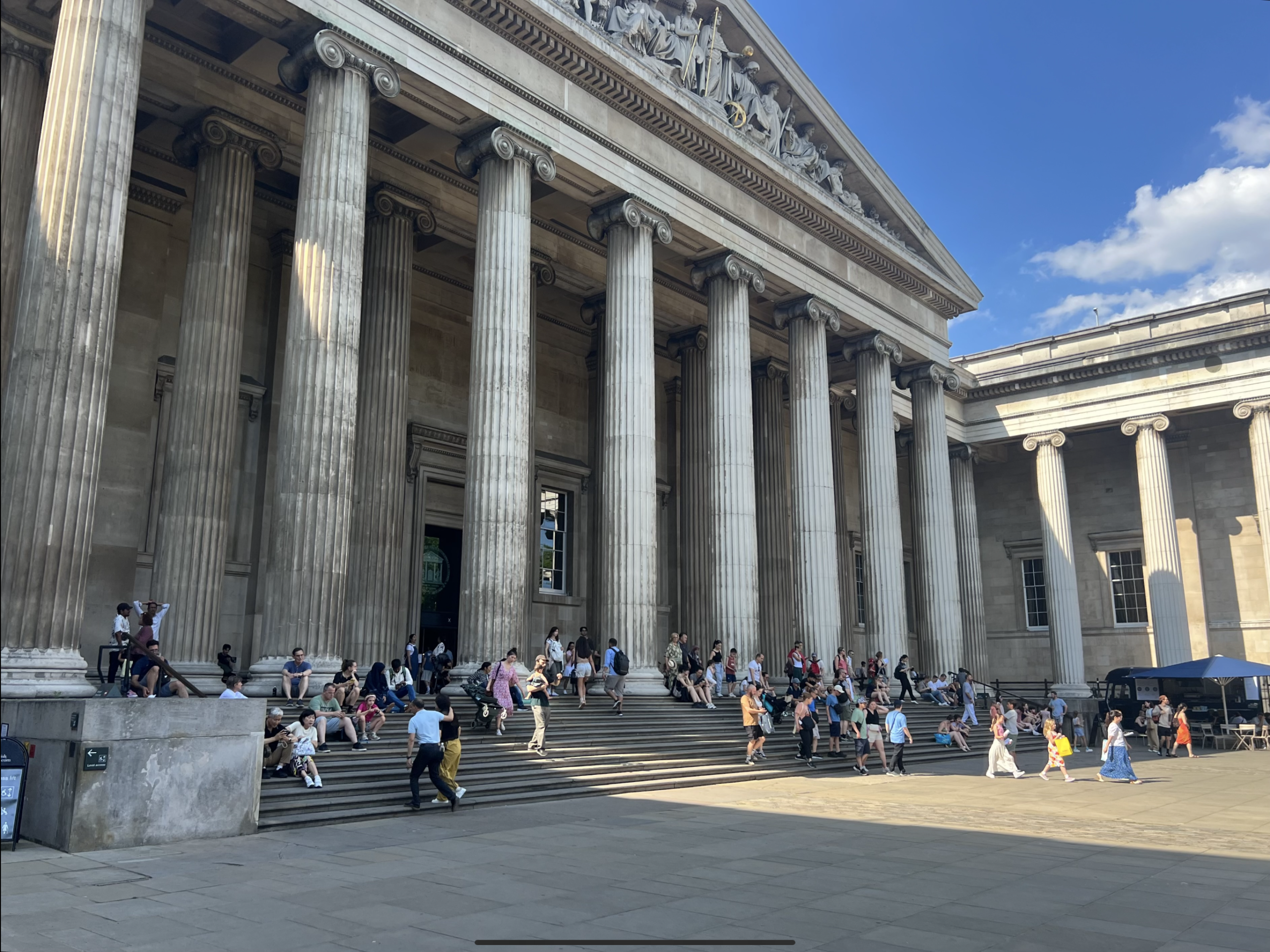
Words by Lina Osman. Image courtesy of Lina Osman.
You may also like
In the country that doesn’t exist
The Foreign Office advises against all travel to Transnistria “The city does not tell its past,
Perpetuum Mobile – Polish politics today
Removing a sticker from a glass panel at a bus stop is not an easy task, and I would normally never
The Aubervilliers teacher
His assailant, he said, was armed with a box-cutter and invoked the Islamic State as he carried out