

Nothing Ever Happens
Christianity has always been a fundamental part of me. My earliest memory is of crouching beneath a pew in the parish church where my family would worship when I was a child. My mother became a priest when I was eight. I sang in a church choir every Sunday and I’ve heard more sermons than I can recall. I’ve watched the weddings and baptisms of thousands of complete strangers. For me, faith is as much cultural as it is spiritual; I choose to be religious because I value Christian culture and traditions, and because it has always been an important part of my life.
An integral part of my faith is captured in the story of Saint Thomas the Doubter. When Thomas first hears about the resurrection of Christ, he responds to the news with disbelief: “unless I see the mark of the nails in his hands, and put my finger in the mark of the nails and my hand in his side, I will not believe”. Jesus later provides him with the evidence he seeks, in the face of his doubt, inviting Thomas to “put your finger here and see my hands. Reach out your hand and put it in my side. Do not doubt but believe. […] Blessed are they who have not seen and have yet come to believe”. Jesus values a faith that is both brave and almost impossible; a faith which fulfils its full definition: belief without evidence other than that of one’s own sense of calling. The cold truth is that very few of us have experienced God. In this sensory age of things touched and felt and heard, of science and knowledge, who can believe in something never seen or known, something always at a distance? From a purely rational perspective, the truth of any religious position is unverifiable and so, in the most literal sense, meaningless.
Sufjan Stevens wrestles with these problems throughout his music. The themes of faith and doubt, woven together in Carrie And Lowell—Sufjan Stevens’ seventh album—are consistently handled with evocative and inspiring subtlety. The album is about the death of Stevens’ mother and his subsequent grief, which he uses this event to explore wider questions about faith, and the doubt which faith brings with it.
Stevens has admitted the role his faith plays in the music he makes: in an interview given in 2006 Stevens said “it’s not so much that faith influences us as it lives in us. […] In every circumstance, giving a speech or tying my shoes, I am a living and moving and feeling being.” I found something definitionally Christian about Carrie and Lowell’s lyrical language and tone. Not a fundamentalist or didactic Christianity, but the Christianity of Thomas the Doubter, a faith of doubt and uncertainty in the midst of grief. In a 2015 Guardian interview with the author David Eggers, Stevens admitted how bad his mental state became while he was writing the album: “I was recording songs as a means of grieving, of making sense of it. I fell deeper and deeper into doubt and misery. It was a year of real darkness.” In his grief, Stevens finds himself questioning the innate belief within him, and asking himself how firm his faith really is. In one of the first lines of Carrie and Lowell Stevens hangs his loss of meaning in the air with the words: “I don’t know where to begin”.
Stevens’s engagement with the fundamental religious question of how we can have faith in something that we can neither see nor touch nor hear is brought to full expression in Casimir Pulaski Day, an earlier song from his 2005 album Illinois. Casimir Pulaski Day is about an ex-girlfriend of Stevens who died of bone cancer at the age of 12. He sings, at the beginning of the second verse: “Tuesday night, at the bible study / We lift our hands and pray over your body / But nothing ever happens.’ A journalist in 2012 said that in these lines Sufjan Stevens expresses ‘agnostic doubt’. Maybe he’s prayed for this girl to get better hundreds of times, but she hasn’t. This is the problem for Stevens and for all people of faith. “Nothing ever happens”—at least nothing that we can see.
The finality and irrevocability of death are enough to make anyone doubt their God. Death is acknowledged throughout Stevens’ work. At the end of Fourth of July Stevens repeatedly sings “we’re all going to die”. The final line of the album’s longest, and most lyrically complex, song John My Beloved is “There’s only a shadow of me / In a manner of speaking I’m dead”. The grief begun by his mother’s death brings Stevens face to face with his own mortality and insignificance. Suffering and doubt are essential parts of survival and they lead to ultimate enlightenment, as T S Eliot writes: ‘so the darkness shall be the light, and the stillness the dancing.’
The arrogance of total belief which exists when doubt is absent is destructive. David Foster Wallace, in his oft-quoted and brilliant commencement address ‘This is Water’ described a kind of “blind certainty”, in both atheists and religious people. He noticed an absolute conviction in one’s own rightness and a total rejection of doubt, and described this “blind certainty” as “repulsive”. Doubt makes us question the beliefs we have which feel almost beyond question, and it allows us to test and solidify our convictions, so that we can experience light in the darkness, and a dance in the existential stillness of being human.
In John My Beloved, Stevens flits between scenes of a first date, and what is either a prayer or an elegy for his mother. He’s engulfed by a sense of his mortality, and by grief. “So I’ll carry on / Counting my cards down to one”. There’s an echo of the scene in John’s Gospel when Jesus on the cross gives his mother to John, the disciple he loves. In the song, a mother is leaving her child, not the other way around. At the end of the song, Sufjan prays. “Jesus be near me” he sings, echoing the first line of the last verse of “Away in A Manger”. Sufjan begs for something to be there with him, through it all, and maybe that’s the best that we can do.
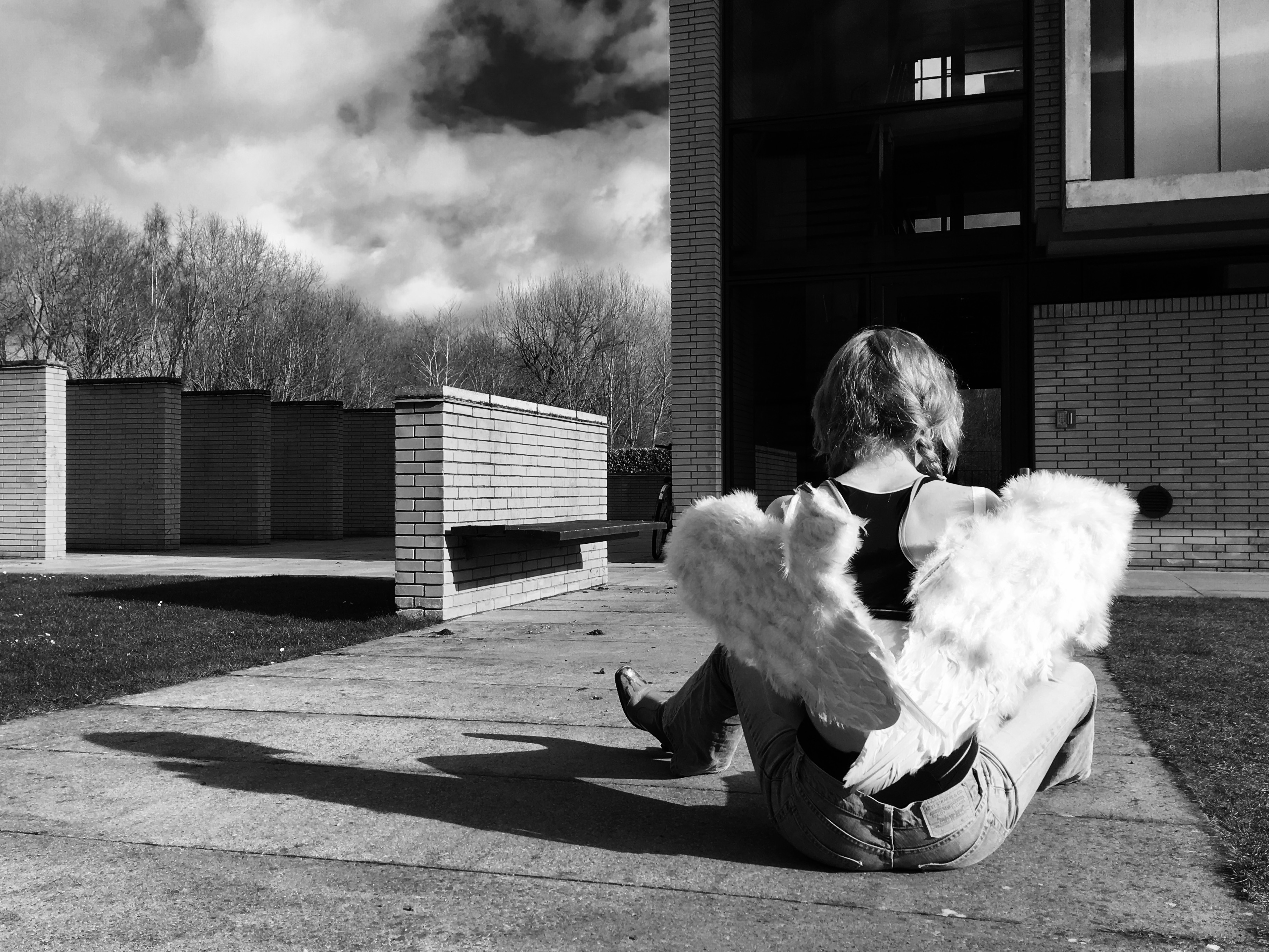
Artwork by Georgia Henage
You may also like
The ISIS TT16 Tapes Vol. 2
Second instalment of ISIS summertime goodness by Christian Hill.
Remembering the Emo Music of the Midwest
704 West High Street in the college town of Urbana, Illinois is no ordinary house. Lying in a leafy
Nostalgia Blues: The Music of Cowboy Bebop
I’m watching tomorrow with one eye While keeping the other on yesterday. Shinichirō Watanabe’s