


What does the “yes” vote mean for women in Turkey?
As the last votes of the Turkish referendum were counted in April, and they watched President Recep Tayyip Erdoğan celebrate his victory, many Turkish women feared for their homeland. Turkey had become a twisted orchestra, as a chorus of “yes” campaigners roared for Erdoğan’s new-found executive powers. The Turkish public may have democratically voted, but in voting “yes”, they had handed over a dangerous amount of power to their leader: a man renowned for his regressive attitude towards women.
Decades before Erdoğan was elected, during the 1920s, the Conservative middle-class of Turkey were often overlooked as the nation underwent ‘Europeanisation’ and reform: significant transformations were made in women’s position in Turkish society. The nation’s devoted leader at the time, Mustafa Kemal Atatürk, lent his support by establishing separation between Islamic law and secular law in Turkish society for the first time. With this progression, Atatürk acknowledged that it simply would not be possible to achieve success if he ignored the segregation which had existed between the sexes under Ottoman rule.
Turkey shone with culture as the “battle of education” was pursued, which would place the country in line with vibrant European democracies. In 1930, the University of Istanbul admitted women to train the future generation of secondary school teachers for the first time, which many young girls would subsequently attend. Under Atatürk’s secular wing, women found themselves with rights to dress freer, attend school and vote in elections, when voting rights were granted in 1934. However, this move away from Islamic culture came at the expense of women being restricted from practicing their beliefs – as the headscarf (yaşmak) was banned.
When Erdoğan rose to power in 2014, he lifted this ban: women were free to wear the headscarf on university campuses from 2010 and in state institutions a few years later. Whilst this move signified a drift away from secularism, it also highlighted Erdoğan’s gross attitude towards women – an attitude that reflects the pressures dictated from those in positions of power, who frequently use religious scripture to enforce the rigid societal expectations of women.
Although a large proportion of women support his case – with 55 per cent of women believed to have voted for Erdoğan in 2015 – the president’s attitude stands largely unpopular with their liberal sisters. He has lectured women that their roles in society are preordained as mothers, and that it is their duty to make the nation bigger and stronger. This rhetoric has also been adopted by Turkish conservatives on a wider scale, as any responsibilities a Turkish woman holds beyond her “duties” as mother and housekeeper are shamed by conservatives.
Rewinding to the Turkish coup last summer, when Erdoğan’s grasp on power was challenged, one group lacking presence were women – and the coup highlighted these attitudes further. Many NGO’s supporting women’s rights were terminated in the aftermath. Amnesty International’s 2016/17 Annual Report highlights this impact of the executive decree which followed the coup – “at least 375 NGOs” were shut down, including humanitarian groups such as the Association for Support of Women Candidates. Through this callous cleansing of NGOs, once a valuable partner to government, freedom of expression – particularly for women – has clearly been veiled by a yaşmak of it’s own: political bias.
The consequent referendum that took place earlier this year has only increased women’s vulnerability, as the president’s newly granted powers to veto legislative bills means Erdoğan can now confidently push women’s rights to the bottom of the pile – which he has already made clear his intentions to do.
Tukey’s twisted government demonstrated this in November 2016, when MPs backed a bill which would allow men convicted of rape charges between 2005 and 16 November 2016 to have their sentences “deferred” if they married their victims. The Justice and Development Party (AKP), led by Erdogan, brought the bill to parliament, suggesting that it was necessary to resolve legal complications associated with child marriage in the country, despite discarding female victims’ rights. The Turkish government faced staunch opposition from opposition MPs, activists and defenders of human rights at the time, who were outraged by this approach to child marriage, and the bill was later shelved due to this. However, women’s rights remain vulnerable in this scenario, as Justice Minister Bekir Bozdağ made it clear that the proposal would be put back on the agenda if all parties could reach a consensus in the future.
Earlier this year, the President was also given powers to appoint a portion of the council who name and revoke judges. By favoring conservative judges, abuses against women will again continue to be treated with little gravity. Conservative leniency towards domestic abuse cases has already been gravely harmful, with judges giving men who have abused – or even murdered – their wives lighter sentences if they appear to show respectful demeanor in court. In 2014, this practice led to dozens of women being killed by their abusive spouses, even after applying for police protection. Anti-abuse laws may be on the books, but deterrence is incredibly limited in Turkey’s harsh reality.
Such action is matched by the suggestion of virginity tests (highlighted in the United Nations Human Rights report last year), which would occur without women’s consent, on the basis of judicial order. We may see other rights may now come under the firing line, given the president’s outward views on abortion and birth control.
The death of Özgecan Aslan, a Turkish woman who was brutally murdered after being a victim of attempted rape in February 2015, ignited a fuse within women across Turkey, encouraging them to protect themselves against domestic violence and rape. Through their pain and worry, they represented the spirit of their country during an age which had defended women and enhanced their greatness.
Despite such fierce protest, the “yes” vote – which has heightened Erdoğan’s power, giving him a greater advantage over his opposition, and the power to give abusers a free pass – signifies, worryingly, a transformation in the Turkish vision of what’s expected of women. Yet there is hope for the future: with Turkey’s “Iron Lady”, Meral Akşener, ready to challenge Erdogan, it could be a woman who shakes Erdogan’s power and shapes Turkey’s future.
Sources: https://www.amnesty.org/en/countries/europe-and-central-asia/turkey/report-turkey/ Regarding Ozgecan Aslan: http://www.independent.co.uk/news/world/middle-east/street-protests-across-turkey-after-woman-killed-for-resisting-rape-10047078.html
Virginity tests on the basis of judicial order: http://www.ohchr.org/EN/NewsEvents/Pages/DisplayNews.aspx?NewsID=20266&LangID=E
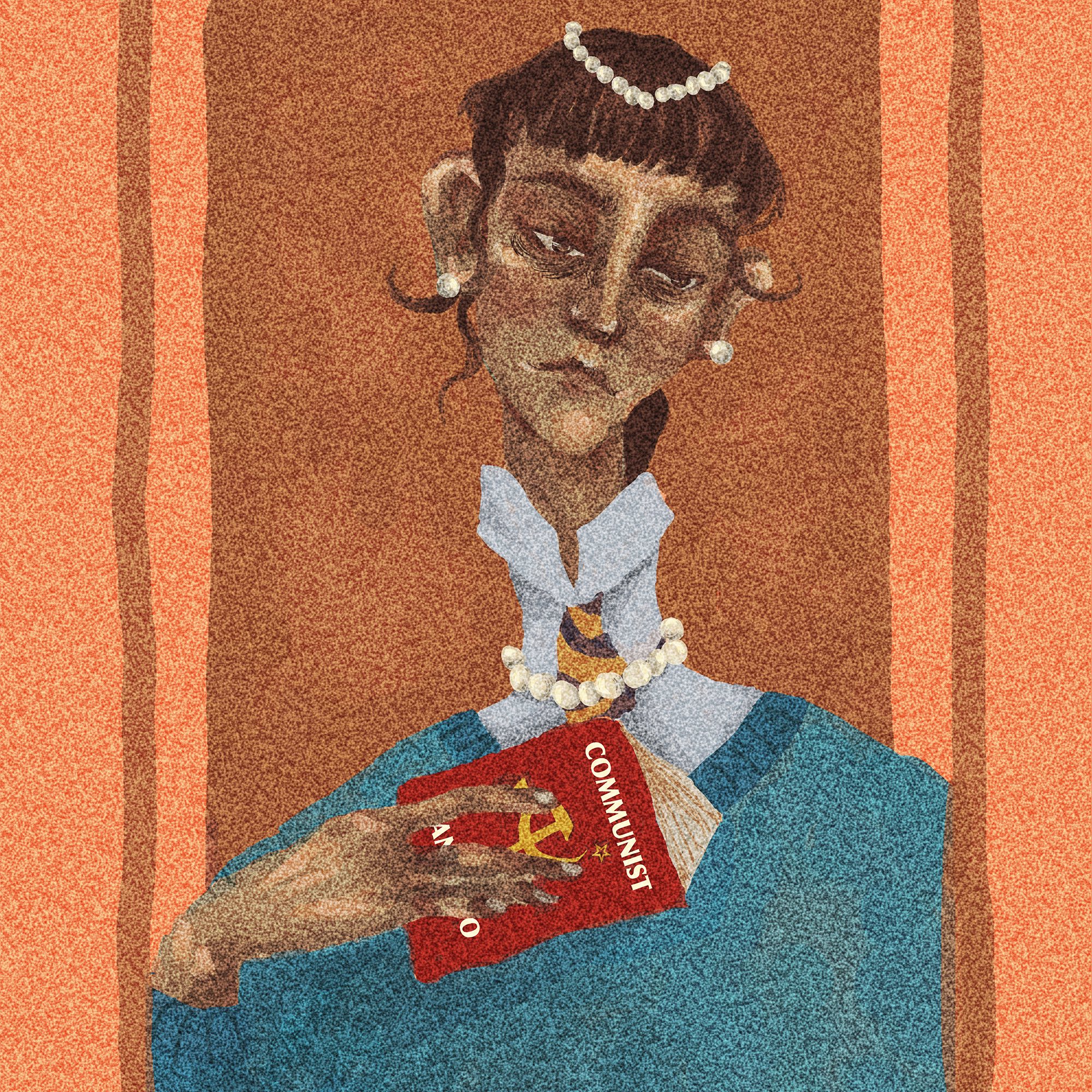
Image by Niamh Simpson
You may also like

Human wrongs in Geneva
Numerous underground nuclear shelters are now being used to house Geneva’s asylum seekers, out of

Requiem for the Simulation Generation
‘Watched from the wings as the scenes were replaying’ The fatalistic lyrics from Joy Division’
Oscar Wilde and Sally Rooney: Parodying the Political
“Art is individualism, and individualism is a disturbing and disintegrating force. There lies its